
From breakfast to late-night snacks: 8 everyday street foods enjoyed by Wuhan locals
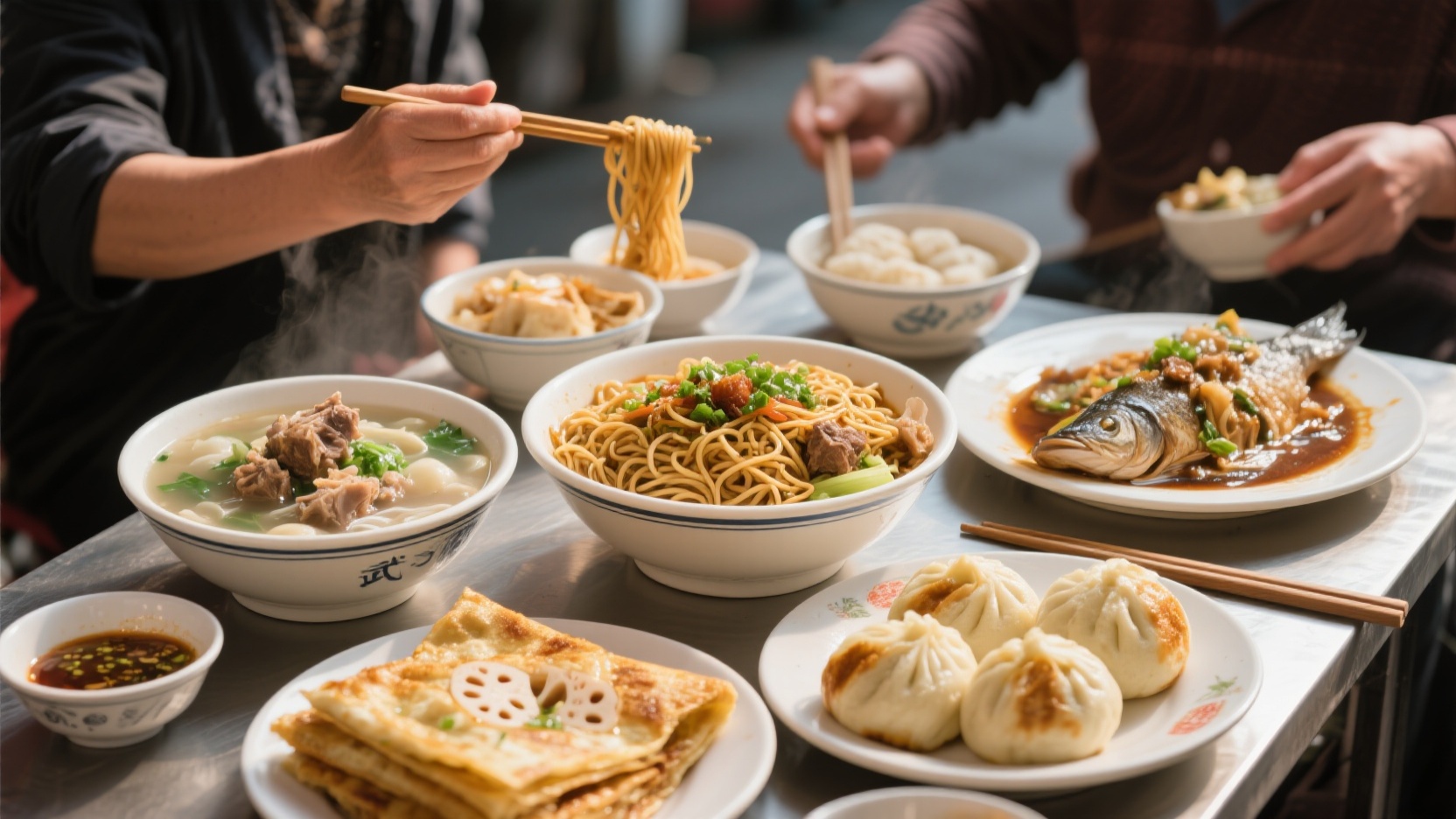
In Wuhan, people call eating breakfast "guozao" and late-night snacking "xiaoye," with lunch and afternoon tea appearing at any time in between. These four meals a day are not a ritual, but rather a natural rhythm of taste that unfolds along the streets and alleys. The following eight dishes are frequent staples on the locals' daily tables and offer the most direct entry point into understanding life in Wuhan.
Morning: Hot dry noodles, three-delicacy bean curd sheets, and rice noodle soup
Hot dry noodles are the foundation of Wuhan's breakfast. Alkaline noodles are pre-cooked to 80% doneness, tossed with oil and cooled. Before eating, they are blanched in boiling water, drained, and then quickly mixed with sesame paste, diced radish, chopped green onions, soy sauce, and chili oil. The sesame paste needs to be diluted with sesame oil to create a thick consistency that clings to the noodles. The first taste is the aroma of soy sauce and alkaline paste, followed by the chewy noodles and the crisp radish. For locals, carrying a paper bowl and mixing the noodles while walking is the most familiar morning activity. There's no fixed way to eat it, and you don't need to sit down; this casualness perfectly captures the rhythm of a Wuhan morning.
Three-delicacy bean curd sheets take on a more formal status at breakfast. Mung beans and rice are ground into a paste, spread into a thin sheet, brushed with egg wash, topped with steamed glutinous rice, and then covered with a filling made of stir-fried fresh meat, shiitake mushrooms, and bamboo shoots. It's then flipped and pan-fried until golden brown. The outer bean curd sheet is slightly crispy, the inner glutinous rice is soft and oily, the filling is savory, and the overall texture is substantial. The sound of the bean curd sheet maker flipping the pancakes often forms the background noise of the breakfast stall, along with the queuing crowd.
Thick rice noodle soup with fried dough sticks is a traditional dish from the riverside. Small crucian carp is simmered for a long time, then the bones are removed. The fish broth is then cooked with rice noodles until it becomes a thick paste, sprinkled with plenty of white pepper, and served with freshly fried dough sticks. The fried dough sticks are torn into pieces, dipped into the thick soup, and eaten after soaking up the spicy broth. The rice noodles are soft, and the freshness of the fish and the spiciness of the pepper combine to create a delightful experience. Older generations of Wuhan residents considered "thick rice noodle soup with fried dough sticks" a way to combat the damp and cold weather, warming their stomachs and preserving memories of working along the riverbank in the early morning.
Lunch: Pork rib and lotus root soup, Wuchang fish
In the bustling local restaurants, pork rib and lotus root soup is a top order. The lotus root and pork ribs are prepared separately. After blanching the ribs, they are placed in a pot with the lotus root pieces, brought to a boil over high heat, then simmered for several hours. The starch in the Honghu lotus root separates after prolonged cooking, resulting in a soft, powdery texture that can be pulled into fine strands. The soup is clear and sweet, and the meat is fragrant but not greasy. In Wuhan families, simmering soup is a daily ritual. Locals consider it unacceptable if the lotus root isn't powdery and the soup isn't thoroughly simmered. Only when the aroma of a pot of soup fills the air does lunch feel truly complete.
Wuchang fish is a common delicacy in the middle reaches of the Yangtze River. Locally, it's mostly prepared by steaming. The fish is scored, placed on a bed of ginger and scallions, and drizzled with a little cooking wine and soy sauce. After steaming, it's sprinkled with scallion shreds and hot oil. The steaming process requires precise control of the heat; the fish only needs simple seasoning to retain its natural flavor. The tender, garlic-clove-like flesh, dipped in the sauce at the bottom of the plate, has a sweet aftertaste and almost no muddy taste. It's not only a symbol of local produce but also often sits in the center of the family dining table, representing a formal yet unpretentious lunch.
Afternoon tea: Fried lotus root sandwiches
At the alleyway stalls around three or four in the afternoon, fried lotus root sandwiches are a frequent snack. Lotus root is sliced into connected pieces, stuffed with seasoned minced pork, coated in a thick, evenly coated batter, and deep-fried until golden brown and crispy. When you bite into it, the outer coating is crispy, the lotus root remains sweet and crunchy, and the filling oozes out its juices, creating a delightful interplay of oily and lotus root aromas. Many people have been eating this since childhood. The stall owner keeps frying batches of these sandwiches, the sound of the oil sizzling from afternoon until evening. A small serving of fried lotus root sandwiches is just the perfect way to fill the gap between meals.
Late at night: Beef noodles, pan-fried buns
The main dish at late-night eateries is often beef noodles. Beef bones and spices are simmered to create a bright red broth, the beef is braised until tender, and rice noodles or alkaline noodles are cooked, then topped with the broth, meat, and a spoonful of chili oil. The broth is rich but not cloudy, the beef is flavorful and tender, and the rice noodles are smooth. Most stalls also offer toppings like offal and braised eggs, but these don't affect the base of the broth. This bowl of late-night snack is often spicier, used to dispel fatigue and the night air.
Pan-fried buns are a common last-minute option at many late-night food stalls. Small, leavened buns are placed seam-side down in a pan, water is added, the pan is covered, and they are pan-fried until the water evaporates and a golden-brown, crispy crust forms on the bottom. They are then sprinkled with scallions and sesame seeds before serving. The bottom is crispy, the dough is soft, and the pork filling is juicy. When they first come out of the pan, you should take small bites to avoid burning your mouth with the hot meat juices. They are often paired with beef noodles, creating a dry-and-wet contrast that makes for a common late-night snack at food stalls.
From the streets to the alleys, experience the city through its food in a single day.