
Suzhou Slow Travel 7 Days | A Deep and Slow Travel Itinerary for Families: 7 Days and 6 Nights of Exploring Alleys, Taking Boats, and Soaking in Hot Springs
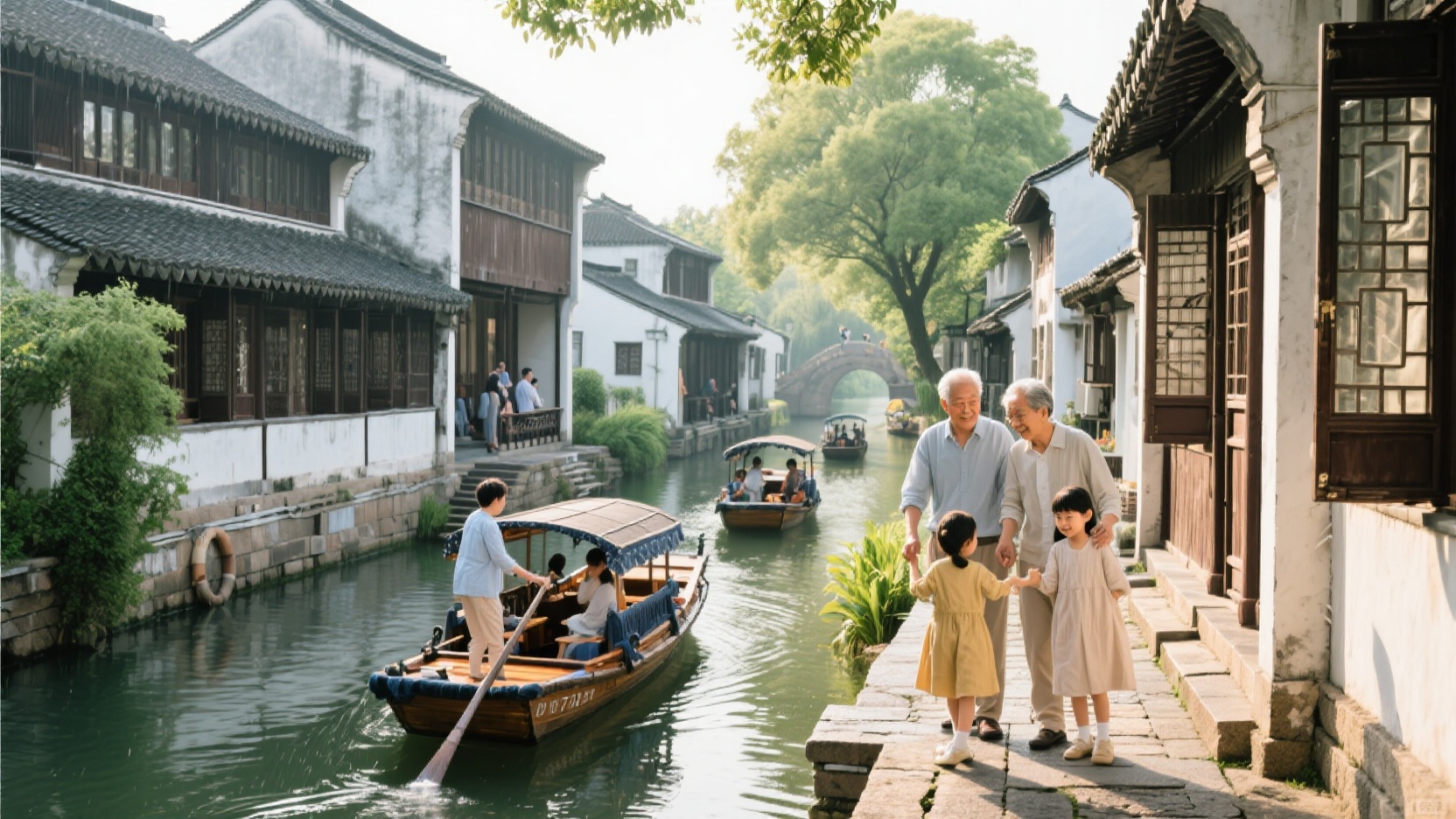
This guide breaks down the 7-day, 6-night Suzhou itinerary into a slow-paced framework of "no more than 3 key points per day." It does not focus on the number of check-ins, but prioritizes locations with flat roads, alternative boat rides, and places where you can stop at any time. It is suitable for families, retirees, and those taking time off to travel.
Day 1: First Impressions of the Old City: Suzhou Museum (Main Building), Humble Administrator's Garden, North Section of Pingjiang Road
First, visit the Suzhou Museum (advance reservations via official channels are required). The museum's layout is wheelchair- and stroller-friendly. For the adjacent Humble Administrator's Garden, it's recommended to enter early and focus on the central water garden, where the covered walkways and stone bridges have gentle slopes. In the afternoon, head to the northern section of Pingjiang Road, walking from the Baita East Road intersection towards Huxiangshi Lane to avoid tour groups. You can find riverside teahouses to rest. No night tour is planned for this day to conserve energy for the next day.
Day 2 City Gates and Shantang: Panmen Gate, western section of Shantang Street, Tiger Hill
The Panmen Scenic Area's water and land gates and city wall walkways are perfect for a leisurely stroll, and the plaza inside the city is spacious. In the afternoon, enter the western section of Shantang Street from Xinmin Bridge. This section has fewer shops and more local residents. You can walk along the river to the south gate of Tiger Hill, or take a hand-rowed boat instead of walking. Tiger Hill has a gentle slope overall, and the main attractions are concentrated on the Thousand-Man Stone and Yunyan Temple Pagoda. The elderly and children don't need to climb to the top; the tea gardens at the foot of the mountain are also a good place to rest.
Day 3-Day 4 Choose one of the following near the suburbs: leisurely stroll through an ancient town or visit a hot spring or wetland.
Choose one of the following two options for Day 3 and Day 4: Option A is to visit a nearby ancient town, and Option B is to visit hot springs and a nature reserve. It is not recommended to combine the two options to avoid unnecessary travel back and forth.
Day 3-Day 4 Route A: Slow travel through two ancient towns in the suburbs
When choosing Route A, Day 3 should be spent either in Tongli or Mudu: In Tongli, the focus is on Tuisi Garden and the Three Bridges; in Mudu, the focus is on Yan Family Garden and Hongyin Mountain Villa. Both locations offer hand-rowed boats or sightseeing boats to replace some walking. Day 4 should be spent in either Lili or Luzhi: Lili's covered walkways are gentle and quiet, while Luzhi is known for Baosheng Temple and the Water Town Costume Museum. If you choose Tongli on Day 3, Lili is recommended for Day 4; if you choose Mudu on Day 3, Luzhi is recommended for Day 4 to avoid the crowds of Zhouzhuang and Wuzhen.
Day 3-Day 4 Route B: Slow Walk Through Hot Springs and Taihu Wetland
If choosing Route B, on Day 3 morning, head to the hot springs in Shushan or Yangshan area. If you have elderly people or children with you, it's recommended to limit your soaking time to two hours. In the afternoon, walk along the wooden boardwalk in Shushan Village, which has a very gentle slope. On Day 4, head to Suzhou Taihu Lakeside National Wetland or Taihu National Wetland Park. The elevated boardwalk makes it easy to push wheelchairs and strollers. In the afternoon, you can visit Xijing Bay to see the seasonal flower fields. If there are no flowers in bloom, return directly to the city to rest.
Day 5 East Lake Buffer Zone: Jinji Lake Lakeside Trail, Ligong Causeway
After two consecutive days of outings, reduce the intensity on the fifth day. For the Jinji Lake loop trail, choose either the western section or the Ligong Causeway section; you don't need to circle the entire lake. There are plenty of lakeside restaurants and public seating areas, so you can stop and explore as you go. In the evening, you can enjoy the lake view and the city skyline. Check the opening hours of the musical fountain in advance; if it's not running, there's no need to wait. If you're traveling with young children, shorten your walking distance and instead spend some time near Eslite Bookstore and the Yuanrong Sky Screen area.
Day 6 Temples and Gardens: Xiyuan Temple, Lingering Garden or Master of the Nets Garden
In the morning, visit Xiyuan Temple. The vegetarian noodles, the release pond, and the Arhat Hall offer a relaxed pace, and the temple grounds are smooth. In the afternoon, choose between Lingering Garden or Master of the Nets Garden: Lingering Garden is compact but has many stone steps, while Master of the Nets Garden is relatively flat and smaller, making it more suitable for leisurely exploration. No shopping street is planned for the day to avoid overlapping with tourist crowds.
Day 7: Closing Day: Fengmen Hengjie, Canglang Pavilion or Keyuan Garden
The last day concludes with a focus on local life. In the morning, have breakfast at Fengmen Hengjie and explore the local market, then walk to either Canglang Pavilion or Keyuan Garden. The two gardens are adjacent; Canglang Pavilion's covered corridors and waterfront layout are effortless to navigate, while Keyuan Garden is smaller and less crowded. Check out in the afternoon and return home; no major tourist attractions are planned.
Recommended gentle slope routes suitable for the elderly and children
Prioritize the Pingjiang Road-Ouyuan-Dongyuan route, as the riverside stone path is smooth; the western section of Shantang Street to Tiger Hill can be reached by boat; the western section of Jinji Lake and the boardwalk of Taihu Lake Wetland are suitable for wheelchairs and strollers; if visiting Qionglong Mountain, it is recommended to take the scenic shuttle bus to the core area to avoid continuous climbing. The rockery in Lion Grove Garden and some stone steps in Lingering Garden are not suitable for elderly people to walk alone.
Local frequently used apps list
For reservations and ticket purchases, use "Jundao Suzhou" or "Suzhou Gardens Official WeChat Account"; for the subway, use "Su e Xing"; for real-time bus location, use "Suzhou Bus"; for navigation and ride-hailing, use mainstream maps and ride-hailing apps; for payment, mobile payment is the main method, but some older shops still require cash, so it is recommended to carry a small amount of cash.
Clothing suggestions for rainy and dry seasons
Suzhou's plum rain season is concentrated from mid-June to early July, characterized by hot and humid weather. Quick-drying clothing, non-slip shoes, and a folding umbrella are recommended, as the stone paths and bridges in gardens become slippery after rain. From November to February of the following year, the weather is cold and damp. Indoor gardens and older houses often lack heating, so windproof jackets, light down jackets, and knee pads are necessary. In March and April, there are significant temperature differences between day and night, so layering is recommended. In summer, mosquitoes are also a concern, especially around lakes and wetlands in the evenings.