
Wandering through Suzhou's alleyways | Avoiding Pingjiang Road, a 4.2-kilometer route connects old houses, farmers' markets, and vinyl record shops (Blogger's personal autumn review)
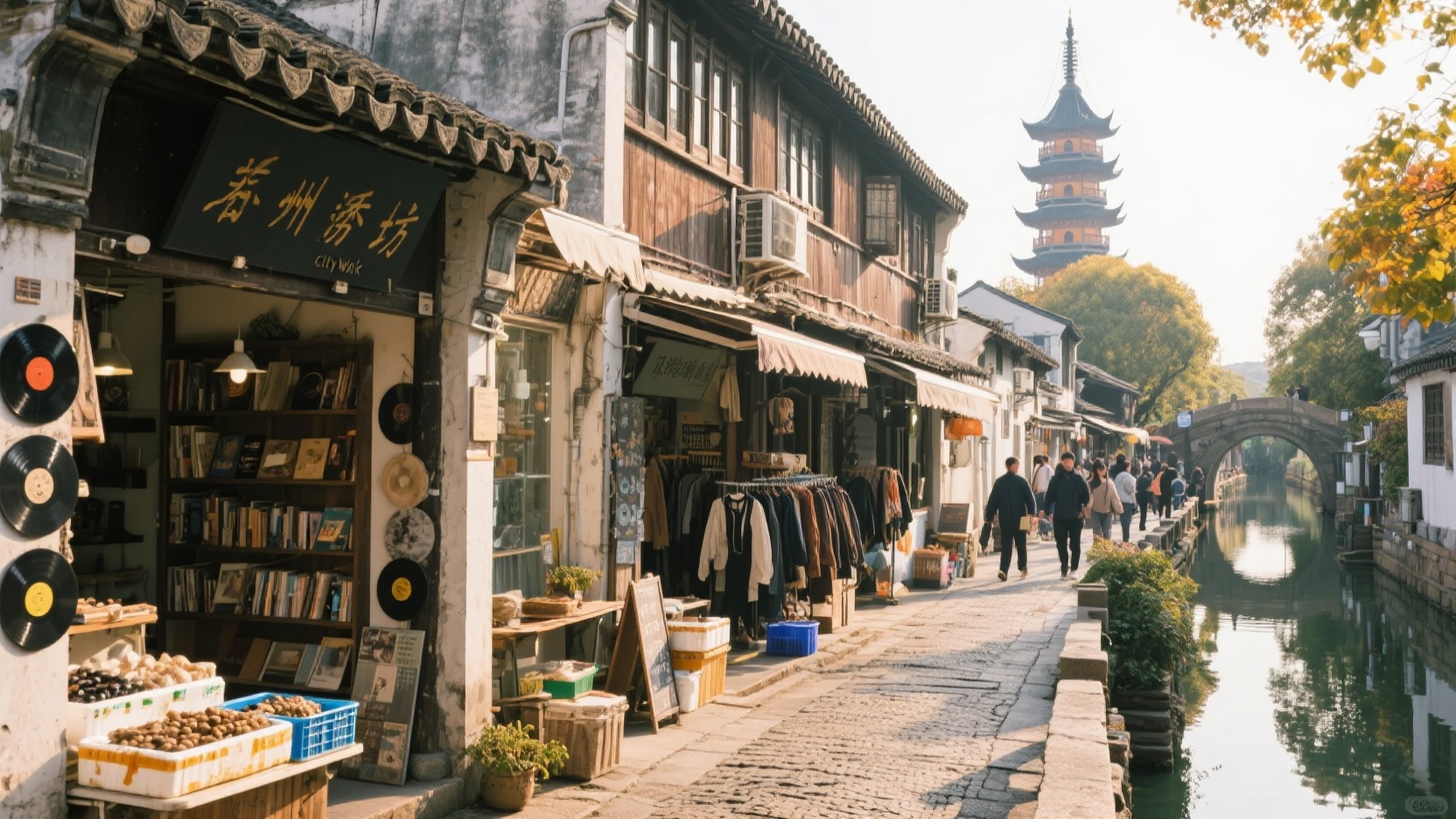
First, let me clarify: this isn't a "replacement" of Pingjiang Road or Shantang Street, but rather a completely reverse route. The third time I was swept along by the crowds on Pingjiang Road, I turned into a side alley called "Jinfan Road," and realized that Suzhou's artistic atmosphere doesn't rely on gardens and trendy streets. This main route, from Leqiao Bridge to the Twin Towers, is about 4.2 kilometers long, taking about 1 hour and 50 minutes on foot. Adding the two side streets, it's just the right amount of time to while away most of an afternoon. No queues, no tickets, all you need is a pair of soft-soled shoes and a bit of curiosity.
Main Route Overview: From Leqiao to Shuangta, a 4.2-kilometer walk that won't tire you out.
Specific route: After exiting Leqiao Metro Station, head east onto Jinfan Road. Follow Jinfan Road—Huangfeiji—Tongguanfang—Xiaoyifang—Dashitou Lane—Ximei Lane—Liu Lane—Cuku Lane—Gunxiufang—Daicheng Bridge Lower Pond—Wangxing Bridge North End, ending at Shuangta Market. The entire route is one-way; the alleys are narrow but mostly free of traffic, making it ideal for walking and taking photos.
The approximate walking times for each section are as follows: Jinfan Road to Huangfeiji (approximately 12 minutes), Huangfeiji to Dashitou Lane (approximately 10 minutes), Dashitou Lane to Ximei Lane (approximately 8 minutes), Ximei Lane to Cuku Lane (approximately 10 minutes), Cuku Lane to Gunxiufang (approximately 8 minutes), and Gunxiufang to Shuangta Market (approximately 12 minutes). Including stops, it is recommended to allow two and a half to three hours.
From Jinfan Road to Huangfeiji: A slow-motion view of the Republican-era buildings and vinyl record shops (approximately 12 minutes + 10 minutes walk)
Hidden along Jinfan Road are clusters of Republican-era villas, including the former residence of Zhang Taiyan. Two plane trees at the entrance filter the afternoon light into fragmented dappled patterns. Camera position: Standing at the alley entrance diagonally opposite the residence, use a medium telephoto lens to frame the entrance and plane tree leaves together; at three o'clock in the afternoon, the light shines obliquely on the exterior wall. Why it's worth stopping for 5 minutes: This isn't a newly renovated tourist attraction; the walls are peeling, and the window frames are rusty, but it is precisely this "unfinished" state that allows one to see the true texture of Suzhou during the Republican era.
Turning into Huangfeiji, the alley's name sounds wild, but it's only about 300 meters long. There's a potsticker shop that's been open for years and a pocket park. Camera spot: On the bench on the east side of the pocket park, use a telephoto lens to photograph an old lady picking vegetables and the ivy climbing the wall. Why it's worth watching for 5 minutes: This is a rare "life theater" in the ancient city, with almost no tourists. You can hear people talking in Wu dialect, see clotheslines stretching across the sky, and experience Suzhou's daily life more captivating than any performance.
Branch road 1: From Huangfeiji, turn north onto Pingqiao Straight Street, then enter Sijing Lane, about 0.8 kilometers, a 12-minute walk. Hidden in the lane is a vintage clothing store and several old Qing Dynasty houses, suitable for those who enjoy bargain hunting. However, the store is often closed on Mondays, so don't go there disappointed.
From Da Shi Tou Lane to west Mei Lane: the corner of vintage shop windows, an old well, and a community market (about 18 minutes walk).
Da Shi Tou Lane is named after a Qing Dynasty stone tablet. Inside, the "Floating Life Through the Seasons" old house has an unassuming entrance. Across the street is a vintage clothing store without a large sign, its window displaying old leather trunks and silk shirts. Camera position: Stand diagonally in front of the shop window, framing the old house's entrance as well, with a small aperture to capture the blend of old and new in Suzhou. Why it's worth watching for 5 minutes: This glimpse reveals Suzhou's "aesthetics of vintage items"—not museum exhibits, but everyday life that can be worn and taken with you.
Walking into Ximei Lane, there's a small open space outside the red walls of Kuang Gong Ancestral Hall, where elderly people often play chess in the afternoons. Next to it, at the corner of the community vegetable market, a stall selling aquatic delicacies changes its stock seasonally. Camera angle: Backlit from the market entrance, making the reflections of the scales and plastic bags the foreground. Why it's worth watching for 5 minutes: The shouts and the clanging of the scales here are the most honest white noise in Suzhou, more authentic than any other cultural and creative market.
From Vinegar Alley to Embroidery Workshop: Independent bookstores and cafes illuminate the alley (approximately 15 minutes walk, including branch line 2)
Vinegar Warehouse Lane, whose name includes "vinegar," was once the site of an official granary. Walking in, you'll first pass several courtyards filled with flowers and plants. Camera angle: Stand on the steps opposite the courtyard and use a vertical composition to photograph the latticed windows and wooden doors. Why it's worth watching for 5 minutes: These courtyards often have their doors half-closed, allowing you to see the authentic living conditions of the locals, rather than the touristy "Jiangnan-style homes."
In Gunxiufang, there's an independent bookstore that's only open half a day. The owner's selection leans towards art and local history. Next door, a café opens its window onto the alley. Camera angle: shooting in from the café window, allowing the coffee steam and bookshelves to overlap. Why it's worth watching for 5 minutes: This is the most ordinary glimpse into Suzhou's artsy side—no staged photos, just the sounds of turning pages and grinding coffee.
Branch road two: From Gunxiufang, turn east onto Shengjiadai and walk along the river to Baibu Street, about 0.9 kilometers, a 14-minute walk. On the opposite bank of the river are the old campus of Suzhou University, with its red brick buildings, which are suitable for taking pictures of the reflections in the river and the Republican-era school buildings. However, the campus is not open to the public, so you can only take pictures from this side of the river.
The final stop is the Twin Towers Market: a market and art are just a door away (about an 8-minute walk).
Walking to the north end of Wangxing Bridge, you'll reach the Shuangta Market. This old market, after renovation, retains half its fresh produce section and the other half as a creative and pastry stall. Suggested camera angles: Shoot the transition from the fresh produce section to the creative section at the entrance; the transition between warm and cool lighting is the best spot for photos. Why it's worth watching for 5 minutes: It explains that Suzhou's "culture and art" aren't confined, but rather shared with everyday vegetables and tofu. Buy a bag of arrowhead slices or two pieces of crabapple cake, sit on the stone steps at the entrance, and enjoy them—only then can you truly say you've completed this 4.2-kilometer walk.
Blogger's Summary + Practical Tips
This route perfectly captures the artistic atmosphere of Suzhou—it doesn't rely on gardens to create a grand spectacle, but rather on the natural flow of elements like Republican-era brick walls, old wells, market lights, and bookstore window shadows. It's recommended to start before lunch and finish with some snacks at the Twin Pagodas Market.
Practical tips: Avoid Mondays as some vintage clothing stores and bookstores are closed; wear soft-soled shoes, as the alleys are mostly cobblestone streets; the light is best for photos after 3 pm in autumn, but the market closes after 4 pm, so it's recommended to walk backwards to capture the light; both side routes require returning the same way, so don't force it, the main route is already full; if you want to shoot establishing shots, choose weekday mornings before 10 am when there are the fewest people.