
Suzhou Night Tour Route | A Local Night Economy Checklist Compiled After Three Nights of Research (Including Night Photography Spots and Safety Tips)
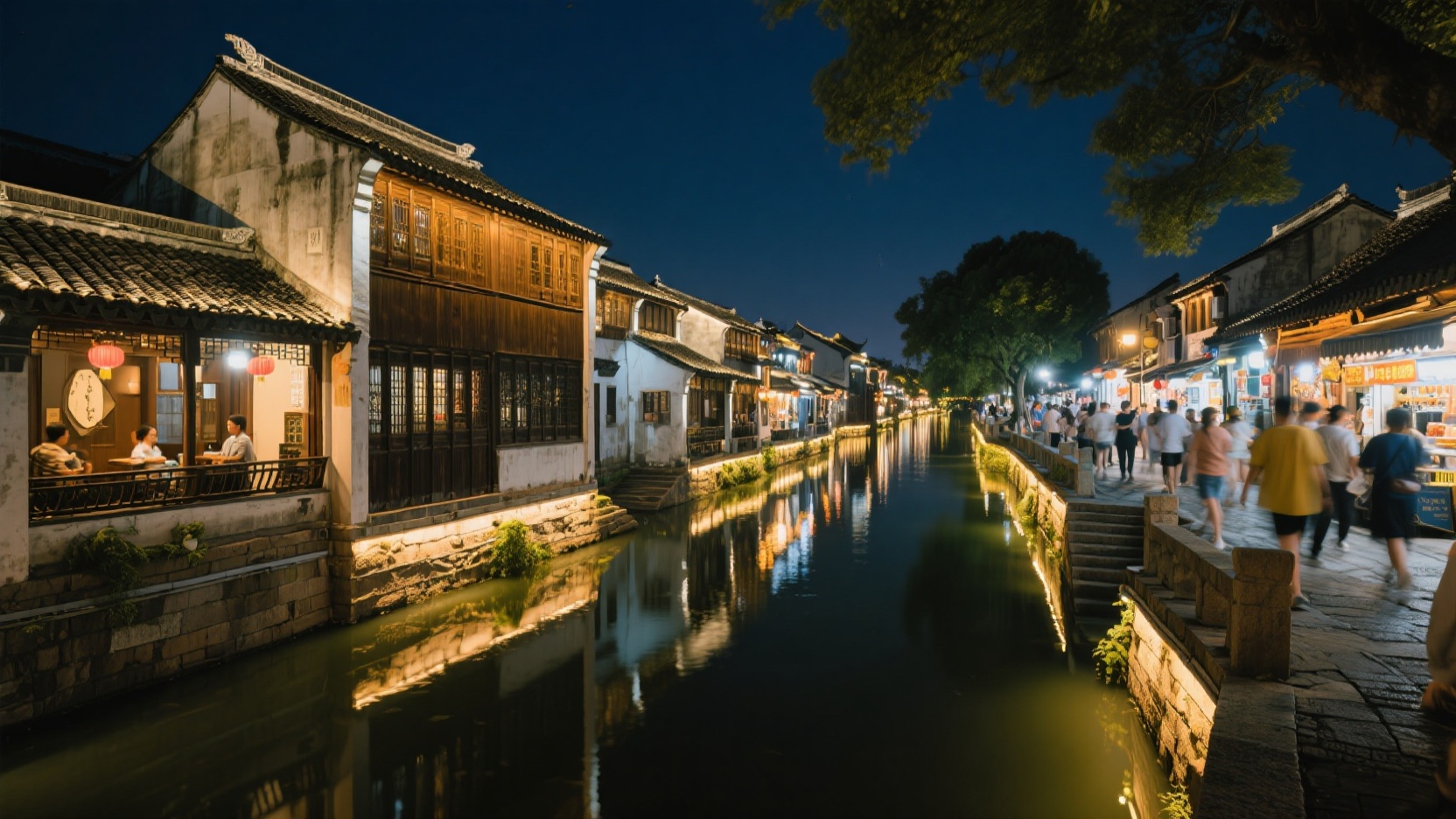
After trying three consecutive nights of nighttime tours in Suzhou, I gave up on Shantang Street and the Jinji Lake viewing platform. Many travel guides only tell you to visit gardens during the day, but leave you nowhere to go at night; I personally tested this route three times, avoiding the two biggest tourist traps. This route, running from 6:00 PM to 11:30 PM, connects the city moat lights, old alleyway food stalls, old houses, Pingtan teahouses, and quiet photo spots in the dead of night. It relies entirely on walking and shared bikes, making it ideal for those wanting to avoid crowds in summer and early autumn.
18:00-19:20 Xiangmen to Loumen Moat Trail: More "Suzhou" than Jinji Lake when the lights are on.
Don't rush to Pingjiang Road as your first stop for a nighttime stroll in Suzhou. Around 6:00 PM, walk about 5 minutes from Xiangmen Metro Station to the entrance of the Ancient City Moat Trail, and walk north along the Xiangmen City Wall. This section has few tourists, mostly locals taking an evening walk after dinner. Around 6:30 PM, the lights on the city wall and the river will gradually turn on. At this time, it's not completely dark yet, and you can capture photos of the city wall's reflection under a blue hue.
The walk from Xiangmen to Loumen is about 2.5 kilometers, taking about an hour while taking photos along the way. Compared to the modern high-rise lights of Jinji Lake, the old city walls, weeping willows, stone bridges, and streetlights along this section of the moat create Suzhou's unique night view. There are no large areas of colored spotlights here, only warm yellow streetlights and the outline of the city walls. Near Loumen, you can also see boats passing by, their reflections shimmering like gold on the water. I arrived at the Loumen gate tower around 7:20 PM.
Connection: After exiting the trail at Loumen, scan a shared bicycle and ride for about 12 minutes to Wuqufang area.
19:30-20:40 Wuqufang-Tangjiaxiang Night Market Area: Avoid the crowds on Shantang Street
Many travel guides recommend Shantang Street for late-night snacks, but the bridge there is packed with people after 7 PM. Wuqufang to Tangjia Lane is a bustling market and tailor shops during the day, transforming into a late-night eatery for locals. Enjoy delicious snacks like wonton soup, Suzhou-style braised fish noodles, savory soy milk with fried dough sticks, and freshly sliced salted goose—eat your way along the street, and you can have a satisfying meal for just a few dozen yuan per person.
Wuqufang offers a wide variety of late-night snacks. I recommend starting with savory dishes, then buying half a salted goose or a box of sweet osmanthus lotus root to take away. If you don't eat pork or offal, the Suzhou-style mung bean soup and deep-fried dumplings are also good choices. There aren't any trendy, Instagrammable signs here, but the flavors are closer to authentic Suzhou. Many stalls start closing after 8:30 PM, so it's best to arrive before then. The second time I came, I was too late; the braised fish noodles I wanted were sold out, so I had to settle for wontons instead.
Connection: It takes about 8 minutes to walk from the west entrance of Wuqufang, or about 4 minutes by shared bicycle, to reach the middle section of Pingjiang Road.
20:50-22:10 Hiding in an old house and a Pingtan teahouse: A night of storytelling is better than a night stroll through a garden.
The essence of Suzhou's nightlife lies not in bars, but in "night storytelling." Around 8:50 PM, turn into a side alley of Pingjiang Road or Zhongzhangjia Alley and find a Pingtan teahouse located in an old house. These teahouses have small storefronts, dim lanterns, and are not on the main street, but once inside, it's a completely different world.
Order a cup of Biluochun tea and listen to the master chef sing "The Pearl Tower" or a selection from Kunqu Opera—it's a more authentic Suzhou experience than queuing to stroll through the gardens during the day. The Pingtan teahouse has a relaxed, unhurried rhythm; no matter how noisy Pingjiang Road is outside, it quiets down as soon as the curtains are drawn. Remember to arrive ten minutes early and sit near the front, but not directly facing the performers, for a more natural sound recording and photo opportunity.
When choosing a restaurant, there are some pitfalls to avoid: avoid those roadside banquets where the performers start soliciting tips after only two minutes of singing; prioritize older, less busy establishments that have two or three experienced singers taking turns performing, where the cost per person is only a few tens to a hundred yuan and you can sit for an hour and a half.
Transition: After listening to the audiobook at approximately 22:10, walk about 6 minutes to the outer wall of Couple's Garden and the Cang Street area.
22:20-23:30 From the outer wall of Couple's Garden to Cang Street: Late-night flight locations and return trip tips
After 10:20 PM, the crowds on Pingjiang Road's main street have mostly dispersed, and warm yellow streetlights illuminate the outer walls of Ouyuan Garden and the corner of Cangjie Street. The white walls, black tiles, old trees, and empty stone slabs are even more photogenic than during the day. The Cangjie Street area used to be Suzhou's granary, but now it's almost deserted at night. Standing at the intersection of Cangjie Street and Zhongzhangjia Lane and looking south, you can capture the old-fashioned streetlights and the seemingly endless alleyways, creating clean images perfect for phone wallpapers. It's not far from the subway station, so you can take your time taking a few photos of the empty alleyways before heading back.
After 11 PM, the subway gradually stops operating. It is recommended to walk from Ganjiang Road to the subway station or take a taxi back to your accommodation. Do not venture into unlit side alleys to take night photos; safety is more important than getting good shots.
The blogger summarizes: The biggest advantage of this route is that it avoids backtracking, connecting the moat to old alleyway late-night snacks, then to old houses for reading at night, and finally to empty streets late at night, showcasing three distinct atmospheres of Suzhou's nightlife. Summer and early autumn are the best times to visit, and you can even capture blues-themed photos around 7 PM. If you also dislike crowding gardens during the day, this route is a great alternative.
Night shooting location 1: West side of Xiangmen Bridge, shoot the reflection of the city wall and moat, use blue mode around 19:00.
Night shooting position 2: Shoot from below Loumen Gate Tower, the outline is clearest when the lights are just turned on.
Night shooting location 3: Wuqufang alley entrance, using a central focus to capture the bustling night market atmosphere and crowds.
Night shooting location 4: Inside the old Pingtan teahouse, shoot the stage and old furniture before the show starts, and turn off the flash.
Night shooting location 5: The outer wall of Ouyuan Garden or the corner of Cangjie Street. Shoot the empty alley after 22:30. It is recommended to bring a small fill light.
Safety Tip 1: The moat walkway has sections that run along the water without railings. When walking on the inner side at night, avoid looking at your phone while walking.
Safety Tip 2: There are many electric bikes around the night market stalls in the old alley. Do not ride shared bikes into Wuqufang. It is recommended to park them at the alley entrance.
Safety Tip 3: Pingtan teahouses are mostly old wooden houses with narrow passageways. When entering, pay attention to the fire exits first.
Safety Tip 4: The subway stops operating after 11 PM, so check the last train in advance; girls should try to walk back to the main street in groups.