
Shanghai Solo Travel Safety Bureau | Three-Day, Two-Night Solo Trip Avoidance Checklist (Accommodation, Food, Flight Seats, Group Buying - All Personally Tested)
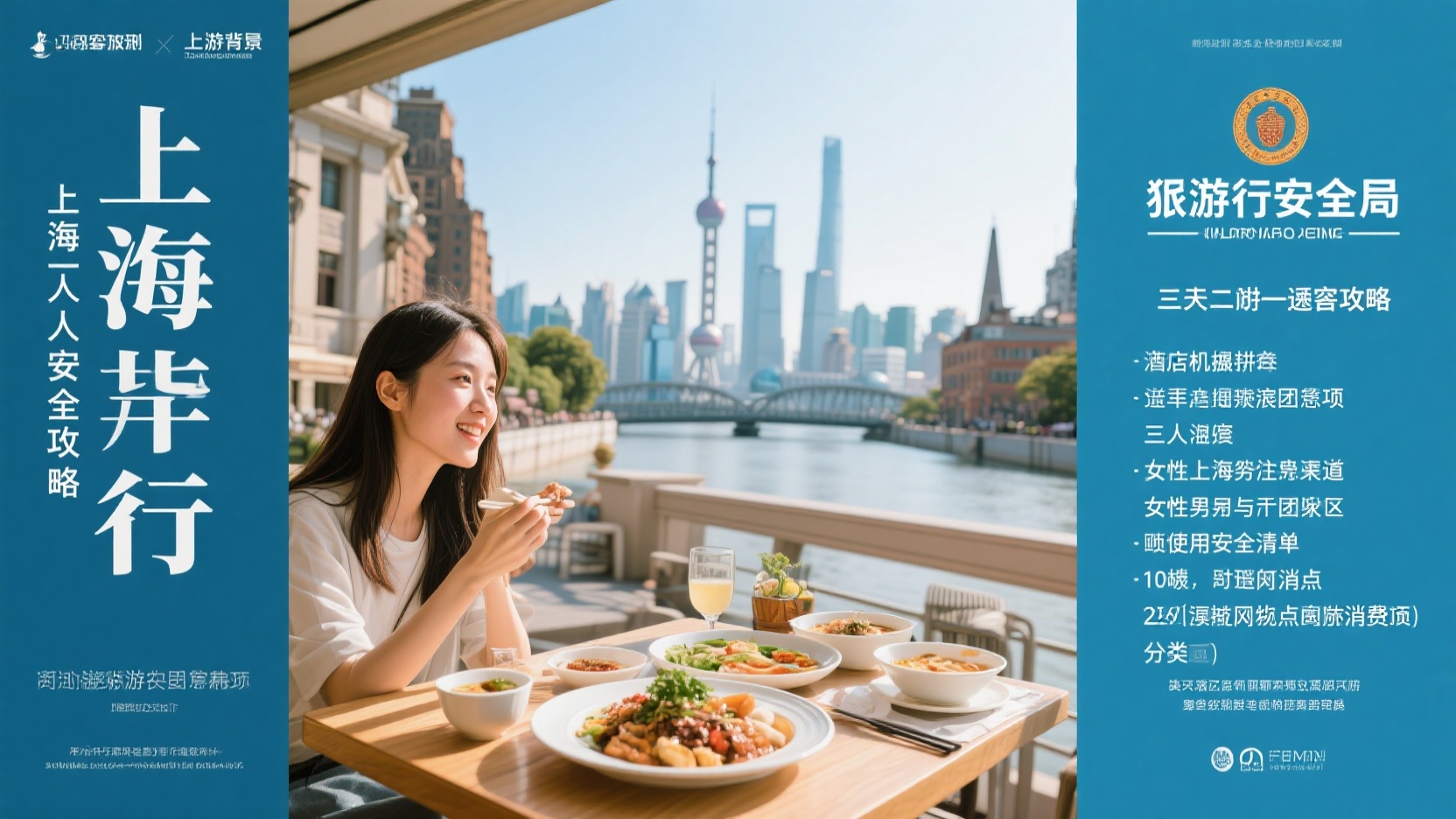
After traversing all 16 districts of Shanghai and making twenty solo trips, I discovered that the biggest fear when traveling alone in Shanghai isn't getting lost, but rather being crammed into the crowds of Nanjing Road and the Bund by travel guides, unable to capture the desired scenery or enjoy a proper meal. This post won't focus on "must-see" spots; instead, it will re-plan a three-day, two-night trip from my own perspective, addressing issues like finding comfortable accommodations, dining alone without feeling awkward, taking photos independently, and avoiding pitfalls when joining last-minute group tours.
1. Accommodation: Focus on the "safe area" between Jing'an Temple and Yuyuan Road, rather than People's Square.
Many people choose People's Square or Nanjing East Road for convenience, but these areas have many entrances and exits, and the crowds are dense in the mornings and evenings, making it tiring to drag luggage through the underpasses. I would recommend staying in the triangle area of "Jing'an Temple - Jiangsu Road - Yuyuan Road", where subway lines 2, 7, and 11 intersect. It's still lively after 10 pm, with a high density of convenience stores and drugstores, so you won't feel like the whole street has suddenly become quiet when you come back alone.
If you're on a budget, choose a hostel or mid-range chain with private female dormitories in the area. The key is to look for two things: 24-hour front desk and access control, and a subway station within a five-minute walk. Avoid the cheap guesthouses around the North Square of Shanghai Railway Station, as the population there is diverse. For solo male travelers, Changning Gubei and Xujiahui are also safe options, with well-lit streets and good CCTV coverage.
2. For solo diners: Choose "kitchen counter" or "shared table window" to enjoy a complete meal without ordering large dishes.
Eating alone in Shanghai isn't about not having a seat, but about ordering too much and wasting food, or ordering too little and ending up with a fast-food meal. Based on my experience, I recommend prioritizing three types of seating: counter seats at Japanese ramen or set meal restaurants, shared tables and benches at local noodle shops, and small window seats at pan-fried dumpling or wonton shops. For example, several local noodle shops near Dingxi Road are packed with nearby office workers sharing tables during lunchtime. Ordering a bowl of noodles and a side of vegetarian chicken, you can get a complete taste of Shanghai cuisine for just a few dozen yuan per person.
If you want to eat pan-fried dumplings, you don't necessarily have to queue at a particular flagship store. The neighborhood pan-fried dumpling shops along Yuyuan Road and Dongzhuanbang Road are often more spacious after 2 PM. If you're looking for Japanese food, some small ramen shops in Gubei have individual partitioned seating; you can order via your phone and have your food served by ringing a bell – no need for small talk. Save the hot pot and other Shanghainese dishes for the day you join a group purchase.
Remember this tip: small shops with signs saying "freshly cooked toppings" or "set meals" are usually friendly to solo diners; restaurants with too many large round tables may have extra food added if you go in alone, so try to avoid them.
3. Take photos without asking for help: Set up your tripod in these "city corners" for better photos than on the Bund.
Taking photos alone in Shanghai often requires asking passersby or bringing your own octopus phone and Bluetooth remote. The best spots in Shanghai that offer great photos without disturbing others are usually not directly in front of the main viewpoint, but rather on the sides or steps. The section from Yuanmingyuan Road to the Bund Source is a top choice; the red-brick buildings, wrought-iron streetlights, and Shikumen gables are perfect for propping your phone up on windowsills or steps to take portraits, and there are less than half the number of tourists compared to the Bund viewing platform.
Secondly, the riverside walkway outside the West Bund Art Museum and Long Museum is a good spot. The gray concrete steps, tower cranes, and the blank space on the river make it suitable for low-angle fixed shooting positions, and the light becomes softer after 4 pm. If you want to take photos near Wukang Road, avoid crowding directly under the Wukang Building. Go around to the pedestrian safety island diagonally opposite Tianping Road and use a telephoto lens to avoid the crowds.
In the evening, I recommend going to the mirrored corridor outside the west gate of the Pudong Art Museum. You can easily capture reflections and the Lujiazui skyline by placing your phone against the wall. Good shooting spots all have one thing in common: there are platforms, steps, or railings nearby, making it easy to fix your equipment and avoid the risk of standing in the middle of the road for your lens.
IV. Group Tours and Travel Companions: Only join "qualified small groups" and avoid casual encounters on the street.
If you're planning a three-day solo trip and want to visit places like Zhujiajiao, Guangfulin, or the city's historical districts, the easiest way to get scammed on a whim is by trying to solicit customers for "day trips" on the street or by sharing a ride at the entrance of the scenic area. It's highly recommended to search for "city walks or small suburban tours" on major online travel agencies (OTAs) the night before, with ratings of 4.8 or higher, a minimum of 6 people in the group, and insurance included. These tours come with electronic contracts, so it's not unusual for one person to sign up.
Hostels sometimes organize free night runs or city walks in their common areas. Before participating, confirm whether guests have priority and whether there is a charge. Don't easily go to non-public places with strangers. If "helpful" people offer to buy tea, see exhibitions, or exchange currency, simply refuse. There are many legitimate channels in Shanghai; you don't need to rely on chance encounters.
V. Solo Travel Safety Checklist: Regardless of gender, review these 10 points before setting off.
1. Lock the door from the inside upon entering the accommodation. A portable door stopper can be used. Female guests are preferred to choose floors with access control.
2. Confirm the subway route to the hotel during the day, and avoid walking through back streets and alleys at night.
3. Use a legitimate ride-hailing platform and share your trip details with your emergency contact.
4. Return to the hotel or borrow a power bank before the battery level drops below 30%, and do not turn off location services.
5. Keep your identification documents and spare cash in two separate places, and only carry what you need for the day.
6. Do not consume beverages once they are out of sight, regardless of whether they contain alcohol.
7. We do not accept group tours with "insider tickets" recommended by street touts, unlicensed tour guides, or strangers.
8. It's better to delay sending hotel names and exact itineraries rather than publishing them in real time.
9. Remember the last subway time; if it's past 10:30 PM, choose a licensed ride-hailing service instead of taking back roads.
10. In case of an emergency, first call 110 or 120, and notify the hotel front desk, describing the location as the nearest subway exit.
VI. Summary: Treat the three days as a triangular cycle of "stable accommodation - good food - plenty of photos".
A three-day, two-night trip can be planned like this: On the first night, just do two things upon arrival—check in, lock the door, and browse the convenience stores and subway stations near the hotel; on the second day, spend the day taking photos along the West Bund or Suzhou Creek, and have lunch and dinner at a single-serving restaurant; on the third day, store your luggage in the morning and join a short group tour or stroll along a side street, returning to Hongqiao or Pudong in the afternoon at your own pace. Don't overschedule your trip; the freedom of solo travel lies in not having to accommodate anyone.
Useful Tips: Use the "Metropolitan" card or a transit card for the subway; most venues in Shanghai are closed on Mondays, so make reservations one day in advance; bring a light jacket in the summer as indoor air conditioning is strong; it's best to finish enjoying the night view of the Bund and Lujiazui before 10 pm and return to the main street where people are.