
Avoid these Shanghai accommodation pitfalls | Local testimonials: Avoid these 3 areas recommended in travel guides, these 4 are truly convenient.
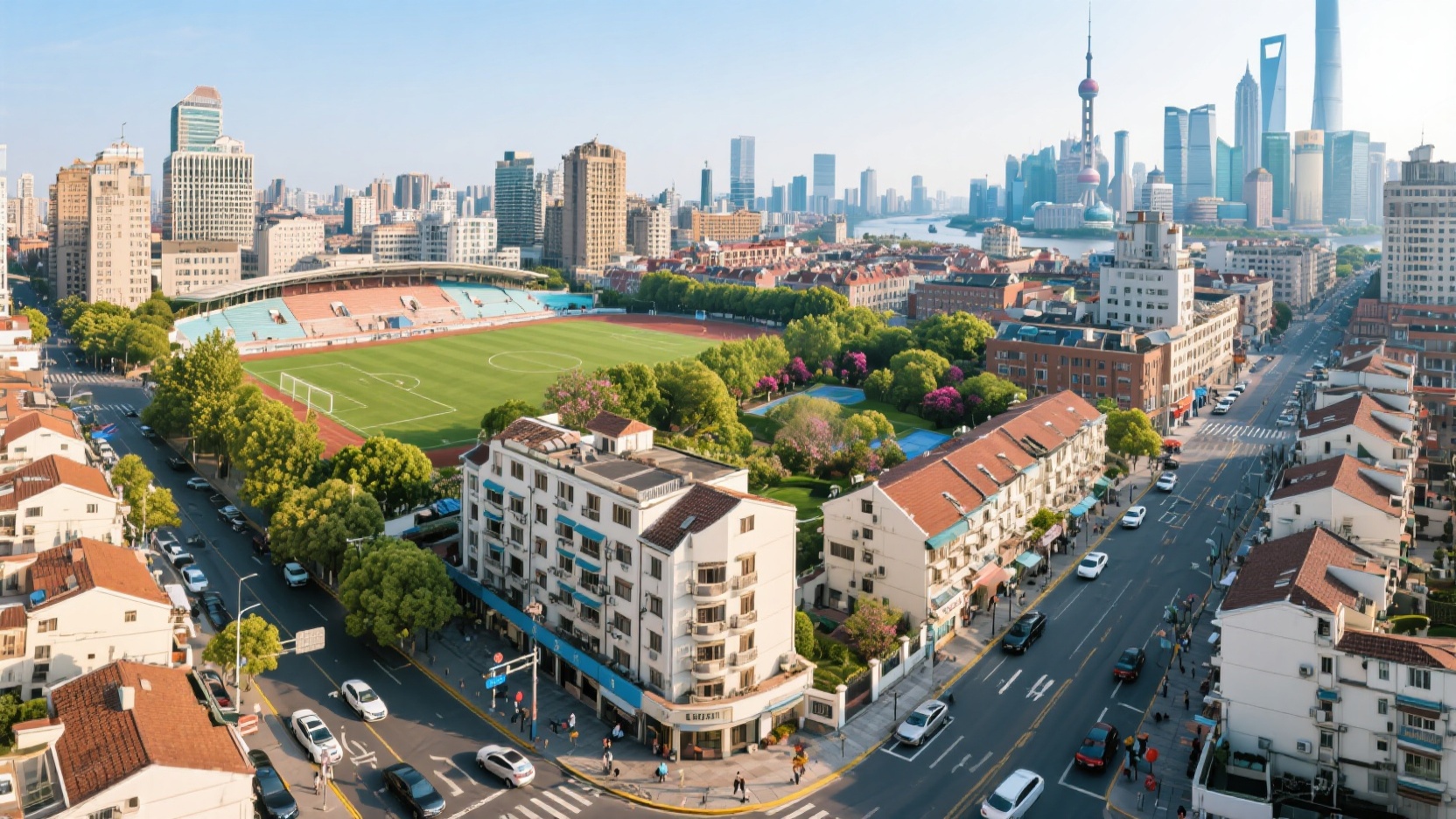
Every time I see a travel guide listing "Nanjing East Road and the Bund" as "must-stay places for first-time visitors to Shanghai," I know someone is going to spend a lot of money on noise. The biggest pitfall when choosing accommodation in Shanghai isn't its distance from attractions, but rather its perceived proximity to them.
Having lived in an old community in Puxi for five years and traveled to and from Shanghai more than twenty times, I can honestly say that truly comfortable accommodations in Shanghai are often relegated to less central areas with "mediocre transportation" in travel guides. Below, I'll first dismantle three trendy areas that locals would almost never choose to stay overnight, and then provide four truly suitable local residential areas.
Nanjing East Road/The Bund: The closer you are to the Bund, the harder it is to sleep at night.
Nanjing East Road Station is consistently one of the most crowded stations on the Shanghai Metro. During rush hour, dragging suitcases in and out of the station is like fighting a tough battle. Taking a taxi is even more frustrating. Due to traffic restrictions on many roads around the pedestrian street, you still have to drag your suitcase several hundred meters to the pick-up point after the driver accepts your fare.
After the daytime crowds disperse, the lighting in some backstreet areas is inadequate, and the soundproofing in hotels converted from old buildings is generally poor; at night, you can hear the sounds of garbage trucks and tourists' suitcases rolling around. The restaurants look bustling, but they're mostly tourist traps, costing around 100 yuan per person and often disappointing. Locals might come here for a meal, but they wouldn't sleep here.
Wukang Road-Anfu Road: Old Western-style houses seen through the lens of travel guides; staying inside feels like sleeping next to a scenic area loudspeaker.
Wukang Road and Anfu Road are indeed among the most photogenic streets in Shanghai, but "taking photos" and "living" are two different things. During the day, trendy cafes and crowds of people taking photos fill the sidewalks, and it's not quiet at night either, with bars setting up outdoor stalls, motorcycles, and live streamers making noise until the early hours of the morning.
Many of the so-called "old-style villa guesthouses" in this area are actually converted from old-style alleyways, with wooden stairs, thin partitions, and dampness. Some don't even have elevators, making it a nightmare if you have a lot of luggage. Parking is basically out of the question; the narrow roads and one-way streets will drive anyone with a car crazy. Locals prefer to stroll around rather than sleep near tourist attractions.
Lujiazui: After 8 p.m., you have to cross several streets to even find a convenience store.
Lujiazui gives people the feeling of being "high-end and convenient," but that's the logic of working during the day, not the logic of tourists staying overnight. After 8 p.m., the office buildings turn off their lights, the shops and small restaurants close, the streets are wide but empty, and you often have to walk a long way to get a late-night snack or buy a bottle of water.
Even more awkward is crossing the river. The Bund looks like it's right across the river, but taking a taxi through the tunnel is incredibly frustrating, and transferring at the subway station involves a considerable walking distance. Parking seems plentiful, but the commercial parking garages have complicated entrances and exits after closing time, and the fees are relatively high-end.
Hongkou Football Stadium/Lu Xun Park: Suitable for those who want to live in the old Shanghai lifestyle area
This is the place I would most recommend to first-time visitors to Shanghai who don't want to stay in touristy areas. It's near the intersection of Metro Lines 3 and 8, about a 20-minute ride to People's Square, and about a 20-minute taxi ride to the Bund during off-peak hours. The surrounding area has the pace of life typical of locals.
Shanyin Road, Tian'ai Road, and Duolun Road have many snack shops and long-established neighborhood stores. You can get decent pan-fried dumplings, wontons, and local-style noodles for just a few dozen yuan per person. There are also late-night food stalls. In the evening, people stroll around Lu Xun Park. The main roads are well-lit, making it safe for solo women to walk back to their hotels.
The downside is that parking is scarce in older communities, and street parking spaces are basically in high demand. It is recommended to choose hotels with parking spaces or park in Hongkou Longemont, rather than expecting to easily find a spot on the street.
Zhongshan Park/Tianshan: Suitable for families, Japanese food lovers, and those with transportation needs from Hongqiao.
Zhongshan Park is an underrated transportation hub in Puxi, where you can transfer to Metro Lines 2, 3, and 4. It takes about 10 minutes to Jing'an Temple, 15 to 20 minutes to People's Square, and about 25 minutes to the Bund Metro Station. It also provides direct access to Hongqiao Airport and the high-speed rail station without any hassle.
The surrounding area, including Dingxi Road, Yuyuan Road, and Gubei, boasts a high density of restaurants, offering both Japanese cuisine and local home-style dishes, with a wide range of options from budget to high-end. The community is well-established, the shopping district is bustling in the evenings, and the return journey to the hotel is safe, avoiding the need to navigate through quiet alleys.
Parking is better than in the city center. Longemont and surrounding hotels have stable parking spaces, but there are fewer street parking spaces near the old alleys of Yuyuan Road. If you are driving, it is recommended to confirm the hotel parking in advance.
Huamu/Lianyang: Suitable for families with children, those driving, and those visiting Disneyland.
If you're traveling with children and a stroller, or planning a trip to Disneyland or Pudong Airport, staying in Huamu Lianyang will be much more comfortable than squeezing into Lujiazui. It takes about 20 minutes by subway line 2 to Lujiazui, and about half an hour by taxi across the river to the Bund. Driving or taking the subway to Disneyland is also within an acceptable range.
This area has wide streets, gated communities, and plenty of greenery. Century Park is right next door, making it quiet and safe at night. Convenience stores and community restaurants are evenly distributed. Lianyang Plaza and Thumb Plaza offer a variety of dining options, without the inflated prices often associated with touristy establishments.
Parking is very convenient for those driving; shopping malls and most hotels have ample parking spaces, making it a rare "family-friendly" option among accommodations in Pudong.
Daning/Zhabei Park: Suitable for those who drive to shop and those who want a larger room.
Daning's advantage is that it's like living on the outskirts of the city center, but without the parking anxiety of the city center. It takes about 20 minutes to get to People's Square by Line 1, about 25 to 30 minutes to the Bund, and about 20 minutes by taxi to Jing'an Temple, so the transportation is not bad.
The Daning International Commercial Plaza and Jiuguang Center have a high concentration of restaurants, where you can eat well for just tens to hundreds of yuan per person. The area is also safe, with residents jogging and taking walks in the evenings. It's a good choice for people who like comprehensive commercial facilities and can easily go shopping in the evenings.
Parking is much better than in the old town. There are plenty of parking spaces in shopping malls, and some hotels offer affordable or free parking, which is very convenient for people driving.
In conclusion
"Don't ask the locals, I didn't tell you" Tips: 1. Don't try to save time by staying at Nanjing East Road, because queuing to enter and exit the station, taxi restrictions, and dragging your suitcase for a long distance will consume at least half an hour of your energy, which is not worth it.
2. Wukang Road is suitable for taking photos during the day. When staying at a hotel, choose a high-rise building on a back street or go directly to a quiet area like Zhongshan Park. Don't be fooled by photos of old villas.
3. Lujiazui is suitable for climbing to enjoy the night view and having a business meal, but it is not suitable as an overnight base, as finding food and crossing the river at night are very expensive.
4. When traveling with elderly people or children, prioritize checking whether subway transfers involve climbing long passageways and whether elevators are readily available, rather than just looking at the straight-line distance on a map.
5. Self-driving tourists should try to choose areas with parking spaces provided by shopping malls or hotels. Parking on the roadside in old communities in Puxi is basically a matter of luck, and illegal parking is likely to result in a ticket.