
What do people in Shanghai eat in a day? I checked the locals' schedules.
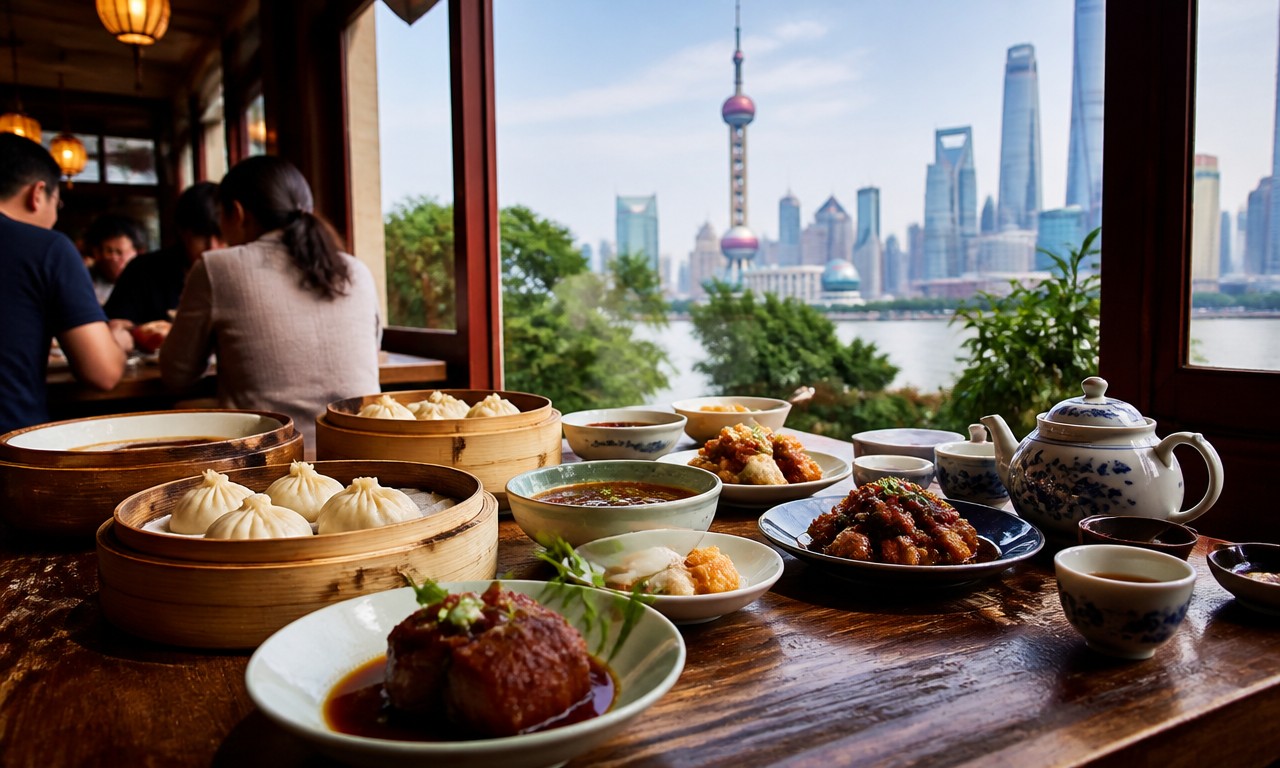
Many readers have asked me: How should I plan my Shanghai food tour? Is there a street where I can eat my way from one end to the other? I've thought about this question carefully, and the answer might differ from most guides—the key to Shanghai cuisine isn't "where to eat," but "what time to eat." Locals are very particular about the timing of their meals; many foods have a clear "best before" period. If you miss that time, the same food from the same restaurant can taste significantly different. So this guide doesn't recommend a must-eat list. Instead, it follows a daily schedule, explaining what to eat at each time of day, why that time is best, and how to order.
6:00 AM First pot of rice at the morning market
The best things to eat during this time are pan-fried buns and potstickers. The reason is simple: these two items are at their peak for only a few minutes after coming out of the pan—the bottom is crispy, the filling is juicy, and when you bite into them, the piping hot broth bursts out. Once they cool down, the bottom softens, and the broth is absorbed by the dough, and they become just two different things. The market opens at 6 a.m., and the first batch is usually when the chef has the best control of the heat, resulting in an even oil temperature and the perfect color and crispness for the bottom. Plus, there are fewer people early in the morning, so you don't have to wait in line for the next batch, and you can eat them immediately after they're cooked.
If you wait until after 10 a.m., there will be many people and many pots, the pace of serving will be faster, the cooking time will be more inconsistent, and the food will sit for a longer time after it's cooked. Locals who want to eat pan-fried dumplings either go to the early morning market or go during the off-peak hours around 3 or 4 p.m. to avoid the lunch rush.
8:00 Local breakfast
Eight o'clock is the time when Shanghainese people eat breakfast. Salty soy milk with fried dough sticks, glutinous rice balls, and small wontons are common dishes on the locals' tables. Why this time? Most breakfast shops in Shanghai are open between 6:30 and 9:30, so going at eight o'clock is the safest bet—you won't be left out of some items as early as 6 o'clock, and you won't be left out or cold as you are close to closing time after 9 o'clock.
The savory soy milk, with its dried shrimp, seaweed, pickled mustard greens, and crispy fried dough sticks, poured over hot soy milk, is the most authentic and down-to-earth bowl of soup of the day. Rice balls must be eaten hot; the glutinous rice hardens when it cools, significantly altering its texture, which is why it's so particular about timing. The broth and softness of wonton wrappers are most satisfying in the morning; by noon, many shops have diluted the broth, making it less flavorful than the first batch of broth used at the morning market. So, if you're only having breakfast in Shanghai, make sure you have time by 8 a.m.—don't oversleep.
11:00 Lunch Service
Eleven o'clock is the time when the lunch service just opens. At this time, the best thing to eat is noodles—local Shanghai noodles like yellow croaker noodles, spicy pork noodles, and braised pork noodles. The reason is simple: the first batch of broth and toppings at the noodle shop tastes the most authentic when the lunch service starts, before the broth has been diluted with water repeatedly. The fish broth for yellow croaker noodles is made by simmering fish bones fresh; going at eleven o'clock means a shorter wait and the broth is at its richest. The spicy pork topping for spicy pork noodles is freshly stir-fried, with the diced pork still carrying the wok hei (wok aroma), making it the most delicious accompaniment to the noodles.
Most noodle shops in Shanghai only serve lunch and dinner. The most convenient time for lunch is between 11:00 AM and 12:00 PM, when there's no queue and the ingredients are fresh. After 12:30 PM, many shops have waiting times, and the quality of food can become inconsistent due to the chefs working continuously. Additionally, pickled and marinated dishes are a great accompaniment to lunch; cold dishes like pickled edamame and pickled chicken are refreshing with noodles, perfect for those who don't want to eat too much at lunchtime. The core logic of lunchtime is to "catch the first batch," similar to the principle of pan-fried buns at the morning market.
3:00 PM Afternoon tea or sweet soup
Three o'clock in the afternoon is "snack time" for older generations in Shanghai. The best thing to eat at this time isn't Western afternoon tea, but traditional snacks like "shuangdang" (stuffed glutinous rice balls), sweet osmanthus lotus root, and fermented rice balls. Why three o'clock? In the Shanghainese dining rhythm, lunch is finished around 11:30 am, and dinner starts between 6:30 and 7 pm. Around 3 pm is precisely when the feeling of hunger arises. "Shuangdang" consists of stuffed gluten balls with tofu skin rolls served in clear soup; the portion is small, just enough to fill you up.
Sweet lotus root with osmanthus and glutinous rice balls in fermented rice wine are both sweet, so eating them at 3 pm won't affect your appetite for dinner. There's another advantage to going at this time: many traditional pastry shops only open in the afternoon, and going at 3 pm means they've just made their first batch of sweet lotus root and fermented rice wine, so the ingredients are at their best. After 4:30 pm, it's close to closing time, and many items will be sold out, so you might not find anything. If you only want to experience traditional Shanghai pastries during afternoon tea, just remember 3 pm.
18:00 Night market or evening market
Six o'clock in the evening is the time when Shanghainese people eat their main meal. The best time to eat this is for authentic Shanghainese cuisine—braised pork belly, stir-fried shrimp, braised pork belly with clover and pork belly, and pickled bamboo shoots with pork. Why six o'clock in the evening? Shanghainese cuisine is heavy on oil and sauce, and eating it at noon can make you sleepy in the afternoon, so it's most comfortable to eat in the evening. Moreover, many restaurants that serve Shanghainese cuisine prepare their ingredients fresh at two or three in the afternoon, so the wok hei (wok aroma) is at its best when they open at six o'clock.
Braised pork belly needs to simmer for two to three hours. The first batch served at dinner is often the pot that started simmering in the afternoon, cooked to perfection, with the fatty parts melted but not mushy. Fried shrimp needs to be fried fresh; if you go at 6 PM, you'll get crispy shells right out of the fryer. If left too long, the shells soften, and the taste suffers significantly. Offal dishes like braised pork belly and pork intestines are made in larger quantities at dinner than at lunch, ensuring faster ingredient turnover and better freshness. Locals typically arrange meals between 6 PM and 6:30 PM, so going at this time ensures you won't miss your meal. During this time, don't worry about which restaurant to choose; the key is to arrive right when they open, as the first batch of food guarantees the best quality.
22:00 Late-night snack
After 10 PM, Shanghai's late-night food scene is dominated by wontons, fried pork chops with spicy soy sauce, and crayfish. Wontons are a traditional snack from the era of street vendors; although less common now, some late-night eateries still offer them. The reason for eating them at this time is the thin wonton wrappers and the broth with lard and scallions. A hot bowl of these late at night is more satisfying than eating them during the day. Eating them during the day is about novelty; eating them late at night is about comfort—completely different experiences.
Fried pork chops with spicy soy sauce are the soul of Shanghai's late-night snacks. The crispy crust of the freshly fried pork chop and the sweet and sour taste of the spicy soy sauce are especially invigorating late at night. Crayfish season starts to get busiest around 10 PM. If you go at this time, the crayfish are freshly arrived from the evening market and are plumper than those from the afternoon. Plus, eating crayfish during the late-night hours means tables aren't turning over, so you can take your time peeling them. If you have a tight schedule during the day, you can't go wrong by reserving any one of these three options for your late-night snack.