
The Flavors of Ningbo Hidden in the Markets: 10 Local Specialties and Ways to Eat at Zhangbinqiao and Baisha Markets
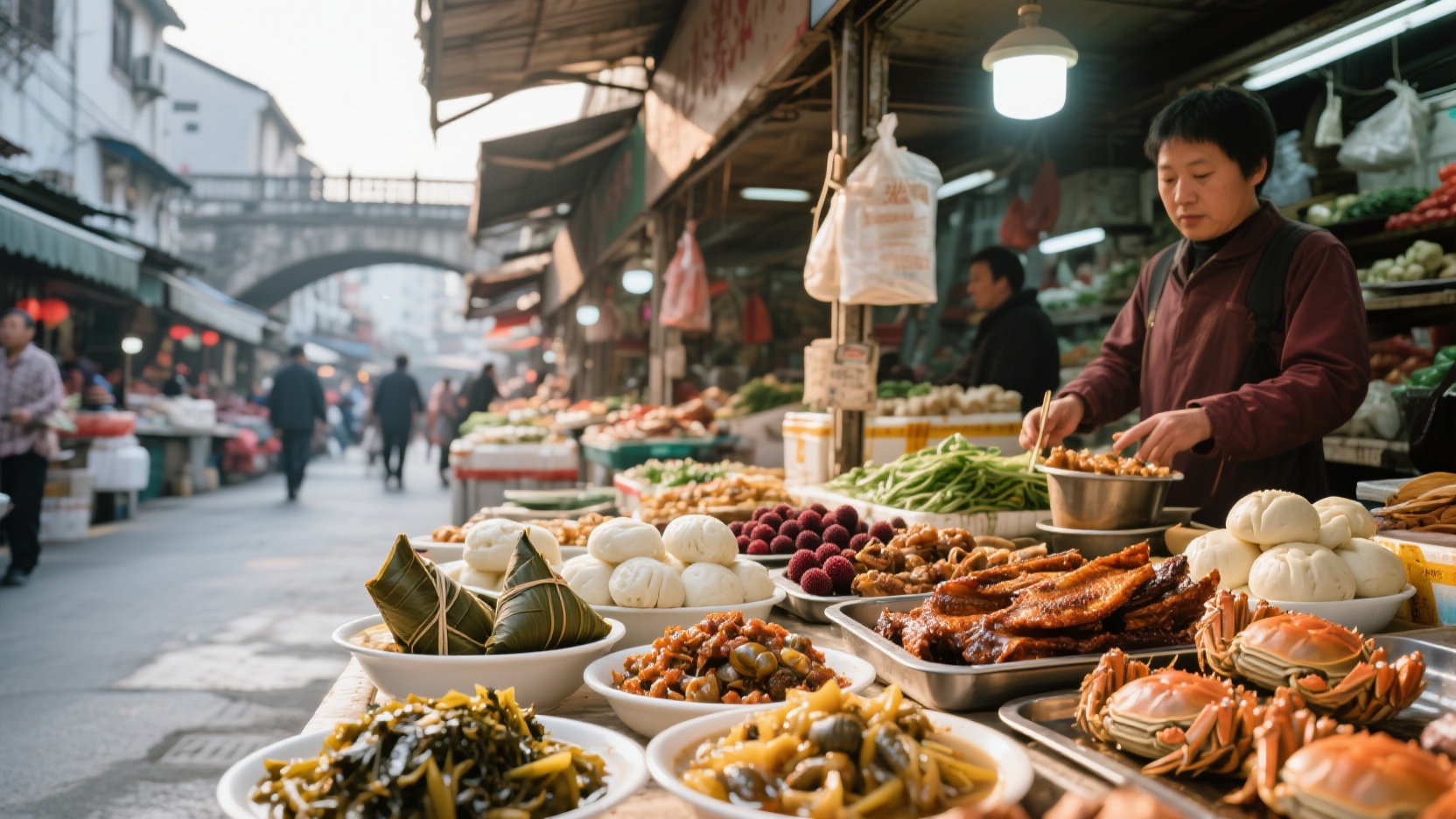
At 5:30 a.m., the seafood section of Zhangbinqiao Market was still not fully awake, but the first batch of braised dishes at the cooked food stalls was already taking on color. Here, there are no standardized offerings like those in tourist food streets, but instead, the most authentic flavors of Ningbo people's daily meals are found. To understand the "harmonious blend of salty and savory" in Ningbo cuisine, you don't need to go to a restaurant first; start at these two old markets—Zhangbinqiao and Baisha Markets.
Cooked food section: Braised vegetables and smoked fish, the art of cooking cold dishes.
In Ningbo, "simmering" refers to reducing the sauce over low heat, allowing the savory flavor to penetrate the ingredients. Simmered vegetables at the market's cooked vegetable stalls typically use the hearts of Chinese cabbage or large-headed cabbage. The ratio of soy sauce to sugar varies from stall to stall. Good simmered vegetables have a glossy black color but are not bitter, and the stems still retain their fibrous texture. When choosing, check if the braising sauce is thick and clings to the sides of the dish, and if the leaves are intact and not broken. Simmered vegetables are best eaten cold. After buying them, do not reheat them; simply serve them with rice porridge or congee to fully appreciate the savory flavor and sweet aftertaste.
Smoked fish, often called "bao yu" in Ningbo, is made by deep-frying chunks of grass carp or silver carp and then soaking them in a sweet and savory braising sauce. A good version available in the market has small holes on the surface of the fish chunks, allowing the braising sauce to penetrate thoroughly, resulting in tender, juicy meat. When buying smoked fish, choose pieces that have been soaked in the braising sauce for a sufficient amount of time that day; the skin should be slightly wrinkled and a bright red color. It can be served as a cold dish or as a side dish with braised vegetables, a common "double platter" for entertaining guests in Ningbo households.
Handmade snack stall: The aroma of rice from alkaline rice balls, steamed rice buns, and alkaline rice dumplings.
In Zhangbinqiao Market, there are several stalls that sell only rice-based snacks year-round. Ash-water dumplings are a unique cold snack from Ningbo, made with rice straw ash water or edible alkaline water, glutinous rice flour, and brown sugar. They are flat and round in shape, and translucent brownish-yellow in color. Good ash-water dumplings are elastic, with a slight "crunch" when bitten, but not sticky. When choosing, check if the surface is smooth and if it springs back quickly when squeezed. Ash-water dumplings must be eaten cold; they are best enjoyed with tea in summer.
Rice buns come in sweet and plain flavors, made from fermented or steamed short-grain or long-grain rice. They have a fine porous surface and a texture somewhere between steamed sponge cake and glutinous rice cake. When buying rice buns at the market, choose those that are uniform in size and not sticky at the bottom. Before eating, you can steam them for three minutes to soften them and enhance the rice aroma.
Alkaline rice dumplings (zongzi) are not only a popular dish during the Dragon Boat Festival in Ningbo; they are often found in food stalls at markets. The glutinous rice is soaked in alkaline water and then wrapped into four-cornered dumplings. After cooking, they are pale yellow in color and have a firm texture. They are best enjoyed cold with white sugar or honey, which brings out the alkaline flavor even more. When choosing zongzi, check if the bamboo leaves are fresh and if the rice grains are clearly separated after peeling them open.
Pickled and preserved vegetable section: a savory trio of fermented winter melon, pickled mustard greens, and mud snail and crab paste.
Moving to the pickle stalls at Baisha Market, the flavors are the most straightforward. Stinky winter melon is one of Ningbo's "Three Stinky Delicacies," made by naturally fermenting winter melon chunks. It has a pungent smell but a refreshing taste. When buying stinky winter melon, choose pieces with clear broth and intact chunks; if the broth is cloudy or the chunks are soft, it has over-fermented. Drizzle a few drops of sesame oil on top, and serve with white porridge or rice—it's an irreplaceable "rice-suppressing hammer" for local elders.
Snow cabbage, also known as pickled mustard greens, is an indispensable ingredient in Ningbo cuisine, used in dishes like snow cabbage soup with yellow croaker and stir-fried rice cakes with snow cabbage. Bulk snow cabbage from market stalls is yellowish-green in color, with clearly defined stems and leaves, and is crisper than vacuum-packed snow cabbage. When selecting snow cabbage, grab a handful and smell it; it should have a sour aroma without any rancid smell, and feel slightly damp but not dripping wet. If you can't finish it all at once, remove it with clean chopsticks and refrigerate it to prevent water from getting in.
Mud snails and crab paste are popular pickled seafood items in Ningbo markets. Mud snails are selected from mud snails in their shells and marinated raw with Shaoxing wine, sugar, and salt. Good mud snails have thin shells and plump meat, with a fragrant aroma of wine and no fishy or sandy taste. When selecting, check if the liquid inside the jar is clear and if the snail meat is plump. For crab paste, choose pieces with clearly defined crab meat and roe, a natural color, and not too finely broken. Both are ready to eat after opening, but mud snails are better paired with porridge, while crab paste can be used as a dip for Ningbo rice cakes.
Seasonal Fruit Stand: The Early Summer Sweetness of Waxberries
The fruit stalls at the entrance of the market follow the seasons. In early summer, Cixi bayberries are a glossy purplish-black. When choosing bayberries, select those with plump berries, rounded flesh, and a dry surface without any oozing juice. Bayberries don't keep well; soak them in lightly salted water for about ten minutes after buying them to remove insects and enhance their sweetness. After the bayberry season ends, local peaches take over. Again, choose peaches with a strong aroma and a firm, springy texture when gently squeezed; size isn't important.
The value of these two markets lies not in taking photos, but in "seeing." You see the vendor's obsession with controlling the heat of the braising liquid, the old wooden spoon used for years at the pickle stand, and the fruit vendor hiding the reddest basket of bayberries behind his back for regular customers. Markets don't tell stories; they present the facts: what's in season, how to eat what ingredients, and what flavors make locals willing to get up early and queue. Visiting a market is the best way to experience a city—especially Ningbo, a city where "salty and savory" is ingrained in daily life. The answers are never on the menu, but in your shopping basket.