
Can we take the same itinerary when taking elderly people and children to Ningbo to see its culture?
This question deserves a serious answer because Ningbo's cultural and artistic resources are scattered, and differences in physical stamina, interests, and pace of stay among different groups have a greater impact on the actual experience than any "must-see" list in any travel guide. For example, at Tianyi Pavilion, an artsy type might spend two hours, while a child might only stay for fifteen minutes; on the Bund, photographers might wait for the evening light, while elders might just want to get back to the hotel for a foot bath. This article doesn't list "must-sees," but rather breaks it down into three durations: half a day, one day, and two days, and further into four categories: families, artsy types, elders, and photographers, clearly outlining routes that suit each group.
Branch 1: You only have half a day – first decide whether or not to touch the "old town cultural core".
Half a day is the most common duration for cultural and artistic tours in Ningbo, especially for passersby and business travelers who happen to be visiting on the side. The first step in identifying your travel style isn't choosing attractions, but rather determining your pace of travel.
For families with young children, I recommend visiting only one place in half a day: the Ningbo Museum. The reason is simple: it has ample indoor space, a clear layout, and uncrowded exhibition halls. Children can see the reconstructed street scenes of "Old Ningbo" and Hemudu pottery without having to spend time outdoors in the sun or rushing around. Don't try to do too much; visiting two places in half a day will inevitably lead to adults being tired and children being restless.
For those with an artistic bent, a half-day trip can include the Ningbo Art Museum and the northern section of the Old Bund. The Ningbo Art Museum is located at the northern end of the Bund; the building itself was converted from an old wharf warehouse. Limit your visit to about an hour. Afterward, walk along the Yong River to the Old Bund; the light is perfect between 4 and 6 pm. This path is short and suitable for a leisurely stroll without rushing.
For groups of older adults, it's best to limit walking distance in half a day. Tianyi Pavilion is the safest option. It's not just a library; it includes gardens, a stele gallery, courtyards, plenty of places to sit and rest, and ample shade, allowing for a slower pace. Avoid taking older adults to two places requiring walking in half a day; Tianyi Pavilion alone is sufficient.
The choice of half a day for the photography team depends on what you want to shoot. If you want to capture the everyday life of the old city, go to the area from the Drum Tower to Yongshou Street; if you want to shoot river views and architecture, the section along the river from the Bund Bridge to the Old Bund is the best. Don't go at noon, the light will be harsh. The streets and alleys of Ningbo only have depth and texture before 9:00 am and after 4:30 pm.
Branch Two: You have a whole day – you can start by combining "indoor in the morning + outdoor in the afternoon".
A full day is the most comfortable length for a cultural and artistic tour of Ningbo, allowing you to truly experience the city's rhythm. The key to finding the right fit is to stagger your visits between places that require quiet and places that require walking.
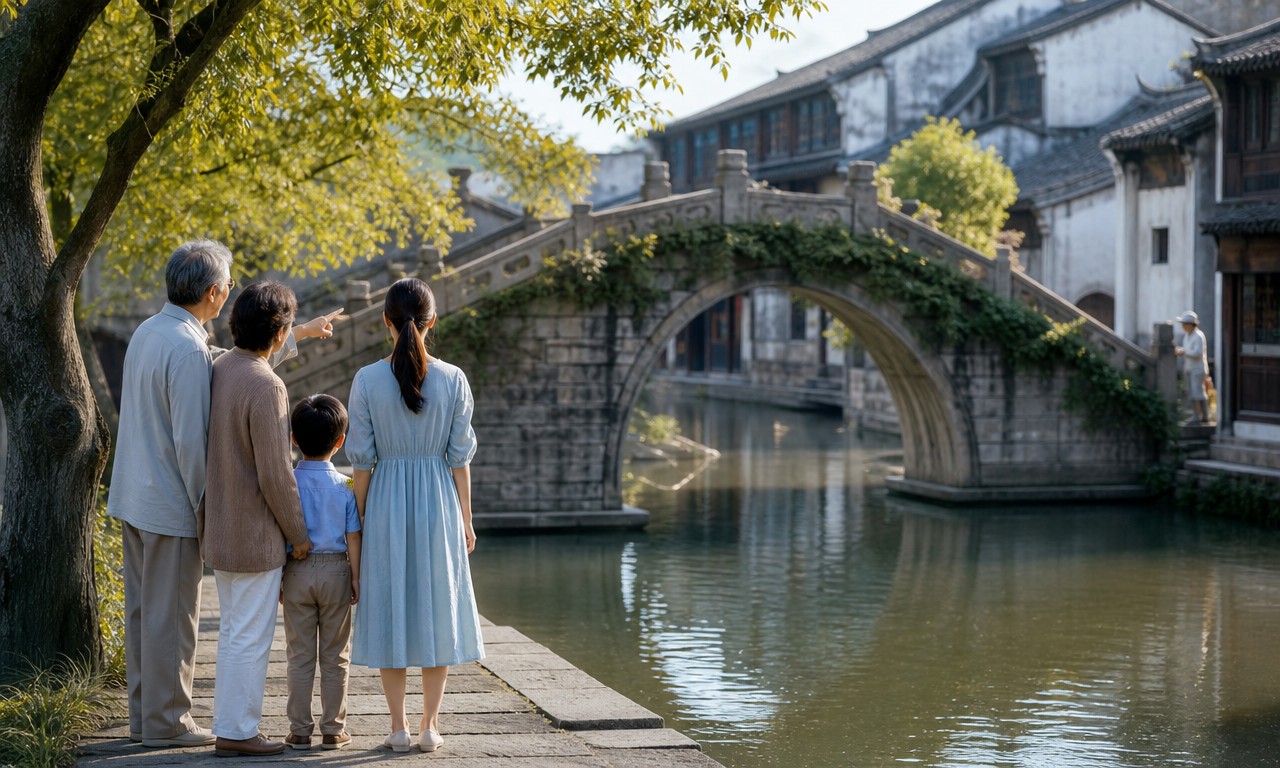
A typical day for a parent-child group includes a visit to the Ningbo Museum in the morning, lunch at the Yinzhou Cultural Square across the street, and a trip to Hanling in Dongqian Lake in the afternoon. Hanling is an old water town with bridges, rivers, and small shops, allowing children to run around freely without tiring parents. Avoid taking children to two museums in a single day; it will exhaust their patience.
A typical day for the artsy group: morning at the Ningbo Art Museum, lunch at a riverside café on the Bund, afternoon at Moon Lake and Tianyi Pavilion. Moon Lake is an open garden, while Tianyi Pavilion is a closed garden; the two places have different cultural densities, making it a perfect day to explore different aspects of culture. In the evening, return to the Drum Tower area and find a used bookstore or independent café to wrap things up.
For seniors, a day should be more relaxed. In the morning, take your time strolling through Tianyi Pavilion; at noon, find a restaurant with seating by Moon Lake; and in the afternoon, walk around Moon Lake Park, admiring the pavilions and the water. There's no need to add any new attractions. Seniors' need for "cultural experiences" is often not about quantity, but about being able to sit down and engage with the content.
For a photography team's day, it's recommended to schedule it by "light" rather than "location". In the morning, go to Moon Lake or Drum Tower to photograph the old city awakening; in the late morning, go to Tianyi Pavilion to photograph the details of the gardens; in the afternoon, go to the Bund to wait for the sunset; and in the evening, go to the Bund Bridge or the Yongjiang River to photograph the blue hour. There are four locations a day, and you should allow time for movement between each location. Don't miss the best light just to go to another place.
Branch 3: You have two days—you can leave the main city and form groups according to the rhythm.
Two days means you can have a relatively complete cultural and artistic itinerary in Ningbo, and you can also choose accommodation in an area that better suits your pace. The key to this is deciding whether to venture outside the central areas of Haishu and Yinzhou on the second day.
For a two-day family trip, you can arrange it as "one day in the city, one day in the suburbs." On the first day, visit the Ningbo Museum and Hanling, and on the second day, go to Cicheng Ancient Town. Cicheng offers the ancient county government office, the Confucius Temple, and a rice cake making experience. The roads are wide and safe, suitable for children. It's recommended to stay overnight in the city on the second night for convenient return travel.
For the artsy group, the first day can be dedicated to the art museum, Moon Lake, Tianyi Pavilion, and the Old Bund. The second day can include the Southern Song Dynasty Stone Carving Park and Hanling by Dongqian Lake, or the Ningbo Gang Museum. The Ningbo Gang Museum, located in Zhenhai, is less crowded and has a solid exhibition, making it suitable for those who want to avoid the crowds and truly appreciate the exhibits. You can stay near the Old Bund at night; the atmosphere along the river at night is completely different from during the day.
For the seniors' two-day trip, the first day was spent in the Yuehu and Tianyige area, and we chose to stay nearby to minimize travel. On the second morning, we went to Qita Temple, which is quiet, tree-lined, and filled with the aroma of incense, offering a slower pace than rushing to the outskirts. Don't make the seniors change accommodations repeatedly just to "go to more places"; stability is more important than variety.
The photography team's two-day trip consisted of two parts: Day 1: shooting the city center – Moon Lake at dawn, Tianyi Pavilion Garden, the Bund at sunset, and the Bund Bridge at night. Day 2: getting up early to shoot the morning mist on Dongqian Lake, shooting the water town in Hanling in the morning, and shooting the details of ancient buildings in Cicheng in the afternoon. The photography team's schedule was based on the light, not the opening hours of the attractions, which was the opposite of the other three teams.
Branch 4: Cross-group general judgments – Where do we live, what season, how many days are enough, what to give?
Where you stay depends on which category you belong to. Families and groups with elderly members are suitable for staying on the east side of Yuehu Lake or in the central area of Yinzhou District, where it's quiet, convenient for dining, and easy to get a taxi. Artsy groups and photography groups are suitable for staying near the Old Bund, where there's a lively atmosphere in the mornings and evenings and it's easy to walk around.
What season is best to visit? Spring and autumn are the best. In spring, the greenery of Yuehu Lake and Tianyi Square is just right, and in autumn, the evenings along the Old Bund are crystal clear. Summer and winter in Ningbo are not suitable for long outdoor cultural and artistic activities. In summer, it's almost impossible to walk outdoors at midday, and in winter, the wind along the river is too strong.
How many days is enough? One day is enough for the core cultural areas of the city; two days are suitable if you add Dongqian Lake or Cicheng; if you want to go further to Beilun or Ninghai, consider three days or more. Don't fill your cultural and artistic itinerary in Ningbo like a checklist; the pace of this city is not fast.
What kind of souvenirs should I bring? You could bring bookmarks or postcards from Tianyi Pavilion or Ningbo Museum. If your elders like, you could buy some traditional Ningbo pastries near Yuehu Lake. Don't bring touristy souvenirs that you can buy anywhere; those things are the same in any city. A handwritten postcard is much more authentically Ningbo.