
Lhasa at a leisurely pace | 7 days 6 nights in-depth slow travel, with options for gentle slopes suitable for seniors and children, or hot springs and ancient towns.
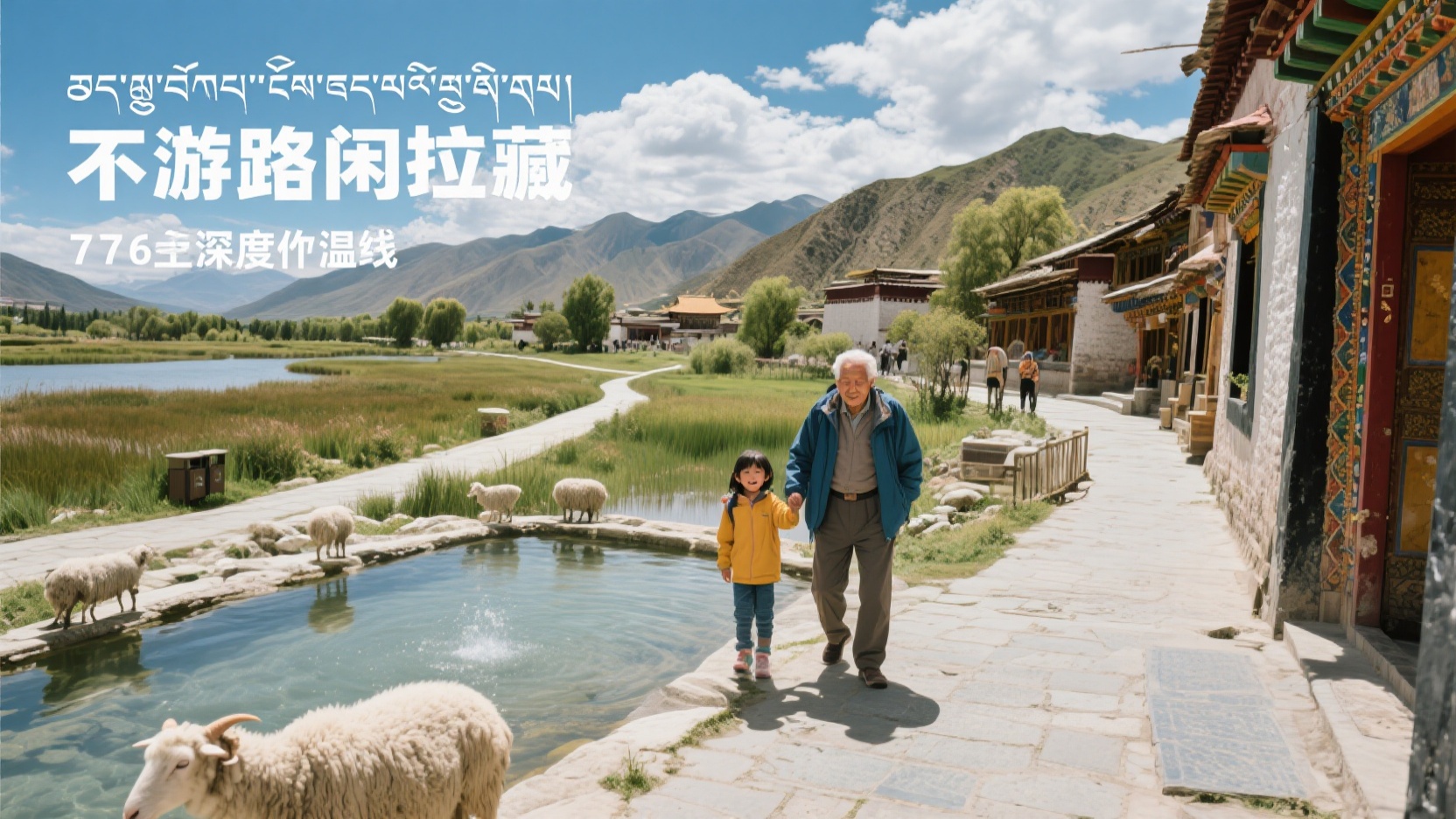
Lhasa is not suitable for rushing, especially when traveling with elderly people or children. The 7-day, 6-night itinerary should focus on altitude acclimatization and low-intensity walking. The following itinerary only retains 2 to 3 key points each day. Days 3 and 4 are designed as two separate routes, allowing you to choose one based on your physical condition and interests, thus avoiding turning your holiday into a training exercise.
Day 1 Arrival and Acclimatization: Slow walking only on flat ground
We recommend choosing a flight or train that lands before noon, allowing your body to acclimatize in the afternoon. After checking in, avoid showering and climbing stairs; simply take a leisurely 15-20 minute walk on flat ground around the hotel. In the evening, if you don't experience headaches or chest tightness, you can take a walk in Potala Palace Square or the east side of Zongjiao Lukang Park, keeping the total time under one hour. No temple visits or hiking activities are scheduled for that day. Dinner should consist mainly of porridge, noodles, and vegetables; avoid alcohol and large meals.
Day 2 Potala Palace and Zongjiao Lukang Park
To enter the Potala Palace in the morning, advance reservations are required, and you must bring your ID card. Once inside, slowly ascend the zigzagging ramp, resting at platforms every so often; avoid racing with others. The tour focuses on the core halls of the White and Red Palaces. Since there are many stairs inside, seniors can focus on the main routes and are not required to see everything. In the afternoon, rest by the Dragon King Pool in Zongjiao Lukang Park. The terrain is flat and shady, suitable for seniors and children to recover their energy. You'll often see locals dancing the Guozhuang dance in the park; sitting and watching for a while is more worthwhile than continuing to rush through the sights.
Day 3-Day 4: Choose one of two paths
Choose only one route for these two days; I don't recommend doing both. Route A focuses on a slower pace of cultural experience, while Route B focuses on relaxing with hot springs and wetlands. Both are suitable for seniors and children.
Two-day leisurely tour of Thumba Ancient Town (Route A)
Day 3: Depart from Lhasa to Thonpa Ancient Town, approximately a 2-hour drive. The ancient town is famous for its Tibetan incense making and watermill corridors; the walkways follow the irrigation canals and have almost no steep slopes. You can visit a Tibetan incense workshop and let children experience the incense-making or drying process, but please communicate with the workshop in advance and pay attention to safety. Overnight in Thonpa or Nyemo County; no activities are planned for the evening. Day 4: Continue strolling through the ancient village alleys in the morning, return to Lhasa in the afternoon, and rest at the hotel or do some simple stretching in the afternoon.
Route B: Yangbajing Hot Springs and Lalu Wetland Nature Reserve
Day 3: Travel to Yangbajing Hot Springs, approximately a 1.5-hour drive. When soaking in the hot springs at high altitude, each session should not exceed 30 minutes. Afterwards, keep warm to avoid catching a cold. You can stay overnight in Yangbajing or return to Lhasa. Multiple consecutive hot spring soaks are not recommended. Day 4: Return to Lhasa in the morning and visit Lalu Wetland National Nature Reserve in the afternoon. The boardwalks within the wetland are gentle, suitable for leisurely walks. You can also bring binoculars to observe waterbirds. Note that Lalu Wetland has limited opening hours and areas; check in advance whether it is open for the day.
Day 5 Norbulingka and Tibet Museum
In the morning, visit Norbulingka. The paths within the park are gentle and shady, making it suitable for strollers or wheelchairs. In the afternoon, head to the Tibet Museum. An indoor visit will shield you from the strong afternoon UV rays and provide valuable historical and cultural background information. The two sites are adjacent and easily walkable, making for a low-energy day. Advance reservations are required for the museum, and please do not bring lighters or other prohibited items inside.
Day 6 Zhaqi Temple and Sera Temple
In the morning, visit Zhaqi Temple. The temple is relatively small with few steps, making it suitable for a quick visit. In the afternoon, head to Sera Monastery. The debating sessions usually begin around 3 PM; you can sit and wait outside the debating area beforehand. The debating area is paved with gravel, so be careful if you have children. Some halls in Sera Monastery have high thresholds; elderly people can use the walls for support when walking. In the evening, return to the Barkhor Street pilgrimage route and simply stroll around with the flow of people; there's no need to enter every shop.
Day 7: Low-intensity wrap-up before the return trip
If your flight or train is in the afternoon, you can spend the morning buying souvenirs near Barkhor Street or relaxing at Zongjiao Lukang Park. Hiking or visiting distant attractions on the day of your return trip is not recommended. Depart from the city center two hours in advance to the airport or train station to allow sufficient time for security checks and luggage processing.
Recommended gentle slope routes suitable for the elderly and children
The top choice is the "Zongjiao Lukang Park - Potala Palace Square" loop, which is entirely flat and about 2 kilometers long, with plenty of rest areas to sit down and relax. The second best option is the "Norbulingka Garden Inner Loop," which has a smooth surface and good shade, making it suitable for wheelchairs and strollers. The third best option is the "Lalu Wetland North Boardwalk," which has almost no slope, but you should be aware of the opening season and sun protection. Avoid choosing routes with continuous ascents, such as the Yaowang Mountain steps and the latter part of the Potala Palace slope.
Local frequently used apps list
The official Potala Palace platform is used to book Potala Palace tickets; the Tibet Museum website allows reservations; Gaode Maps or Baidu Maps are used to find walking routes and hail taxis; Moji Weather or Caiyun Weather provides hourly precipitation and UV indexes; and the mobile bus app allows you to check Lhasa city bus routes. Some temples and parks require on-site QR code scanning, which can be done by searching for the corresponding name in a WeChat mini-program.
Clothing suggestions for rainy and dry seasons
Lhasa's rainy season is concentrated from June to September, with frequent afternoon showers; it's essential to carry a folding umbrella or lightweight raincoat. Clothing recommendations include a quick-drying inner layer, a fleece middle layer, and a windproof outer layer; avoid wearing only short sleeves. During the dry season from October to May of the following year, the sun is strong and there are large temperature differences between day and night. Long sleeves and a light jacket are suitable during the day, while a down or fleece jacket is needed in the mornings and evenings. Regardless of the season, always prepare a wide-brimmed hat, sunglasses, and high-SPF sunscreen. Elderly people and children may want to bring an extra thin scarf, which can also be used to cover the shoulders when entering temples.