
Forget Daming Lake! | Local Testimonial: Enjoy 4 Days of Fun in Jinan Without Paying a Penny for Tickets – Don't Be Fooled by Travel Guides with This Checklist
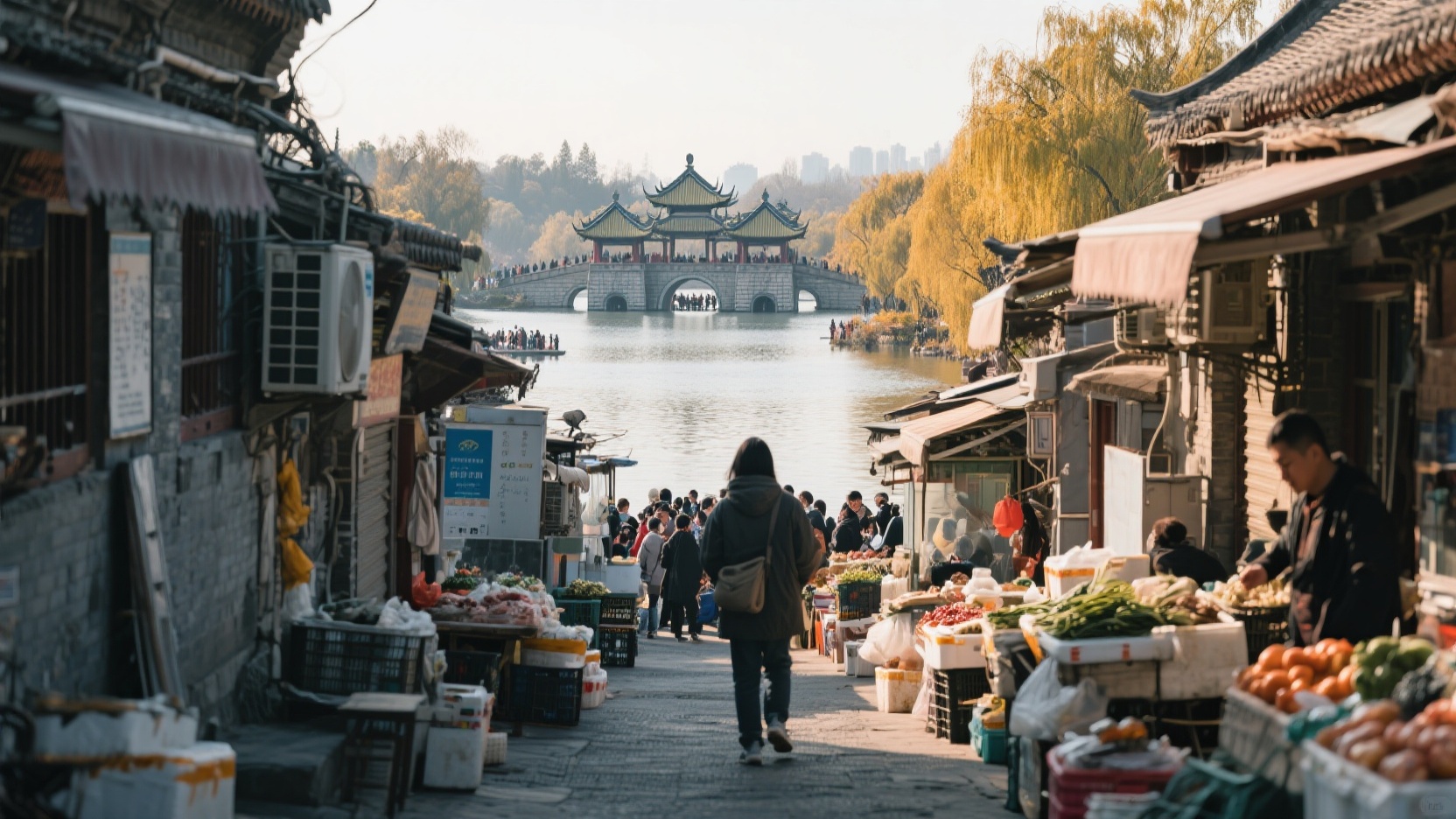
Having lived in Jinan for five years, I dare to say this: the guide that urges you to buy tickets to see the three streams of Baotu Spring and then queue for a long time to take a boat ride on Daming Lake is precisely the first step in ruining the Jinan experience.
The true essence of Jinan is never found in paid tourist attractions. It's hidden in the hawkers' cries at the morning market, the ivy climbing the red brick walls of old factories, and the affordable stir-fried pancake stalls near the university's back gate. This four-day themed tour, without buying a single ticket, relies solely on public transportation, subways, shared bikes, and your own two feet to fully experience the heart of Jinan.
Day 1: Old City Alleys and Passages: Don't enter from the South Gate; go around to the back streets to truly experience Jinan.
On the first day, don't head straight for the ticket gate of "The First Spring Under Heaven". Start from the north entrance of Qushuiting Street and slowly walk in, past Baihuazhou, then turn into Xigengdao and Qifengqiao, alleys so small they're almost invisible on a map. Spring water flows along the walls, and old ladies squat by the stone steps, chilling watermelons in nets—the "spring water in every household" atmosphere isn't staged.
Walking near Wangfu Pond, even without entering any courtyards, just standing at the alley entrance watching the spring water gushing out from the cracks in the rocks, and listening to the locals chat about which years the water was plentiful and which was scarce, is more interesting than paying to see the three streams. At noon, find a busy braised pork stall outside the alley and sit down; you can have a very satisfying meal for just a few dozen yuan per person.
Another hidden charm of the old town's alleyways is "listening to the springs." You don't need to stand in front of a tourist guide sign; just follow the sound of the flowing water. You'll discover details like which house has a hidden drain at its base, or which stone slab is seeping water from its cracks—details that can only be discovered on foot. If you get tired, just find a shady spot to sit for a while; no one will charge you an entrance fee, and no one will rush you onward.
Day 2: Community Market Day: For locals, Jinan awakens with a pot of sweet porridge.
Get up early the next day and don't eat the hotel breakfast yet. Take a stroll around the used bookstores on the outskirts of the Minzu Street Market or the Hero Mountain Cultural Market. The Hero Mountain Cultural Market is more relaxed during the week than on weekends. Used books, old cassette tapes, and old stamps are piled up haphazardly, and you can browse them if you want; the stall owners won't rush you.
The real climax is at the back of the market. Steam rises from the large pots selling sweet porridge, and the aroma of fried dough twists wafts down the street. You don't need to check off any "must-eat" lists; just look for the stalls with the most local elderly people in line, and you can't go wrong following their lead. The total cost for this day might be less than a cup of milk tea at a tourist hotspot.
If it's a Sunday, locals will tell you about an even wilder way to experience it: go "treasure hunting" at the secondhand stalls along the street north of Hero Mountain. Old books, old cameras, and old enamel basins are mixed together. You don't necessarily have to buy anything, but watching the stall owners and buyers haggle back and forth in Jinan dialect is a dialect performance that doesn't require an entrance fee.
Day 3: Old Industrial Area Renovation Day: Red Brick Chimneys More Jinan Than Ancient Streets
The third day was dedicated to Jinan's underrated industrial heritage. First, we visited the D17 Cultural and Creative Industrial Park, a converted old brewery. The old fermentation tanks and red-brick workshops were still there, and the overhead crane tracks hadn't been removed. On a weekday morning, there were almost no tourists; occasionally, nearby residents would walk their dogs, so there was no need to avoid people when taking photos.
In the afternoon, we'll visit the 1953 Tea Culture Creative Industrial Park near the old transformer factory, or the newly opened Jinan Iron and Steel Group Central Forest Park along the old railway line. The vast, rusty tranquility of the old factory area feels more like the essence of Jinan than the crowds on Furong Street. There are no entrance fees; you can simply buy a cup of tea or coffee to sit and rest.
The charm of old industrial areas lies in their scale. The factory buildings, dozens of meters high, the thick pipes, and the empty stockpiles create a sense of mass that is difficult to capture with a mobile phone. You can slowly walk along the old tracks and imagine that this place once roared with machinery, but now only the sound of wind blowing through sheet metal can be heard. This contrast is more captivating than any man-made tourist attraction.
Day 4: University Area Day: There are no tourist attractions on Shanda East Road, but there's youth culture and stir-fried pancakes.
On the fourth day, I slept in and took the bus to Shanshi East Road. The shops around the school have changed hands many times, but the used bookstores, stationery stores, and affordable lemonade stalls are still there. I walked further in to Wenhua West Road, and then strolled to Honglou Square to see the exterior of the old church. I didn't need to go into any of the "tourist attractions."
The charm of the area around the university is its rhythm: at lunchtime, students pour out of class, and stalls selling stir-fried pancakes, Korean noodles, and fried skewers instantly form small queues. You can sit on the curb eating your food with a box in hand, and no one will think you're weird. It's so much more comfortable than getting a squid skewer stuck in your heel on a food street.
Don't rush back to your accommodation in the evening. Stand for a while near a hot water dispenser or print shop close to the university, watching students come and go with their study materials. You'll suddenly feel a few years younger. There aren't any fancy photo spots around universities in Jinan, but that unhurried, youthful energy is free and limited-time.
What's the best season to visit? Avoid April and October; autumn and winter are the hidden gems of Jinan.
If you ask me when locals wouldn't recommend visiting, I'd say mid-April to early May, and the entire National Day holiday. In the former, willow catkins will be everywhere, and in the latter, the crowds will turn Qushuiting Street into a pedestrian zone. Spring in Jinan is extremely short; before you know it, the plane tree catkins are already in your suitcase.
The best time to wander alone is from mid-November to early March of the following year. In winter, the spring water steams, the old alleys are quiet and peaceful, and the market starts making sausages and frying lotus root cakes, creating a strong festive atmosphere. If you come in summer, choose early morning or evening, as it is still cool by the spring water under the shade of the trees.
If you can only come on weekends, choose Sunday morning to Monday morning. The Hero Hill used bookstores are busiest on Sundays, and the park and streets quickly return to calm on Mondays. For less than the price of a ticket, you can experience a completely different pace.
The logic behind "anti-check-in" without buying tickets: save the money by eating.
After four days, you'll find that Jinan has plenty of things to see, but what it lacks is a guide that will take you a step away from the main gate of the scenic area and into the side alleys. Not buying tickets isn't about being stingy; it's about reallocating your budget to more authentic experiences: like eating braised pork prepared in different ways for three days in a row, enjoying freshly fried youxuan (a type of fried dough twist) at the market, or having a leisurely cup of tea in the old factory area.
This style of travel is especially suitable for solo travelers. You don't need to accommodate your companions' anxiety about checking off tourist attractions, nor do you need to wait for each other at the entrances of paid attractions. Public transportation, subways, and shared bikes are enough to connect all locations, and the pace is entirely under your control.
Many people, after leaving Jinan, don't miss any particular tourist attraction, but rather those few minutes spent daydreaming by the springs or chatting with vendors at the market on a quiet afternoon. Jinan's "attractions" are already scattered throughout life; it just depends on whether you're willing to put aside your must-see list and walk down that unremarkable little path on the map.
In closing: Don't ask the locals if I didn't tell you.
1. When traveling alone to Jinan, it is best to stay on the outskirts of the old city or near universities. Taking public transportation is faster than taking a taxi, as many alleys are inaccessible by car.
Second, don't have a proper meal on Furong Street or Kuanhouli; those are just backdrops for tourists. Walk two streets to the side, and the prices and food will be much more reasonable.
3. Don't sleep in on market days. It's best to arrive before 8 a.m., as the stalls selling sweet porridge, fried dough twists, and tofu pudding close early.
4. Try to avoid Mondays for the renovation of old industrial areas, as some exhibition halls or studios will be closed. The park is open, but small shops may be closed.
Fifth, shared bicycles are very useful in Jinan's old city, but you have to push them on some of the cobblestone streets, so don't push yourself too hard; the subway can quickly take you from the West Railway Station to the edge of the old city.
Sixth, the key to truly saving yourself the trouble is this: Don't treat "attractions" as a task, but rather treat Jinan as a city you can visit repeatedly. You'll find that you can experience the city more deeply than paying tourists without paying for admission.