
Don't go to Wuzhen and Xitang in Jiaxing | Local's firsthand experience: A 3-day trip to the streets and markets without paying entrance fees – don't be fooled by travel guides!
Those who spend hundreds of yuan on a combined ticket for Nanhu Lake and Yuehe River in Jiaxing are basically wasting their trip. The most interesting parts of this city are precisely those old alleys, markets, old factories, and university backstreets that don't charge admission, have no ticket checkpoints, and are even deliberately downplayed on maps. Below is an unconventional route that I've repeatedly taken after living in Jiaxing for over five years and traveling there more than twenty times. It avoids all the major paid attractions and is perfect for a leisurely solo stroll.
First, discard the "ancient town package ticket mentality": the truly worthwhile areas to visit in Jiaxing are the residential areas.
Many people's first thought when visiting Jiaxing is Wuzhen and Xitang, but locals don't go there on weekends to avoid the crowds of tourists. Jiaxing city has plenty of free historical districts: Yuehe Street itself doesn't charge an entrance fee, but a few small exhibition halls inside require separate tickets, so you can skip them; Luxihui, Meiwan Street, and Zicheng Ruins Park are all places where you can leisurely stroll around for an afternoon.
The counterintuitive point is that Jiaxing has a weak "tourist attraction feel," but a strong sense of everyday life. If you cross out all the paid attractions on the map, the remaining routes are actually more coherent because the old town is small; you can walk from one old alley to another riverbank in twenty minutes.
Day 2: Old Town Alleys Day – Walking the entire route through Shaonian Road, Xiucheng Bridge, and Zicheng area.
On the first day, I suggest starting from Shaonian Road. Don't use navigation to go to tourist attractions; just walk south along the old alleys. Shaonian Road still retains many hardware stores, tailor shops, and secondhand bookstores located under residential buildings from the 1990s. At seven or eight in the morning, you can see locals squatting by the roadside eating fried dough sticks and pancakes. This scene is more authentic than any replica of an old street.
Walking to the vicinity of Xiucheng Bridge, you can see the canal and the old wharf. Xiucheng Bridge itself is not a tourist attraction, but elderly people often play chess under the camphor trees at the bridgehead. Then, circle around to the Zicheng Ruins Park, which is free to enter. The city walls and lawns are perfect for relaxing. No tickets are required throughout the park; if you get tired, you can stop at a roadside shop to buy a bottle of water—the owner won't charge you extra just because you're a tourist.
The best part about this route is that you can turn into the side alleys at any time without being in a hurry. Encountering old-fashioned barbershops with their doors open, old bathhouses, and alleyways with clothes hanging out to dry, you get the most authentic glimpse into Jiaxing's old town.
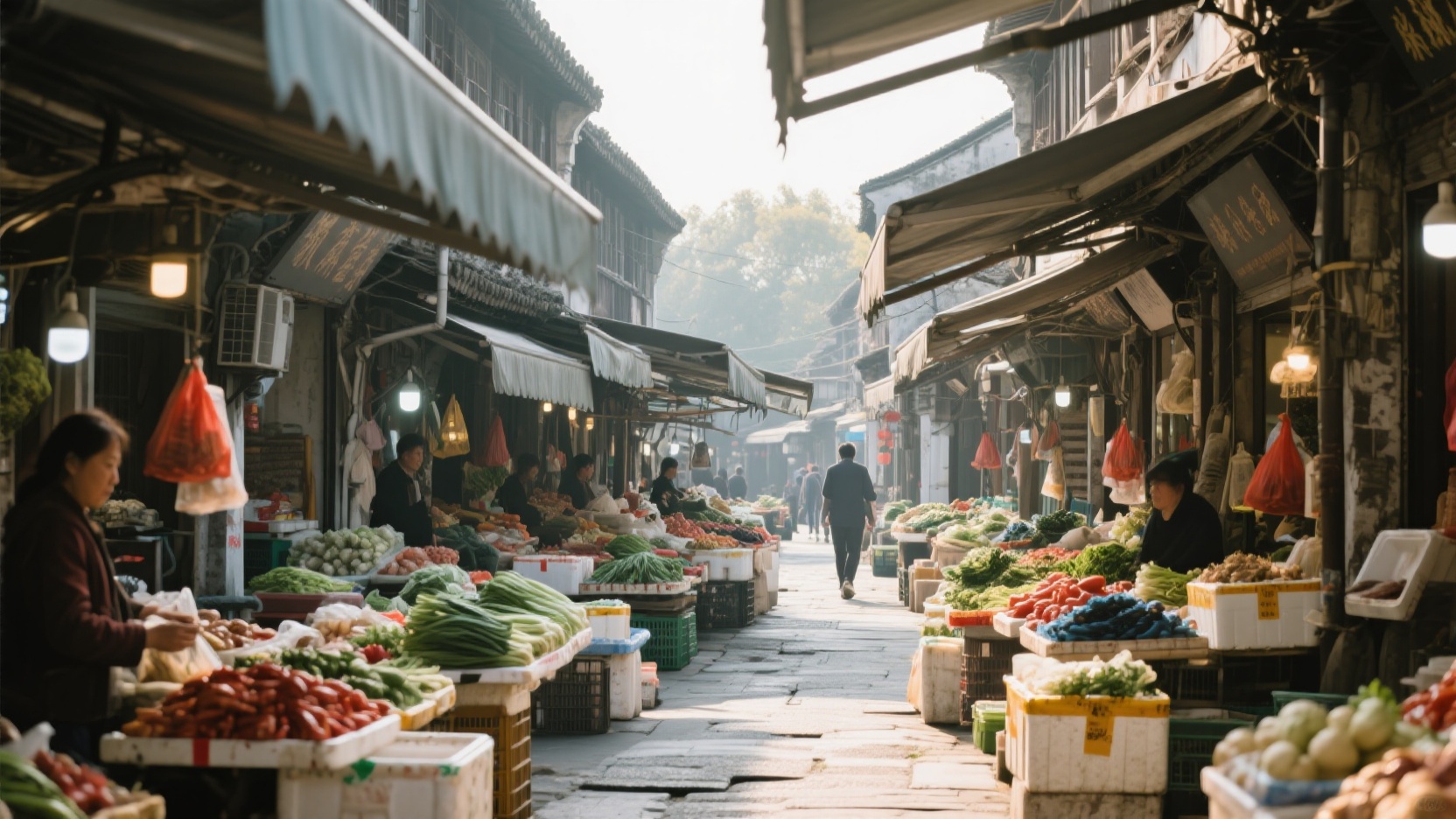
Day 2: Community Market Day – Sanshuiwan, Jishui, Hongbo Road, from breakfast to dinner.
The theme for the second day was the local market. Sanshuiwan Market is where Jiaxing locals shop daily. The outer ring is lined with breakfast stalls, cooked food shops, and pastry shops, and it gets lively as early as 7 a.m. Don't rush to take pictures as soon as you enter. First, join the queue with the local aunties to buy a large flatbread and fried dough sticks or a serving of shumai. You can eat your fill for just a few yuan per person.
The area around Jishui Market is more of an older neighborhood, making it a good place to observe how Jiaxing locals buy groceries and negotiate prices. In the afternoon, you can go to the Hongbo Road area, where there are many braised food shops and cold drink wholesale stores that have been open for twenty years. You don't need to buy a lot; just buy a little of each kind and sit on the stone benches by the roadside to eat slowly. It's much more comfortable than queuing at the food street.
There's a hidden gem at the wet market: find a stall that offers processing services, buy seasonal river fish or vegetables, and have the owner do some simple preparation for you. It's mostly local housewives buying there; tourists are surprisingly few, and the prices are so reasonable you might doubt you heard correctly.
Day 3: Old Industrial Area Renovation Day – Luli Street, Old Warehouses in the East of the City, and Old Factories Along the Canal
Jiaxing's industrial history is concentrated in Luli Street in the east of the city, around the old railway station, and along the banks of the Grand Canal. This area hasn't undergone unified redevelopment; many old factory buildings still retain their red brick walls, tin doors, and old factory names, making it suitable for those who appreciate a sense of ruin or industrial photography. It's recommended to take a bus to the vicinity of Luli Street, get off, and walk along the old street to see the old factory areas interspersed with residential areas.
Some old warehouses have been converted into creative offices or design studios, but most are free to enter. You can look around from the outside when the gates are half open, but don't force your way into private areas. There are occasional small docks and old cranes along the canal, and the lighting is great for taking photos in the evening. There's no entrance fee for the entire area; just be careful and stay away from dangerous buildings.
If you encounter security guards or residents, politely say you're just taking a walk around the neighborhood; most are very friendly. They'll tell you which building used to be a silk factory or which section of the riverbank was used for transporting silkworm cocoons.
Day 5: University Surrounding Area Day – Low-Cost Living Area Next to Jiaxing University and Nanhu University
The fourth day is dedicated to the areas surrounding universities. The vicinity of Jiaxing University's Yuexiu campus and Nanhu College is a genuinely affordable area for local young people to eat and drink. There aren't any trendy restaurants here, but there are many small eateries, milk tea shops, stationery stores, secondhand bookstores, and fruit stalls that have been around for years, with prices at least half that of tourist areas.
At lunchtime, you can join the students in line for a bowl of noodles or a rice bowl; it's very affordable. In the afternoon, take a stroll in the community park or riverside greenway next to the university. You'll see students working part-time, walking their dogs, and jogging—this everyday life is something you won't find in travel guides. You won't feel awkward ordering snacks, browsing small shops, or sitting on a bench by the river.
VI. If you can only choose one mode of transportation: public transport plus water bus is better for understanding Jiaxing than taking a taxi.
Jiaxing city has a dense network of bus lines, as well as water buses that locals use for commuting. These buses run along the city's ring canal and Hangzhou Pond, and the fare is symbolic, much more affordable than tourist boats. While there aren't many water bus stops, almost every one is located near a free old street or market, making it a perfect example of an unconventional route.
Taking taxis the entire way is not recommended, as many alleys in Jiaxing's old town are inaccessible by car. Taking public transportation and walking will allow you to explore the city's fabric more thoroughly. You can also experience a section of the tram, seeing the transition between the old and new towns along the way.
In conclusion: 6 tips for the easiest way to travel alone
1. Choose chain hotels or hostels on the outskirts of the old town, avoiding areas near tourist attractions. These are quieter and cheaper. 2. Head out before 7:00 AM. Local life in Jiaxing begins in the early morning, with the markets and alleyways being the most vibrant.
3. You don't need to carry much cash, as mobile payment is widely accepted, but it's more convenient to have some small change on hand for public transportation or water buses. 4. By not entering any of the smaller exhibits that require tickets, you really won't miss the core experiences.
5. When dining alone, avoid ordering large dishes. You can buy all the snacks around the market individually or in half portions; the owners usually don't mind. 6. Rainy days are actually better for visiting the market and old alleyways—fewer people, stronger aromas, and better lighting.