
I only have one meal to eat on my first trip to Jiaxing. What should I eat?
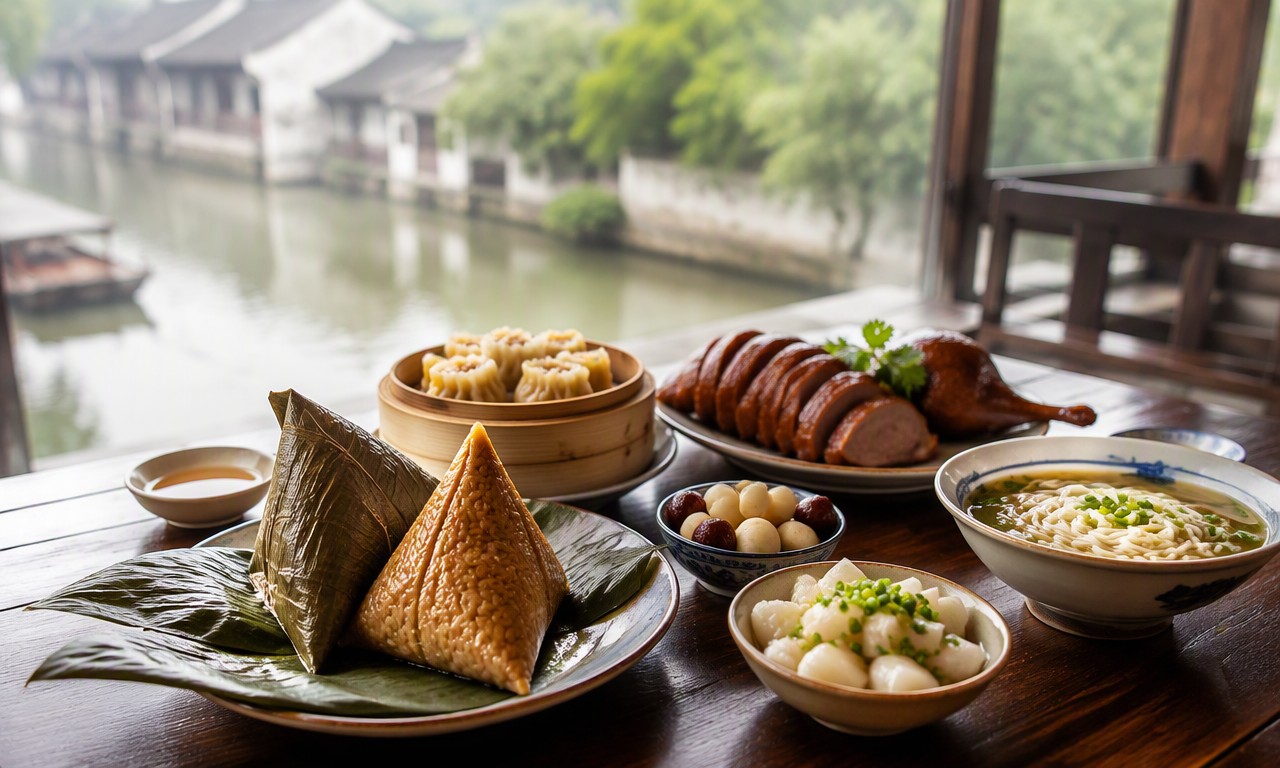
This question deserves a serious answer because Jiaxing's food scene is incredibly diverse—zongzi (sticky rice dumplings), shumai (steamed dumplings), braised duck, mutton noodles, Nanhu water chestnuts, and yanqiu (a type of fried dumpling). Some say that "not trying any of these is a wasted trip." However, if you only have time for one meal, the cost of choosing the wrong food isn't necessarily bad taste, but rather wasting your appetite on something that can be easily substituted. The following questions are ones that readers have repeatedly asked, and I will address them one by one according to different scenarios.
This is my first time in Jiaxing, and I only have one meal. What should I eat?
My advice is to eat local snacks in the "Nanmentou" or "Hexing Road" area, rather than going to a fancy restaurant and ordering a whole table of dishes. The reason is simple: you can find about 70-80% similar main dishes in other cities in Jiangsu and Zhejiang, but combinations like "fresh pork shumai with beef vermicelli soup" or "salty soy milk with glutinous rice balls" are hard to find outside of Jiaxing.
If you only have one meal, I suggest ordering this: a basket of fresh pork shumai (Jiaxing shumai has a pork filling, not glutinous rice filling; the skin is extremely thin, and the meat is very juicy), a bowl of beef and vermicelli soup (the soup is clear but has a strong beef bone flavor; the vermicelli is thin), and a savory soy milk with fried dough stick crumbs. These three items can be found in any established restaurant. The order of eating them is to first drink the soy milk with a spoon, then eat the shumai, and finally finish with the vermicelli soup.
What do locals in Jiaxing eat for breakfast? Is it different from what tourists expect?
Tourists often mistakenly believe that zongzi (sticky rice dumplings) are the only breakfast food in Jiaxing, but in reality, a small percentage of locals eat zongzi for breakfast. Zongzi is more of a daily snack or seasonal food. The more common breakfast items are: small wontons with potstickers, savory soy milk with rice cakes or glutinous rice balls, scallion oil noodles with a spoonful of chili sauce, and mutton noodles, which are frequently seen in winter.
I recommend going to breakfast shops near residential areas, rather than the ones near the scenic area entrance. The way to tell is simple—between 7:30 and 8:00 AM, if you see people in their pajamas queuing outside and people chatting in their local dialect at the tables, you can't go wrong. When ordering, don't just order a bowl of wontons. Jiaxing people's breakfast habit is to combine "dry and wet" foods, such as potstickers with wontons, or a flatbread wrapped around fried dough sticks with soy milk.
Should Jiaxing zongzi be eaten sweet or savory? This is the most frequently asked question by tourists, but one that often leads to misunderstandings.
To put it simply: the representative flavor of Jiaxing zongzi is savory, with "fresh pork zongzi" and "salted egg yolk and fresh pork zongzi" being the core. Sweet zongzi are not the mainstream here. The reason is simple: several time-honored brands in Jiaxing started with fresh pork zongzi. The pork must be fatty pork belly, and the glutinous rice is mixed with soy sauce. After steaming, the fat from the pork melts into the rice, which is the essence of Jiaxing zongzi.
There are two important points to remember when eating zongzi correctly. First, zongzi should be eaten while they're hot. Once they cool down, the glutinous rice becomes mushy and the fatty meat solidifies, resulting in a significantly worse texture. Second, do not drizzle any sauce on them. Jiaxing zongzi is already well-seasoned; adding sugar or vinegar will ruin its original savory flavor. If you really want to try a sweeter taste, you can buy a red bean paste zongzi for comparison, but don't consider it the representative of Jiaxing zongzi.
Are local specialties like Wenhu braised duck and Hongda roast chicken really worth going out of your way to buy?
Worth buying, but know how to buy them. Wenhu braised duck and Hongda roast chicken are both Jiaxing flavors that you can take home. They share the characteristic that they are better eaten cold than hot. For the braised duck, buy the pre-cut, vacuum-packed kind, thaw naturally at home, and eat it directly. The skin is firm, the meat is chewy, and the sauce is savory with a hint of sweetness. The roast chicken, on the other hand, has a firmer texture, not the soft and mushy type, which is suitable for people who like a good texture.
I don't recommend buying those "ready-to-eat" packs sold near train stations; the skin will become soggy and the sauce will taste greasy after heating. If you buy from a store, ask the staff to take it from the refrigerated display case, not the insulated one. If I had to choose one of the two local specialties, I would recommend braised duck, as its flavor is more distinctive and it's less likely to be a mistake when giving it as a gift.
What's so special about the Nanhu water chestnut? Is it something you absolutely must eat?
The characteristic of Nanhu water chestnuts is that they are "hornless" and their shape resembles a gold ingot, unlike ordinary water chestnuts. But I must say something honest: the biggest feature of Nanhu water chestnuts lies in the season and place of origin. When they are fresh enough, they are indeed sweet and crisp, but if you don't go in autumn, or if what you buy is not picked on the same day, the experience will be diminished.
If you visit Jiaxing in autumn, I recommend looking for freshly cooked water chestnuts near Nanhu Lake. You can eat them shelled; the flesh is crisp, juicy, and has a delicate fragrance. If it's out of season, most of the water chestnuts on the market are frozen, which tend to be powdery and bland, so there's no need to specifically look for them. The most common local way to prepare them is stir-fried with edamame, a light and refreshing dish that goes well with rice.
What exactly is the difference between those small shops in alleys and those famous "internet celebrity shops"?
The core difference isn't the absolute quality of the taste, but rather "stability" and "local customer repurchase rate." Trendy restaurants often excel in visual appeal and speed of preparation, making them perfect for taking photos and checking in on social media. However, many of these restaurants are located near tourist attractions with high foot traffic, making it difficult to maintain consistent skill levels. Established shops in alleyways, on the other hand, often specialize in just a few items, maintaining that consistent quality for decades, resulting in a stable and reliable culinary foundation.
There are two ways to tell. First, look at the length of the menu; the shorter the menu, the more worthwhile it is to go, because shops that focus on a few specialties are often more confident. Second, look at the opening hours; established shops usually don't rush into the evening rush, closing once they've sold out for breakfast and lunch, and won't extend their opening hours to increase table turnover. For tourists, if the queue exceeds half an hour, my advice is to go to another shop; the overall quality difference in Jiaxing's food isn't significant enough to justify waiting that long.
What can you eat after 10 PM? Is it just barbecue and takeout?
No. While barbecue is indeed listed on Jiaxing's late-night food map, these are more characteristic local specialties: fresh meat shumai shops that open late at night (not many, but you have to find them), beef and vermicelli soup stalls, and some mutton noodle restaurants that stay open until the early hours of the morning. These shops don't advertise; they rely on word-of-mouth recommendations from nearby residents.
The best way to find these places is to go to areas with concentrated old residential areas, such as those small streets a kilometer or two away from the train or bus station. Small shops that are still lit up after 10 pm and have steam rising from their doors are worth going into. Order a small bowl of mutton noodles, or a basket of shumai with a bowl of soup; you'll feel warm afterwards. It's more substantial than barbecue, and you're less likely to get ripped off.