
Hangzhou Avoidance List | Don't be fooled by 3-day, 2-night itineraries; a modified route tested and verified by a local.
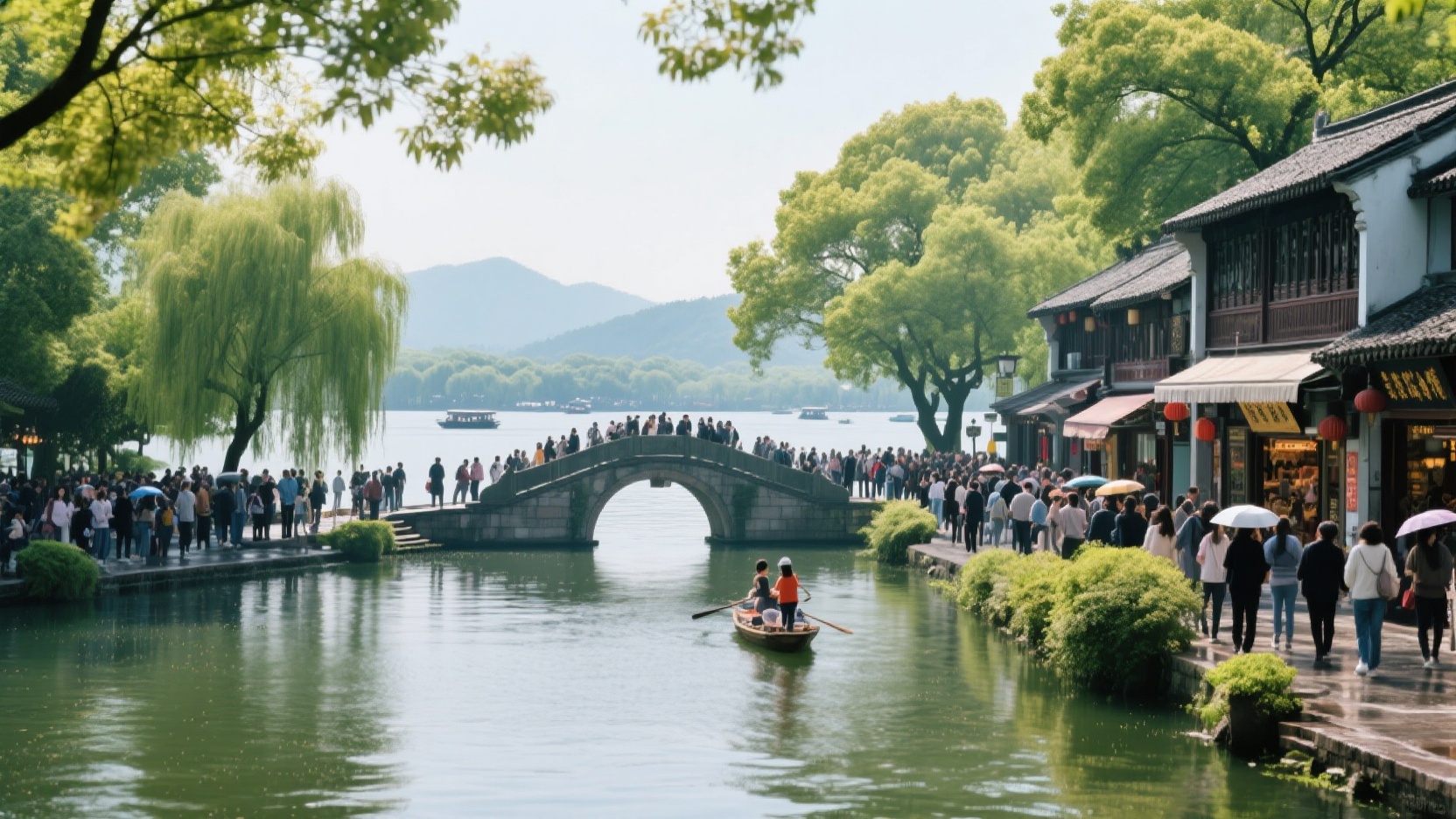
Having lived in Hangzhou for seven years, the sentence I fear most is, "I followed the online three-day, two-night itinerary and West Lake was just so-so"—it's not that West Lake is bad, it's that you were led into the most congested, rushed, and tourist-center-like routes by that itinerary.
Those "3-day, 2-night classic routes" online are essentially checklists for tour groups, not for people who want to truly experience Hangzhou. Below, we'll break down this popular itinerary item by item, explaining where traffic jams are likely, where half an hour is enough, which restaurants are not worth waiting two hours for, and finally giving you a local-optimized version.
Don't connect "Broken Bridge - Bai Causeway - Lakeside" into a single line; the morning rush hour is even more daunting than commuting to work.
On the first day, almost everyone online wrote about Broken Bridge in the Snow, Bai Causeway, Autumn Moon over the Calm Lake, and the Lakeside Pedestrian Street. I advise you, before 7 AM this street belongs to elderly people walking their birds, and after 9 AM it becomes a moving human wall. You can't even hold your phone up on the Broken Bridge, you can't find an empty lake on Bai Causeway, and the queue to enter the Lakeside Longxiang Bridge subway station stretches from the ground level to the second basement level.
The section of this route that's truly worth walking is from Beishan Street to Gushan, not the front of the Broken Bridge. Locals who go to Gushan to see the plum blossoms on weekends also avoid the section in front of Yue Fei Temple. You can easily take a boat from Qianwang Temple to Three Pools Mirroring the Moon and then back to Flower Harbor, leaving the lakeside for an evening stroll.
If you absolutely must visit the Broken Bridge, choose to do so around 6 AM or after 10 PM, when it truly resembles a "broken bridge" rather than a moving human wall. If you pass by during the day, quickly take a photo and head west along Beishan Street, leaving time for the quiet lakeside behind Gushan Mountain.
Lingyin Temple isn't more efficacious the earlier you go; what you perceive as a peaceful morning service is actually the start of a tour frenzy.
Many guides tell you to rush to Lingyin Temple at 7 or 8 AM, only to find that your group arrives even earlier. Feilai Peak and Lingyin Temple should be entered separately; the route is designed to keep you constantly on the move. The incense in front of the Mahavira Hall is plentiful, but it's so crowded that it's difficult to even get a quiet glance at the Buddha statues.
Locals tend to frequent the road leading to the Three Temples of Tianzhu: Fajing Temple in Lower Tianzhu, Fajing Temple in Middle Tianzhu, and Faxi Temple in Upper Tianzhu. Especially on weekday afternoons or light rainy days, the road is shaded by camphor trees, and there are more monks than tourists. The evening prayers at Faxi Temple and the Laba porridge at Fajing Temple are the temple memories that Hangzhou locals cherish.
If you only want to go to Lingyin Temple to fulfill your vow, try to choose a weekday morning after 10 am or afternoon after 2 pm to avoid the morning rush hour and the peak tour period.
Hefang Street and Southern Song Imperial Street: Locals only pass by without eating there; half of the "must-eat" spots are not Hangzhou cuisine.
Hefang Street is worth strolling around, but don't treat it as a food street. The tornado potatoes, grilled squid, and bamboo tube milk tea have absolutely nothing to do with Hangzhou. Beggar's chicken and Longjing tea pastries are mostly tourist traps; authentic Hangzhou restaurants won't be located on this street.
If you're craving the taste of Hangzhou, head to the Shiwukui Lane or Dama Lane area. The morning markets there offer freshly fried dough sticks, scallion pancakes, and crispy fish. Alternatively, try the shops in the old residential areas of Chengxi and Zhaohui. A bowl of Pian'erchuan noodles costs only a few dozen yuan per person, and the owners won't rush you. Don't believe those restaurants on the "must-eat list" that have queues for two hours; many are just popular, not necessarily known for their wok hei (wok aroma).
The Southern Song Imperial Street is perfect for a leisurely afternoon stroll. You can admire the architecture, but when buying souvenirs, be sure to check the ingredient list first. Items labeled "Hangzhou specialty" may not actually be from Hangzhou.
Removing Leifeng Pagoda and Yue Fei Temple wouldn't be a big loss; they could be replaced with Jingci Temple and Yuhu Bay.
The old Leifeng Pagoda collapsed long ago; the new pagoda is a modern building with an elevator, and the queue to climb it is just a sea of heads. While the Yue Fei Temple has historical significance, unless you're particularly interested in Yue Fei's life, a half-hour walk around is sufficient. Visiting both sites on the same day will likely disrupt your afternoon's pace.
Delete it and switch to the southern route: watch the evening bell at Nanping Hill from Jingci Temple, and enjoy the less crowded and clear waters of Yuhu Bay and Turtle Pool. In spring, the cherry blossoms and rain add to the charm of Jiangnan. In the evening, turn onto Yanggong Causeway from Hupao Road to see the true western section of West Lake.
Xixi Wetland is not a "must-visit" destination; it's best experienced in spring, autumn, and on rainy days.
Online sources describe Xixi Wetland as the "green lung of the city," but in summer it's like a sauna with mosquitoes, and in winter during the dry season, the reeds fall over, diminishing the scenery. If you only have three days, a special trip to Xixi will take up most of your day, and returning to West Lake will be very rushed.
Xixi is best suited for slow-paced travelers or families with children. Spring and autumn are ideal times to take an electric boat ride, and rainy days offer a more serene and refreshing experience. If time is limited, consider alternatives like Maojiabu, Yuhu Bay, or the Botanical Garden; the scenery is just as beautiful, and you'll save on transportation costs.
Simply put, Xixi is not bad, it's just not in the same vein as West Lake. Cramming three days into Xixi will result in a mixed experience of rushing, queuing for boats, and getting bitten by mosquitoes; it's better to save that for a dedicated, leisurely trip in the future.
The optimized version of the indigenous "3 days 2 nights + 1 day flexible alternative" is directly copied.
Day 1: Walk along Beishan Street to Gushan in the morning, take a boat to Huagang, have vegetarian noodles near Jingci Temple at noon; visit Faxi Temple or Sanzhu Temple in the afternoon, and take a walk along the canal in the evening, avoiding the crowded lakeside.
Day 2: In the morning, walk from Longjing Village to Jiuxi Yanshu, which is easy as it's uphill; have tea at Meijiawu at noon; in the afternoon, go to Yunqi Bamboo Path or Hupao; and watch the sunset at Wushan Chenghuang Pavilion in the evening.
Day 3: Visit Dadou Road, Xiangji Temple, and Xiaohezhijie, or have breakfast at Damalong at the foot of Wushan Mountain, then climb Yuhuang Mountain. Alternative options: Liangzhu Ancient City Ruins, Xianghu Lake, and Manjuelong, depending on the season and crowds.
If you're traveling with elderly people, avoid walking on the gravel path of Jiuxi and save your free days for Xianghu or Yuhu Bay; if you're traveling with children, you can add Xixi to your free days, as the electric boat ride is less tiring; couples or those with good stamina can go to the Manjuelong-Longjing hiking trail, which is more private than Su Causeway and you can even drink seasonal Longjing tea at the villagers' homes.
10 Things You Shouldn't Do: Hangzhou Native's Lightning Protection Standards
1. Don't drive into the West Lake scenic area on weekends, or you'll be stuck in traffic for ages; 2. Don't buy "freshly stir-fried Longjing tea" from roadside vendors, as it's hard to tell if it's genuine or not; 3. Don't queue up to eat at the popular chain restaurants in Hubin Yintai, they're just as good on weekdays; 4. Don't book a day tour, you can get around West Lake by subway and on foot; 5. Don't ride along Su Causeway at noon in the summer, you'll get heatstroke without shade.
6. Don't wear high heels on the gravel path in Jiuxi; 7. Don't climb over the tea garden fence for a "popular photo spot"; 8. Don't take an unlicensed taxi to Lingyin Temple, public buses and ride-hailing services are safer; 9. Don't plan your trip solely based on the subway, many of Hangzhou's beautiful sights are on public transport and walking routes; 10. Don't only visit Taiziwan in spring, Turtle Pool and Maojiabu are less crowded and have better flowers.
In closing: 5 tips you shouldn't ask locals about.
First, don't cancel your trip on rainy days. Rain in Hangzhou is part of the scenery. The Three Temples of Tianzhu, Yuhu Bay, and Yunqi Bamboo Path are even more beautiful in the rain, with the stone paths reflecting the water and half the number of people.
Secondly, West Lake is not a place to "see everything in one go." It is divided into the North Route, the West Route, and the South Route. Choosing only a section each time is more worthwhile than a long walk and makes it easier to see the moment when the water suddenly becomes calm.
Third, Hangzhou is suitable for going out early and returning late. From 7:00 to 9:00 in the morning and from 5:00 to 7:00 in the evening are the times when West Lake is most like a private retreat for locals, and even the benches by the lake are empty.
Fourth, if you want to eat Hangzhou cuisine, don't be fixated on "old brands". Small restaurants in community shops and around the farmers' market are often closer to home-style cooking. Just look for noodle shops with lots of locals wearing slippers sitting in them, and go in.
Fifth, don't believe the "three-day tour of Hangzhou" guide. This itinerary only helps you avoid the worst spots. The real highlights should be saved for next time, or for a rainy weekday.