
How many days are enough to visit Guilin? A few essential questions to ask before you go.
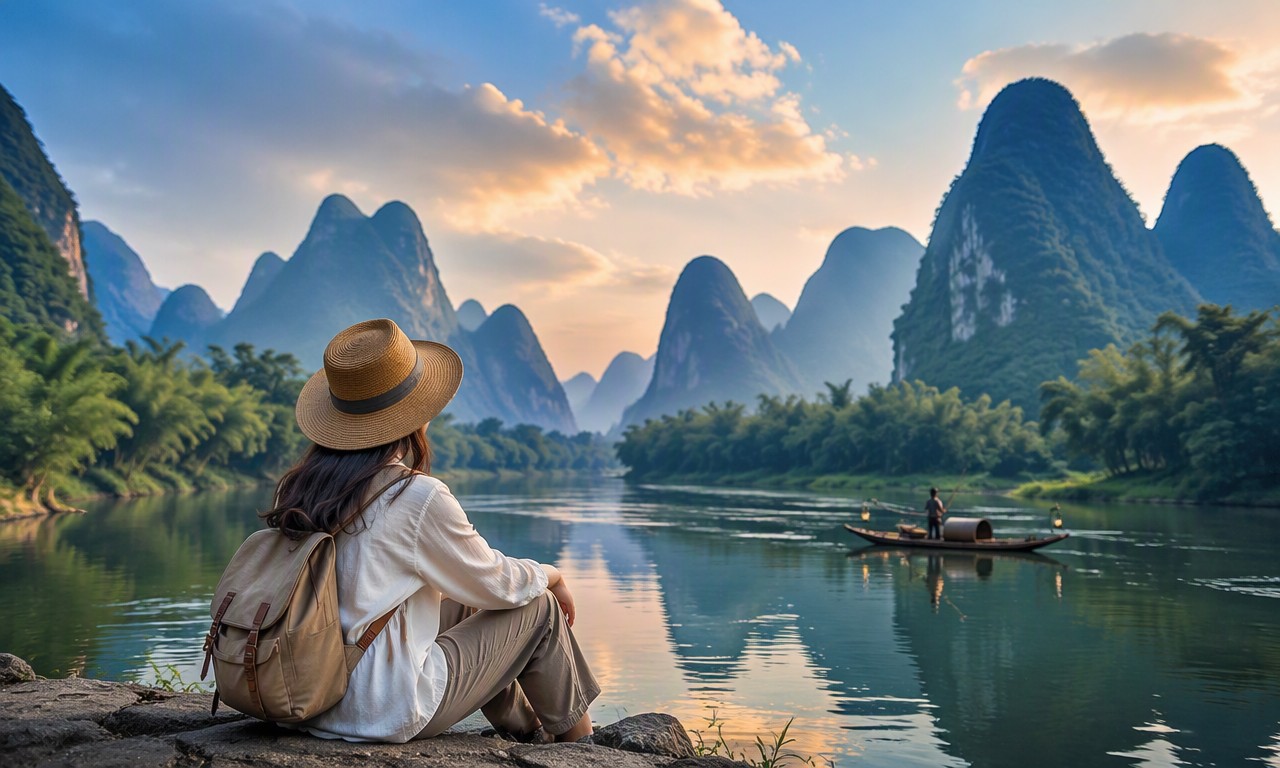
Whenever readers are planning a trip to Guilin, the questions almost always revolve around these points: how many days are enough, what season is best to go, is it okay to bring family, how to control the budget, and where is the most convenient place to stay. These questions seem basic, but they often determine the comfort of the entire trip. Instead of reading ten travel guides and still being undecided, I'd rather address the most frequently asked questions from over the years in one go, providing clear answers and reasons, so you can just follow my advice.
Question 1: How many days are enough to visit Guilin?
My assessment is that a four-day, three-night trip to Guilin city and Yangshuo is the most comfortable pace for most people. Three days and two nights is also possible, but it will sacrifice time for a leisurely transition between the Li River and the Yulong River. If you only have two days, you basically have to choose one: either Guilin city plus the Longji Rice Terraces, or Yangshuo plus the most scenic section of the Li River. Don't try to do too much.
Why four days? Because the attractions in Guilin are quite far apart, especially the Longji Rice Terraces, which take up most of the day to travel to and from the city center, and Yangshuo is also more than an hour's drive from Guilin. A four-day itinerary could be: Day 1: Arrive in Guilin and visit Elephant Trunk Hill and the area around the Two Rivers and Four Lakes. Day 2: Travel along the most scenic section of the Li River to Yangshuo. Day 3: Cycle along the Yulong River in Yangshuo, stroll along West Street, or visit Silver Cave. Day 4: Return or continue to Longji. This pace is relaxed and avoids wasting time on back-and-forth travel.
Question 2: What is the best season to visit Guilin?
If you can tolerate a little rain, my answer is clear: April to June and September to October are the best months. April to June is the season with the most water; the Li River and Yulong River have high water levels and clear water, and the misty rain of Guilin is at its most enchanting. September to October has stable weather, clear skies, and crisp autumn air, perfect for outdoor cycling and hiking. The rice paddies of the Longji Rice Terraces turn from green to yellow, creating a particularly beautiful layered effect.
The least recommended time to visit is actually the month before the Spring Festival and summer vacation, when tourist density is at its highest, queues for bamboo rafts on the Li River are long, and accommodation prices in Yangshuo are significantly higher. Visiting Guilin in winter isn't bad, but the damp chill is intense. If you don't catch a sunny day, heavy fog on the river and low visibility will diminish the enjoyment of the mountains and water. The criteria are actually quite simple: if you want to see the fluidity of the water, choose a month with ample rainfall but not to the point of flooding; if you want to capture clear mountain silhouettes, choose a crisp, clear autumn day.
Question 3: Is it safe for me to come to Guilin alone?
It's safe, and there are many activities in Yangshuo suitable for solo travelers. Guilin is a well-developed tourist city with public transportation covering major attractions, good nighttime lighting in main streets, and generally good public security. When traveling alone, the most important thing to be careful about is not trusting touts offering day tours or cheap boat tickets on the street, especially around train and bus stations, as these areas are where information asymmetry is most likely to lead to scams.
My advice is: when traveling alone, prioritize itineraries recommended through official channels or hotel receptions. Try to stay in the town center or within walking distance of West Street at night; avoid going to guesthouses in remote areas just to save money. Cycling along the Yulong River can be done alone, but save an offline map of the route beforehand. Supply points are limited along the way, so bring enough water and a power bank. Being alone isn't dangerous; the real danger lies in impulsively joining an unknown "group tour."
Question 4: Is it suitable to bring elderly people and children?
It's suitable, but you need to choose different routes. If you're traveling with elderly people and children, I suggest focusing on Yangshuo and the most scenic section of the Li River. Whether or not to visit the Longji Rice Terraces depends on the mobility of the elderly. The Li River cruise is a scenic boat trip, requiring almost no physical exertion, and is suitable for both the elderly and children. The bamboo rafting on the Yulong River in Yangshuo is also relatively gentle and suitable for the whole family, but be sure to choose a reputable dock. Bamboo rafts have age restrictions, and very young children may not be able to ride.
It's not recommended to take elderly people or children to climb to the high viewpoints of the Longji Rice Terraces. Although the scenery is spectacular, there are many steps and steep slopes, especially in the hot and humid summer, which can easily tire the elderly. If you must go, choose to stay in a guesthouse near the viewpoint within the scenic area to minimize the back-and-forth climbing. Guilin city has a dense concentration of attractions that can be easily walked around. Take your family out for some rice noodles, visit the Jingjiang Prince City, and slow down for a more comfortable experience.
Question 5: What is the approximate budget?
There's no standard answer to this question, but I can give you a clear sense of budget. Taking a four-day, three-night trip as an example, staying in budget hotels or hostels, eating local snacks and home-style dishes, and including entrance fees to major attractions and transportation, you can expect to spend a few hundred to a little over a thousand yuan per person. A mid-range budget, staying in comfortable hotels or better guesthouses in Yangshuo, eating one or two local meals, and experiencing both the Li River and Yulong River, will normally cost between a thousand and two thousand yuan per person. The high-end budget has no upper limit; the main increase comes from accommodation and car rental costs.
The real factors affecting your budget are often not food and entrance fees, but rather transportation and accommodation. For the same level of accommodation, the price can differ by as much as double between the area near West Street in Yangshuo and a village a few kilometers away. Hiring a car is more expensive than public transport, but it saves time and is suitable for families or those with limited time. If you have a limited budget, the most economical approach is to use public transport and inexpensive accommodation, eat simple meals like noodles, and avoid holidays. Four days can easily be covered for under 1000 yuan per person, and you'll still have a very satisfying experience.
Question 6: Should I stay in Guilin city or Yangshuo?
Many first-time visitors struggle with this question, and my advice is straightforward: stay in Yangshuo unless your main purpose is to visit the Longji Rice Terraces or attractions in Guilin city. Yangshuo is the most scenic part of Guilin, containing the Yulong River, the Ten-Mile Gallery, and West Street. Staying in Yangshuo allows for evening walks and early morning bike rides, saving you the hassle of traveling back and forth. Guilin city, on the other hand, is primarily a transportation hub and urban landscape; Elephant Trunk Hill and the Two Rivers and Four Lakes can be visited in half a day to a full day.
If the Longji Rice Terraces make up a large part of your itinerary, then stay one night in Guilin city to make it convenient to set off for Longji early the next morning. Otherwise, I would suggest staying in Guilin for the first night for easy connections, and then staying in Yangshuo for the next two nights. Accommodation in Yangshuo ranges from the core area of West Street to villages along the Yulong River. If you want a quiet place, choose a guesthouse a little further from West Street but closer to the Yulong River or the Ten-Mile Gallery. If you want convenience, stay within a ten-minute walk of West Street.
Question 7: What are some good souvenirs to bring back with you?
Guilin's souvenirs are actually underrated. The three most worthwhile items to bring back are: dried Guilin rice noodles, osmanthus-related products, and handmade ginger candy from Yangshuo. For dried rice noodles, choose small packages; simply boil them in water at home, add a spice packet, and the flavor will be about 70% authentic. For osmanthus products, I recommend osmanthus honey and osmanthus cake, but make sure to buy packaged products with proper production licenses, not bulk or unlabeled products. Yangshuo ginger candy and osmanthus wine are also good choices; be aware of the baggage regulations for alcoholic beverages.
I don't recommend buying those so-called "specialty gift packs" at the entrance of tourist attractions. They often contain mass-produced, cheap pastries that have little to do with what locals actually eat. The principle for buying souvenirs is the same as what I've always told my readers: buy things you've tried and enjoyed, or things with clear origin and production information. Don't be impulsive just because the packaging looks nice. Large supermarkets in the city center and reputable specialty shops in Yangshuo offer transparent pricing and guaranteed quality.
Question 8: If I could only choose one, the Li River cruise or the Yulong River bamboo raft?
This question has been asked a lot, and my assessment is: if it's your first time visiting, the most scenic section of the Li River is your first lesson in understanding Guilin's landscape—choose it. The Li River cruise covers grand vistas; the Nine Horses Painting Mountain, the Yellow Cloth Reflection, and the scene depicted on the 20 RMB note are all located in this section. The views are expansive, and the sense of a landscape painting is at its strongest. It gives you the overall impression of "passing through a painting."
The Yulong River bamboo rafting offers a different rhythm. The water is narrower and calmer, with the rafts close to the surface, immersing you in the surrounding mountains and water. It's more suitable for those who prefer a slower pace and want to relax in nature. If you could only choose one, go for the Li River on your first visit, and definitely the Yulong River on your second. If you have enough time, you can do both without conflict, as the experiences are completely different and not repetitive.