
Foshan Old Town "Alleyway Wandering" Route | A List of Artistic Avoidance Spots in the Old Town That I Compiled After Four Trials (Autumn Afternoon - Solo/Couple Version)
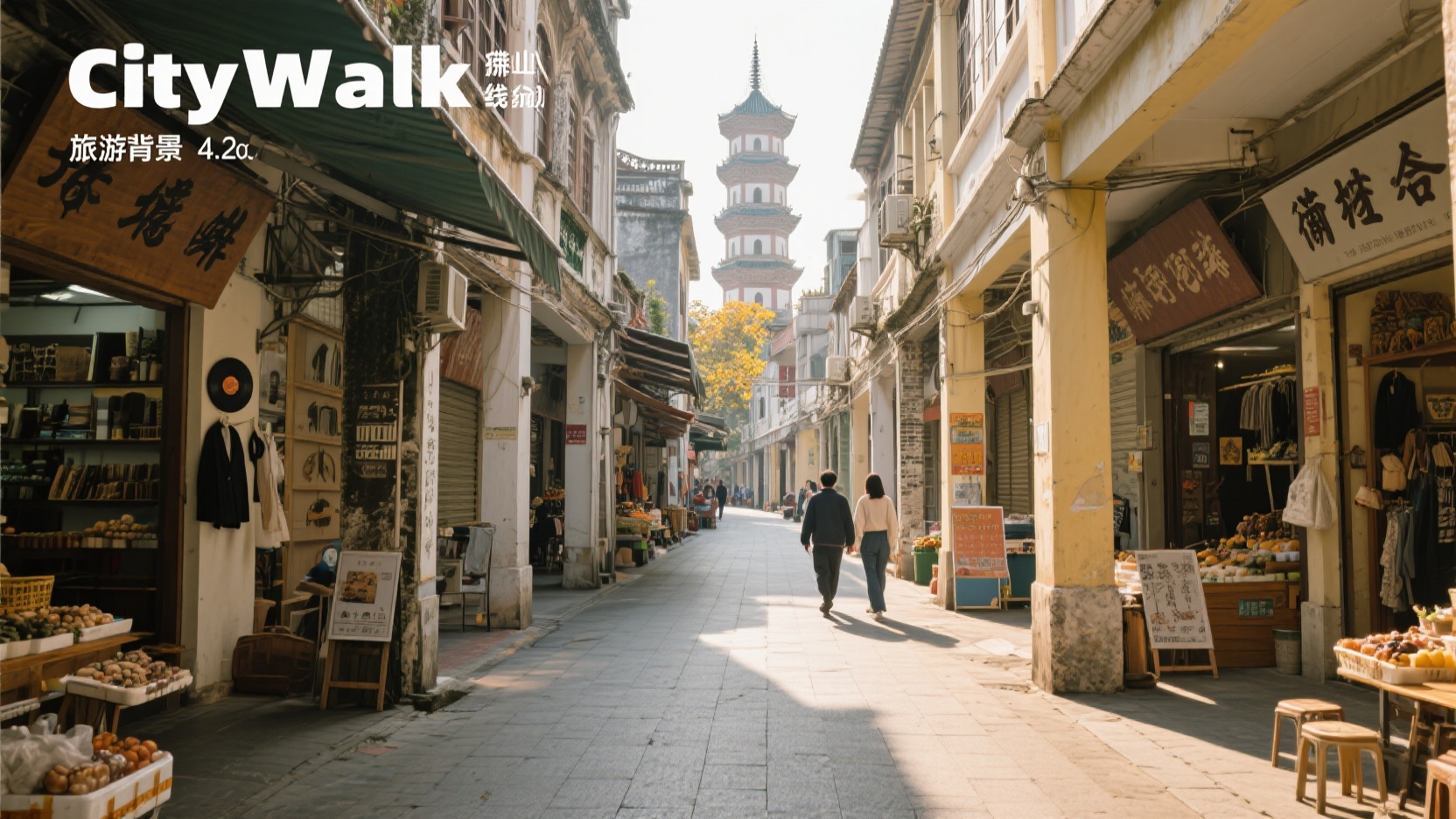
To avoid the crowds at Lingnan Tiandi, I spent four consecutive afternoons exploring the alleyways of the old town of Chancheng in Foshan, stringing together scattered fragments of the old streets into a walking loop of about 4.2 kilometers. This route doesn't prioritize a high density of attractions; instead, it allows you to slowly stroll along the fabric of Tapo Street, Kuaizi Road, Renwei, Pujunxu, and Tongxin Alley. Two branching paths are available for you to choose from, making it perfect for a solo afternoon walk in autumn or with a friend who isn't in a rush.
Starting point of Tapo Street: First, check the Foshan "birth certificate" (0-0.6km, about 8 minutes walk).
After exiting Pujun North Road Station, turn into Tapo Street. The street is narrow, and old-fashioned mailboxes and blue brick walls isolate the city noise. Tapo Temple and the ancient well are the origin of Foshan's name and also the quietest starting point of the entire loop. Blogger's camera position: Standing next to the ancient well with the wok-shaped gable wall of Tapo Temple as the background, take a low-angle shot of the well's reflection; if it's after 3 pm, the light will shine obliquely on the stone lintel of the temple gate from the west.
Why it's worth stopping for 5 minutes: The small temple is free but packed with information. The stone plaques on the walls and the inscriptions on the ancient well help you understand that "Foshan" isn't just a legend, but a community that grew from a well. Five minutes is enough to walk around to the back of the temple to see the Qing Dynasty stone plaque, or sit under the banyan tree and listen to the local elders chatting in Cantonese—more engaging than any guided tour.
Kuaizi Road - Pinzi Street: The most photogenic section of the old town (0.6-1.8km, about 15 minutes on foot)
Walking southwest along Kuaizi Road, the stalls selling Spring Festival couplets, old-fashioned tailor shops, and herbal medicine shops under the arcades are still open for business. This isn't a stage set; it's an everyday space still in use. The blogger's camera angles: Use a medium-telephoto lens to compress the arcade colonnade at the bend in Kuaizi Road, waiting for an old bicycle or an elderly person carrying a load to pass by; or crouch down to capture the contrast between the red paper of handwritten Spring Festival couplets and the gray walls.
Why it's worth stopping for 5 minutes: The arcade buildings on Kuaizi Road are well-preserved, and the red of the handwritten Spring Festival couplets and the gray tones of the arcade buildings create a rare sense of order in the old city; then walk to the intersection of Pinzi Street, and you can see the gray plastic of the Republic of China-era shops and the faded shop signs, which is a street scene texture that is "stable even when the camera is not in the picture".
Branch Line A: Yinggang Community and Renwei Late Qing Dynasty/Early Republican Era Maze (round trip from the fork in the road is about 1.2km, 20 minutes on foot)
Turn right from Pinzi Street into Yinggang Community; this is the first branch road outside the main road. Many alley names contain "Ying" or "He" (meaning oriole or crane), indicating a dense concentration of late Qing Dynasty and early Republican-era residences. You can easily lose your way after just a couple of turns. The blogger's camera angles: Find an old house with a corner staircase and shoot from below, capturing the layers of light from the courtyard hitting the blue brick walls; or shoot the wok-shaped gable wall of Renwei alongside clothes drying in the same frame, being careful to avoid shooting residents directly in the face.
Why it's worth stopping for 5 minutes: Renwei neighborhood has almost no commercial development. A sliding door, a gray-plastered wall, and a few potted plants on a balcony can create a vivid cross-section of Lingnan life. It is recommended to return to the main road after walking to Renwei Watchtower, and avoid walking through dead ends to avoid disturbing residents and save walking energy.
Pujunxu Market Street Corner and Pocket Park (1.8-2.9km, about 14 minutes walk)
After returning to the main road, head towards Pujunxu area. The corner of the old town's vegetable market is the most vibrant and lively section. The blogger's camera angles: Backlit shots of vendors arranging vegetables at the market entrance, with old residential buildings in the background; or moving to the wrought iron bench in the pocket park to capture a quiet scene of elderly people playing chess against the backdrop of banyan tree aerial roots.
Why it's worth stopping for 5 minutes: The corner of the market retains the most authentic food atmosphere and order of Foshan's old town. The wet stone slabs, the Cantonese vendors' cries, and the caramel-colored aroma wafting from the roast meat stalls bring a stronger sense of "local life" than any tourist attraction. The pocket park isn't large, but the aerial roots of the banyan trees and the old pavilion offer a place to rest, and it's also the only green buffer zone on the main road.
Branch Line B: The cluster of vinyl record and vintage clothing stores in Tongxin Alley (approximately 0.8km round trip from the side road, 12 minutes walk)
Turning into Tongxin Lane from near Pujun Market, this is the second branch line. Hidden here are independent bookstores, vinyl record shops, and vintage clothing stores, their unassuming facades easily missed. Recommended camera angles: Photograph the handwritten blackboard and warm yellow lighting outside the vinyl record shop, or the old shirts and leather suitcases hanging in the vintage clothing store window; photography is usually allowed inside, but please ask first.
Why it's worth stopping for 5 minutes: These small shops aren't chain stores; you have to push open the door to know what's inside. The owners are willing to talk about different versions and origins, and often quietly play old Cantonese songs or jazz. Keep your side trips on the return journey so you don't miss the pre-sunset light on the main road.
Return to the old building cafe from Fuxian Road to finish (2.9-4.2km, about 18 minutes on foot).
After exiting Tongxin Lane, return along Fuxian Road, passing a row of renovated Republican-era arcade buildings, and return to an old-style café near the end of the loop road. The blogger's camera angles: Before sunset, capture the warm light sweeping across the colonnades from the outside of the arcade buildings on Fuxian Road, creating a sense of light and shadow; if inside the café, the second-floor window offers a view of the street's depth and the overlapping layers of old and new roof tiles.
Why it's worth stopping for 5 minutes: The arcades in this area are more orderly than those on Kuaizi Road, making it a good place to look back at the whole route when you're finishing up; the cafe is converted from an old house, and the seats by the window offer a view of the roof ridges overlapping with the new residential areas in the distance, making it the only place on the route where you can sit down and "digest" the urban fabric.
The blogger summarizes: This approximately 4.2-kilometer hiking route avoids backtracking, and you can freely choose between two side routes; the main road is flat, while the stone-paved sections of the side routes are slightly slippery. The most comfortable time to visit is from 2 PM to 6 PM in autumn, when the light is gentle, the market is still open, and the independent shops are all still open.
Tips 1: Wear non-slip flat shoes, as some old alleys have moss; set your camera's white balance to cloudy or shaded, and warm tones on old walls will make them more appealing.
Tip 2: Going out in the afternoon during the week will best avoid crowds. Avoid going to Kuaizi Road on weekend mornings, as there will be crowds of people buying things for the ancestral worship.
Tip 3: Most of the independent shops in the side quests open in the afternoon, so it is recommended to enter after 1 p.m., as you may not find them open in the morning.
Tip 4: Do not take close-up photos of vendors and elderly people directly in front of you. You can nod first to indicate that you are safe, or use a telephoto lens. Maintaining a distance is the safest option.
Tip 5: There are not many public restrooms along the route, so it is recommended to take a break near the Pujunxu vegetable market before taking branch line B.