
Seven Days in Chengdu: A Relaxing Journey Through Chengdu (7 Days 6 Nights) - A Daily Guide for Families and Retirees (Two or Three Points Per Day)
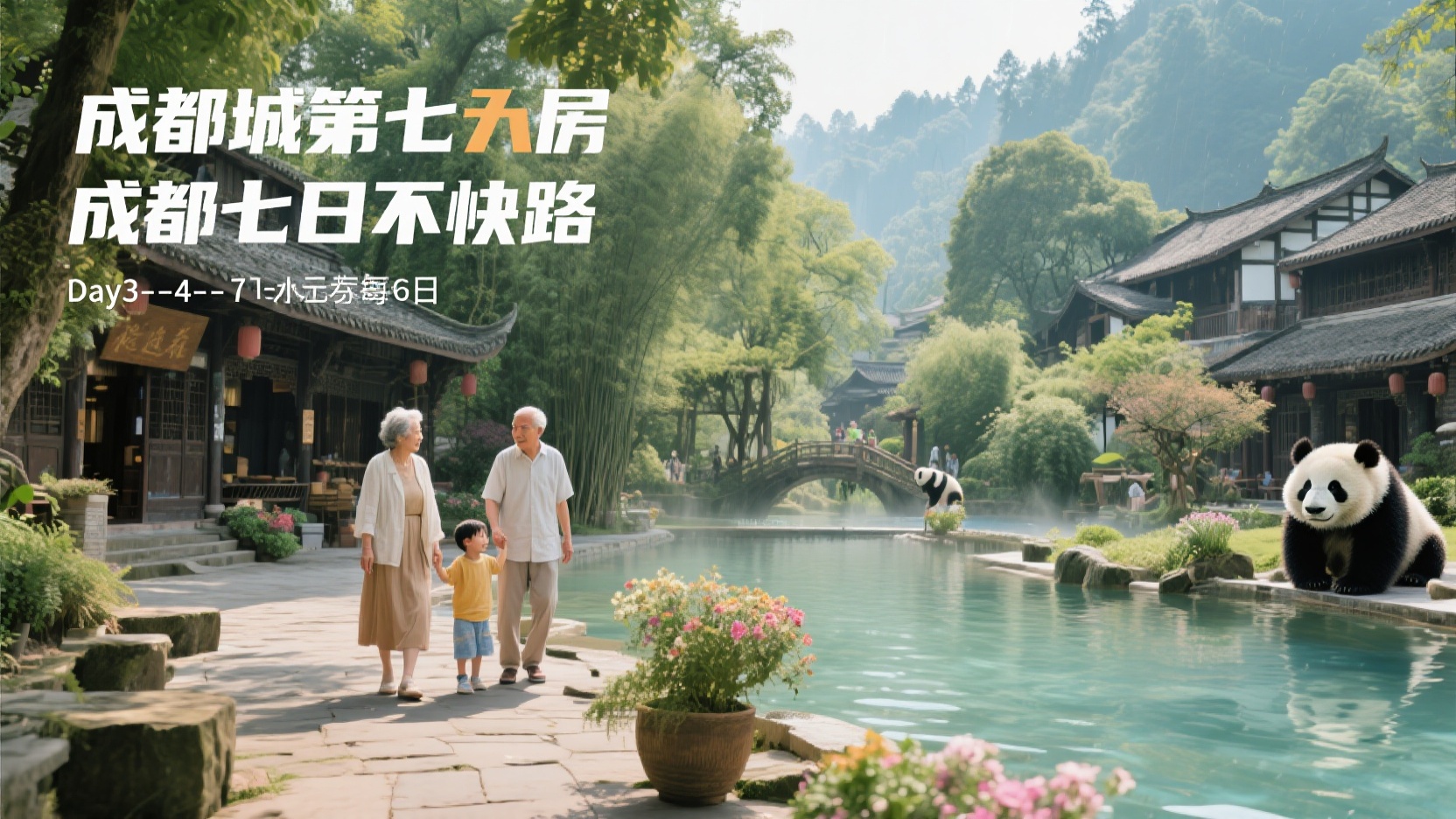
The key to slow travel in Chengdu isn't the number of places you visit, but rather keeping your daily commute within half an hour. The following 7-day, 6-night itinerary is arranged with a "one main destination in the morning, one secondary destination in the afternoon, and free time in the evening" rhythm, making it suitable for travelers with parents, preschool children, or those who don't want to rush.
Day 1: Upon arrival, I only did two things: drink tea and familiarize myself with the route.
After checking in, head to Heming Teahouse in People's Park, order a cup of covered-bowl tea, let the children feed the koi by the lake, and the elderly can rest under the covered walkway. In the afternoon, walk along Zhijishi Street and Kuixinglou Street in the Shaocheng area to identify the interchange station for Metro Lines 2 and 4, preparing for future travel. Have dinner on Kuixinglou Street to avoid queuing on the main street of Kuanzhai Alley.
Day 2: Morning session at the Panda Base, evening walk along the waterfront promenade.
It is recommended to depart from the city center before 7:30 AM and take the scenic area shuttle bus or the Metro Line 3 connecting bus to the Chengdu Research Base of Giant Panda Breeding. Only visit the three core areas: the Moon Nursery, the Sun Nursery, and the Cub Panda Villa; do not attempt to cover the entire park. Return to the city center for lunch and rest. After 4:00 PM, take a walk along Wangping Street and the Fuhe River waterfront promenade. Xiangxiang Lane has a concentration of snacks, but it's best to avoid peak hours.
Day 3-Day 4 Branch 1: Anren Ancient Town plus Huashuiwan Hot Spring
Suitable for families who want to balance cultural experiences with relaxation. On Day 3, take a direct bus to Anren Ancient Town in the morning, only visiting the Liu Family Manor Museum and two sections of Shuren Street, without a detailed visit to the Jianchuan Museum Cluster; in the afternoon, head to Huashuiwan to check into a hot spring hotel, with the hot spring soak limited to 40 minutes. On Day 4, take a walk along the Huashuiwan Forest Trail in the morning, or take the Xiling Snow Mountain Cableway to the halfway point, and return in the afternoon.
Day 3-Day 4 Branch 2: Dujiangyan Panda Valley plus the front of Qingcheng Mountain
Suitable for travelers who prefer nature reserves and scenic landscapes. Day 3: In the morning, visit Dujiangyan Panda Valley, which is less crowded than the city base, with gentler trails, allowing for close-up observation of the red pandas' activity area. In the afternoon, head to the front gate of Qingcheng Mountain, hiking only the section from Jianfu Palace to Yuecheng Lake. Day 4: Take the cable car to Shangqing Palace, then stroll to the Laojun Pavilion intersection and turn back, without attempting to reach the summit. In the afternoon, descend the mountain and return to Chengdu.
Day 5: Du Fu Thatched Cottage and Huanhua Stream (half indoor, half outdoor)
In the morning, visit Du Fu Thatched Cottage, focusing on the central axis stele pavilion, the original thatched cottage site, and the bonsai garden, avoiding spending too much time in the cultural and creative area. At noon, exit from the south gate and enter Huanhuaxi Park, strolling along the Poetry Avenue. The park is shaded by trees, making it suitable for seniors to take a nap. In the afternoon, if energy permits, you can walk to the permanent exhibition hall of the Sichuan Museum, completing a full-day cultural tour.
Day 6: Yulin Vegetable Market Morning Market and Bailuwan Wetland
We'll head to the Yulin Comprehensive Market early in the morning, buying only the day's fruit and braised food, without visiting any trendy restaurants. In the morning, we'll move to Bailuwan Wetland Park, renting multi-person bicycles or taking electric carts along the main loop, stopping by the lotus pond along the way. In the evening, we'll return to the Jiuyan Bridge area to see the covered bridge illuminated, but avoid the bar street to conserve energy.
Day 7: Fangcao Street concludes the day, leaving room for those who miss their trains.
In the morning, take a leisurely stroll along Fangcao Street and Huoshaoyan Lane, buying a small amount of dried goods such as Sichuan peppercorns and broad bean paste. Allow at least 3 hours for travel to the airport or train station, and avoid any places requiring queuing or rushing to avoid return journey anxiety.
Recommended gentle slope routes suitable for the elderly and children
People's Park has no steps throughout the entire city area; Wangjianglou Park's bamboo forest area and Jinjiang Trail are flat; Huanhuaxi Park's Poetry Avenue is wide enough to push a wheelchair; Bailuwan Wetland's main loop has a slope of less than 5%; the cable car section at the front of Qingcheng Mountain can directly reach Shangqing Palace, but the Laojunge section is too steep and it is not recommended to take the elderly to continue uphill; Dujiangyan Panda Valley has basically no steep slopes throughout the park.
Local frequently used apps list
Use the "Tianfu Tong" QR code to ride public transportation; check the "Scenic Area Shuttle Bus" mini-program for directions; use Gaode or Baidu Maps for navigation; refer to recent reviews on Meituan or Dianping for dining options; use Didi or Gaode Maps for taxis; and use 12306 for high-speed rail tickets. It is recommended to bind your real-name information to the WeChat mini-program in advance to reduce on-site operations.
Clothing suggestions for rainy and dry seasons
Chengdu's rainy season is concentrated from May to September. The rain is heavy but usually short-lived. It is recommended to wear quick-drying tops, carry a folding umbrella, and choose non-slip sports sandals or quick-drying hiking shoes. The dry season is from October to April of the following year. It feels damp and cold. You need to prepare fleece inner layers, light down jackets, and water-repellent jackets. The temperature difference between indoors and outdoors is particularly obvious in winter. The elderly and children can bring an extra vest.