
It's not spring, it's winter! | Around the winter solstice is Chengdu's seriously underestimated food season; a local's recommended list to avoid the bad choices.
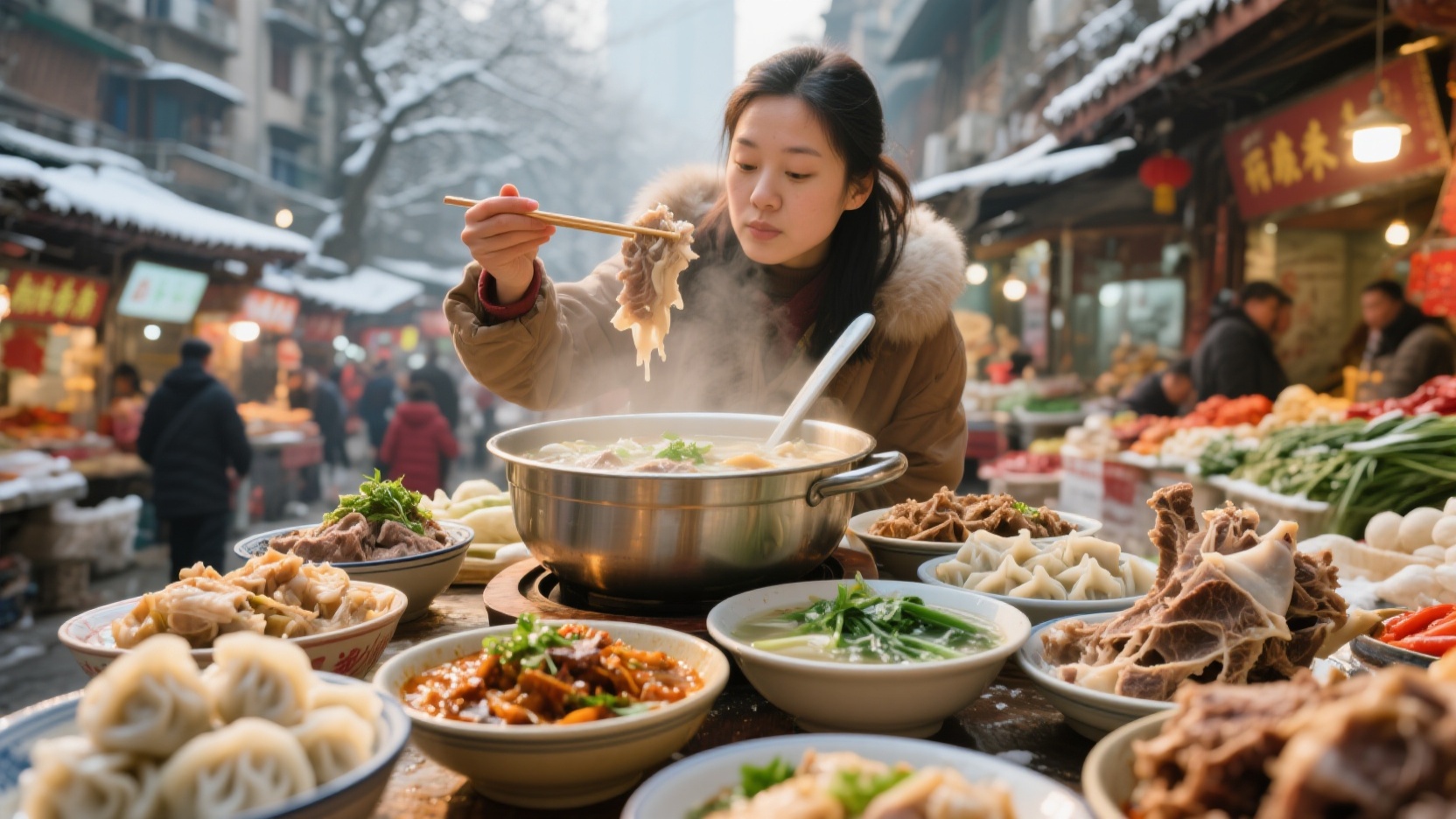
Last winter solstice, I took a friend from Shanghai to an old neighborhood in Yulin for mutton soup. He looked blank and said, "Isn't the best time to eat in Chengdu in spring?" I almost slammed the soup spoon on the rim of his bowl—the most underestimated season for food in this city is clearly around the winter solstice.
Most travel guides exaggerate the beauty of Chengdu's spring, highlighting delicacies like bamboo shoots, bracken, and tender leaves of houttuynia cordata. But what truly draws Chengdu locals to queue until the early hours of the morning in the cold night is the frost-kissed vegetables and hot soups of winter. Spring is about freshness, while winter is about warmth and the everyday flavors of the streets—the two are fundamentally different. After the winter solstice, Chengdu's wet markets become the locals' hidden menu.
Breakfast: Winter green vegetable porridge with boiled radish, and a bowl of revitalizing porridge.
Winter lettuce is a unique leafy green vegetable found only in Chengdu during winter. Its thick, hairy leaves, when cooked in porridge, become so smooth they seem to have been thickened with cornstarch. It thrives in cold weather but is sensitive to heat; its sweetness becomes more pronounced after a frost, and it's at its most tender and succulent around the winter solstice. Locals often skip trendy coffee for breakfast, opting instead for a bowl of thick winter lettuce porridge accompanied by a side of boiled radish. Some older women even add a spoonful of lard, making it even more fragrant.
The best pickled radish is made with local Rouge radishes, soaked overnight before being drained; it's crisp, sour, and slightly sweet. How to eat it authentically? First, drink a couple of sips of congee to warm your stomach, then pick up a piece of radish with your chopsticks and bite into it, enjoying the crunch. Finally, stir the radish into the congee a couple of times, letting the bitter and sweet flavors battle in the bowl. But absolutely do not add sugar; Chengdu people don't like sweet congee. This is how you wake up on a winter morning in Chengdu.
Lunch: Lamb soup isn't the real soul of the meal; it's the plain white flatbread.
Around the Winter Solstice, Chengdu locals must drink mutton soup, but outsiders often turn it into a mutton hot pot, adding a bunch of frozen meatballs to the broth, which locals find distasteful. Authentic mutton soup is served in a single bowl or small pot, with a milky white broth, sliced mutton and offal, and dipped in fermented bean curd and dried chili powder. Around the Winter Solstice, the lines outside mutton restaurants can stretch from 5 pm until the early hours of the morning.
The perfect accompaniment isn't rice, but a plain white flatbread. Tear the flatbread into small pieces and soak it in the broth, letting it absorb the mutton fat and the aroma of the soup—it becomes even more irresistible than the meat. Then, add a handful of pea shoots, scooping them out after just three seconds when they change color; their sweetness cuts through the richness. Why is this soup best enjoyed around the winter solstice? Chengdu winters are damp and cold, and at this time, the mutton has a milder gamey flavor and a firmer texture. After drinking it, you feel like you're wearing a warm coat—that's why you should drink it the colder it gets.
Don't go to those fancy lamb restaurants near tourist attractions. The place with the longest queues downstairs in the old residential area around the winter solstice is the locals' answer.
Winter Solstice Market: Mustard greens, baby bok choy, and red rapeseed are the true winter staples of Chengdu.
Out-of-towners come to Chengdu in spring to find wild vegetables, but the vegetables in Chengdu's winter markets are actually wilder. *Bangcai* (棒菜) looks like lettuce; after peeling, it's white and slightly bitter, but after a frost, its sweetness is brought out. Stewed with cured pork ribs, it makes a clear, sweet broth. *Ercai* (儿菜) grows in clusters, resembling tiny babies; sliced and stir-fried with cured pork, it's crisp, tender, and sweet. *Hongyoucai* (红油菜) sounds like rapeseed flowers, but it's actually just the tender tips stir-fried, with a slightly bitter aroma. These aren't wild vegetables, but they're the most sought-after "wild delicacies" in Chengdu's winter markets.
These vegetables taste best around the winter solstice because the low temperatures allow them to accumulate sugars to resist frost damage, and their bitterness becomes milder. How do locals prepare them? For stewed mustard greens, they only add a little ginger and salt; for stir-fried baby bok choy with cured meat, they add a few dried chilies; and for red mustard greens, they simply stir-fry them plain, adding minced garlic before serving. If you only come to find wild vegetables in the spring, you'll miss out on the winter bounty of the entire western Sichuan plain.
Afternoon tea: Roasted sweet potatoes and brewed beer, hot street drinks are the real afternoon tea.
In Chengdu, afternoon tea in winter isn't found in cafes, but rather at street-side roasted sweet potato stalls and beer brewing stands. After the first frost, the sweet potatoes fully caramelize, roasting them until the skin is charred and oozing honey, while the golden-red flesh steams hot when broken open. Roasted sweet potato stalls are mostly located at market exits and under overpasses. Locals buy one, hold it in their hands to warm their hands, and eat it while it's sticky with sweetness.
The roasted sweet potato is served with a cup of mulled beer. The beer is simmered with fermented glutinous rice, red dates, goji berries, and orange peel until the alcohol aroma dissipates slightly, resulting in a sweet taste with a hint of bitterness. This is the "warm red wine" of old Chengdu winters, much cheaper and warmer than trendy milk tea. Some stalls also sell brown sugar fermented glutinous rice powder, freshly kneaded. Fermentation is fastest around the winter solstice, resulting in the strongest aroma of the wine. However, don't immediately say "warm red wine," or the vendor will give you a disapproving look.
Late-night snack: Pig's trotter soup with spicy hot pot, a solace in the damp chill of 1 a.m.
Don't just focus on hot pot for late-night snacks in Chengdu. Many guides won't tell you that the best thing to eat around the winter solstice in the early morning is a bowl of snow pea and pig's trotter soup. The pig's trotters are stewed until they fall off the bone, the soup is thick and white, and the gelatinous texture is delicious. Late night travelers squat on plastic stools, first taking a sip of the hot soup, then picking up a piece of pig's trotter and dipping it in the chili oil sauce, warming themselves from the stomach. Many pig's trotter soup shops are closed during the day, only setting up plastic tables at night.
Locals always pair pig's trotter soup with some spicy hot pot or cold pot skewers. For vegetables, they order plenty of pea shoots, chicken feet, and potato slices; for meat, they only order beef and gizzard. Why is it so delicious in winter? Because the humidity is highest in the early morning, pig's trotter soup replenishes collagen, and spicy hot pot is invigorating without being too filling. Don't go to the chain stores in shopping malls; look for the yellow light downstairs in an old neighborhood. The white steam rising from the spicy hot pot stall is the most honest signpost in Chengdu's late night.
In conclusion
Don't ask locals "What are the must-eat foods in Chengdu?", ask "What's available at the market around the winter solstice?"
Avoid trendy, fancy mutton soup restaurants; the older neighborhood shops with long queues around the winter solstice are generally a safe bet.
Pea shoots should be taken out of the pot after only three seconds, as they will become bitter if cooked for too long. This is the last bit of stubbornness that Chengdu people have shown.
Brewed beer should be enjoyed at street stalls, not in bars; the taste is completely different.
In the early morning, enjoy pig's trotter soup with spicy hot pot. Remember to order less meat; you're eating the hot soup, not the frozen skewers.