
Zhangjiagang Seasonal Menu | 8 Limited-Time Flavors Personally Tested by the Blogger According to the Solar Terms (Non-Tourist Version)
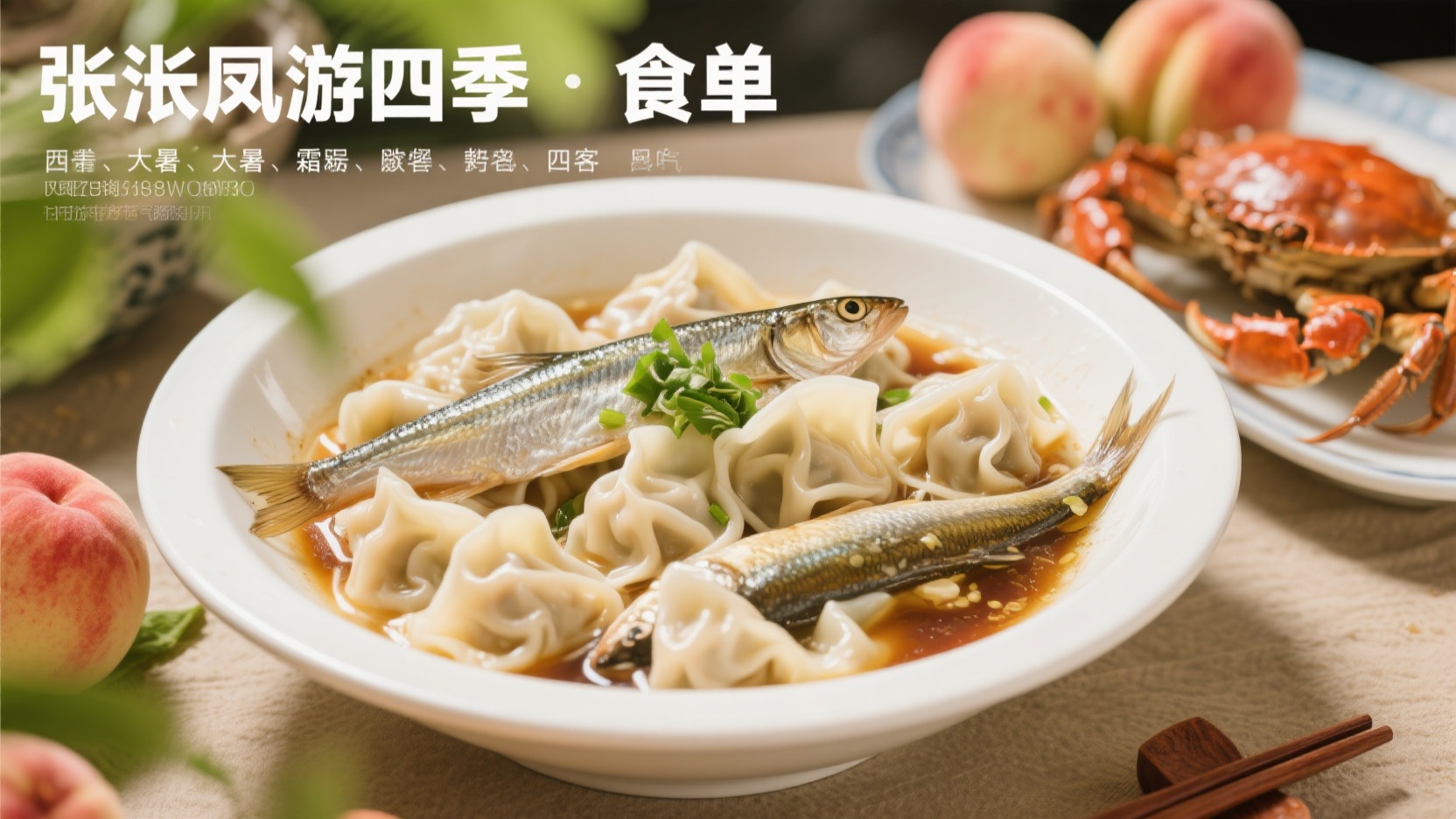
Having traveled around Zhangjiagang for seven years, my biggest lesson is: following Dianping (a Chinese review platform) for food recommendations will never lead you to the right season. The same bowl of knife fish wontons is completely different before and after Qingming Festival; the same Phoenix peach can drop from "amazing" to "ordinary" sweetness just three days before or after the Great Heat (a solar term). This list isn't based on trendy restaurants, but solely on the seasons, featuring eight items—if you miss them, you'll have to wait until next year.
Springtime before Qingming Festival: A battle for freshness between knife fish wontons and mud crabs.
Before Qingming Festival, the bones of the knife fish are soft, and the flesh is so delicate it melts on the tongue. Once Qingming has passed, the fine bones begin to harden, and the freshness diminishes. Most of the knife fish available now are sea knife fish or farmed knife fish, but local chefs still select fish according to the "pre-Qingming standard": the fish body should be silvery-white, and the belly slightly yellowish. Knife fish wontons are a secret recipe that Zhangjiagang locals are reluctant to share. The knife fish is deboned, the meat scraped, and mixed with a small amount of minced pork and shepherd's purse until it becomes sticky, then wrapped into small wontons. Locals insist on "adding it to the clear broth and drinking the soup first," never dipping it in vinegar, for fear of masking the fresh river flavor.
The crab claws, caught around the same time, are also worth a special trip. Between Qingming and Guyu (around April 5th and 20th of the lunar calendar), crabs are most active on the Yangtze River mudflats, their claws exceptionally plump. Locals prepare them in a very rustic way: stir-fried with scallions and ginger or pickled in rice wine, resulting in a large plate of glossy black claws. The way to eat them is simple—suck! Teeth crack open the shell, the tongue hooks onto that tiny bit of sweet, fresh meat, and paired with a sip of warm yellow wine, it's the wildest ritual of spring in Zhangjiagang. After Qingming, the claw meat quickly becomes empty, and even if it's still on the menu, locals no longer order it.
Summer Before the Great Heat: The Secret Code of Beating the Summer Heat with Phoenix Peaches and Crab Tofu
The peaches of Fenghuang Town are considered "liquid gold" before the Great Heat (a solar term in China). Grown in the area with volcanic ash soil and the microclimate along the Yangtze River, the Baifeng and Hujing varieties boast skins so thin they're translucent, and flesh that's soft, juicy, and sweet. Baifeng has a delicate aroma, while Hujing has a more concentrated sweetness; both are worth trying. Locals never cut peaches with a knife; the correct way is to tear a small opening at the stem and suck the juice directly from the flesh, or insert a straw and stir it. To determine ripeness, don't look at the redness; look for naturally occurring "sweet cracks" near the stem. After the Great Heat, while the peaches are still available, the peak sweetness from "sucking them out" is gone.
Another hidden gem in summer is mud crab tofu. It's not actually made from tofu, but rather from crushed mud crabs, strained to extract the juice, which is then steamed with egg whites to achieve a tofu-like texture. In the height of summer, the mud crabs are plump with meat, making the juice the freshest. Locals often serve it with a side of shredded ginger, scooping it up without stirring, letting it slowly melt in your mouth—a refreshing taste with a hint of cool river water. This dish isn't often listed on the menu in small restaurants; you have to ask, "Do you have mud crab tofu today?" to find it. The worst thing is if a restaurant uses frozen mud crabs to make up the difference; the flavor is noticeably inferior, and locals can tell immediately.
Autumn After Frost's Descent: The "Fat-Gaining Logic" of Crabs from Shuangshan Island and Steamed Dishes from Tangqiao
After the first frost, the crabs along the riverbank begin to fatten up, and those on the mudflats of Shuangshan Island are plump and full of roe. Unlike the crabs eaten in spring and summer, autumn is about enjoying their overall plumpness. Locals like to make drunken crabs, marinating them for several days in soy sauce, rice wine, sugar, and spices until the crab meat becomes translucent and gelatinous, with a salty-sweet taste and a hint of wine aroma. They can also be steamed and dipped in ginger and vinegar, with the crab roe filling your mouth. The crabs are at their fattest at this time of year, but their window of opportunity is short; they burrow into their burrows as soon as the cold air arrives. To get to Shuangshan Island, you need to take a ferry, and you can eat freshly caught crabs on the island – that truly means being "less than two hours out of the water."
With the arrival of new rice in autumn, Tangqiao steamed dishes reach their peak flavor. Several layers of steamers are stacked on earthen stoves, simultaneously steaming meatloaf, three delicacies (pork skin, egg dumplings, and cabbage), dried bamboo shoots, and green beans. Steam wafts between the steamers, locking in the original flavors of the ingredients at the bottom of the bowl. Locals enjoy Tangqiao steamed dishes during the early morning or midday rush, as many shops only serve their first batch of the day, closing once sold out. The most classic is the steamed three delicacies, with pork skin, egg dumplings, and cabbage at the bottom. The broth is surprisingly clear, yet every bite is bursting with the rich flavors of autumn.
Winter Solstice Night: Braised mutton and Shazhou yellow crabs as a "warming secret weapon".
For the people of Zhangjiagang, the Winter Solstice is just as important as the Lunar New Year's Eve dinner. Around the Winter Solstice, the aroma of braised mutton fills the countryside. Local goats, skin and all, are chopped into chunks and first stir-fried in a large pot over a wood fire until slightly charred. Then, they are stewed with red dates, old ginger, and white radish until tender. There's a specific way to eat it: the first bite is the skin, its gelatinous texture sticking to your mouth; the second bite is the meat; and finally, the broth is mixed into a bowl of white rice. Some old shops even add a little sugarcane to the broth for a more natural sweetness. Mutton noodles are a morning exclusive, with a rich red broth and a hint of green, leaving you with a light sweat afterward.
The grand finale is Shazhou Youhuang wine. New wine is brewed after the Beginning of Winter, and a pot is perfectly warmed on the Winter Solstice. Locals warm the wine without boiling it, only to about 60 degrees Celsius, adding a few shredded ginger or a preserved plum to the cup. Paired with braised mutton, the sweet aroma of the wine enhances the richness of the mutton. On the Winter Solstice night, the last bite at the Zhangjiagang dinner table is usually half a cup of wine and the words, "After the Winter Solstice, the days will grow longer."
In Zhangjiagang, the solar terms aren't just words on a calendar; they're the signs at the market stalls advertising "only available for these few days." Knife fish wontons are off the shelves after Qingming Festival, peaches lose their flavor after the Great Heat, and crabs become thinner after Frost's Descent. Eating according to the solar terms is the right way to experience a city.
Blogger's Practical Tips: 1. For spring knife fish wontons, it's recommended to go to an old noodle shop near the local market in the morning, as the first broth is the clearest. 2. Don't buy Phoenix peaches picked in advance by the roadside; look for the "honey seam" that naturally splits open at the stem. 3. Eating too many mud crabs can be cooling, so locals usually pair them with yellow wine or ginger. 4. In autumn and winter, it's best to ask in advance whether steamed dishes and mutton are made fresh that day, as some shops only serve lunch. 5. Don't drink winter-brewed wine or Shazhou Youhuang wine on an empty stomach; pairing them with hot dishes is safer.