
Don't book your overnight stay in Tianjin haphazardly | Personal review of three price ranges of guesthouses and chain hotels (including soundproofing, breakfast, and luggage storage to avoid pitfalls
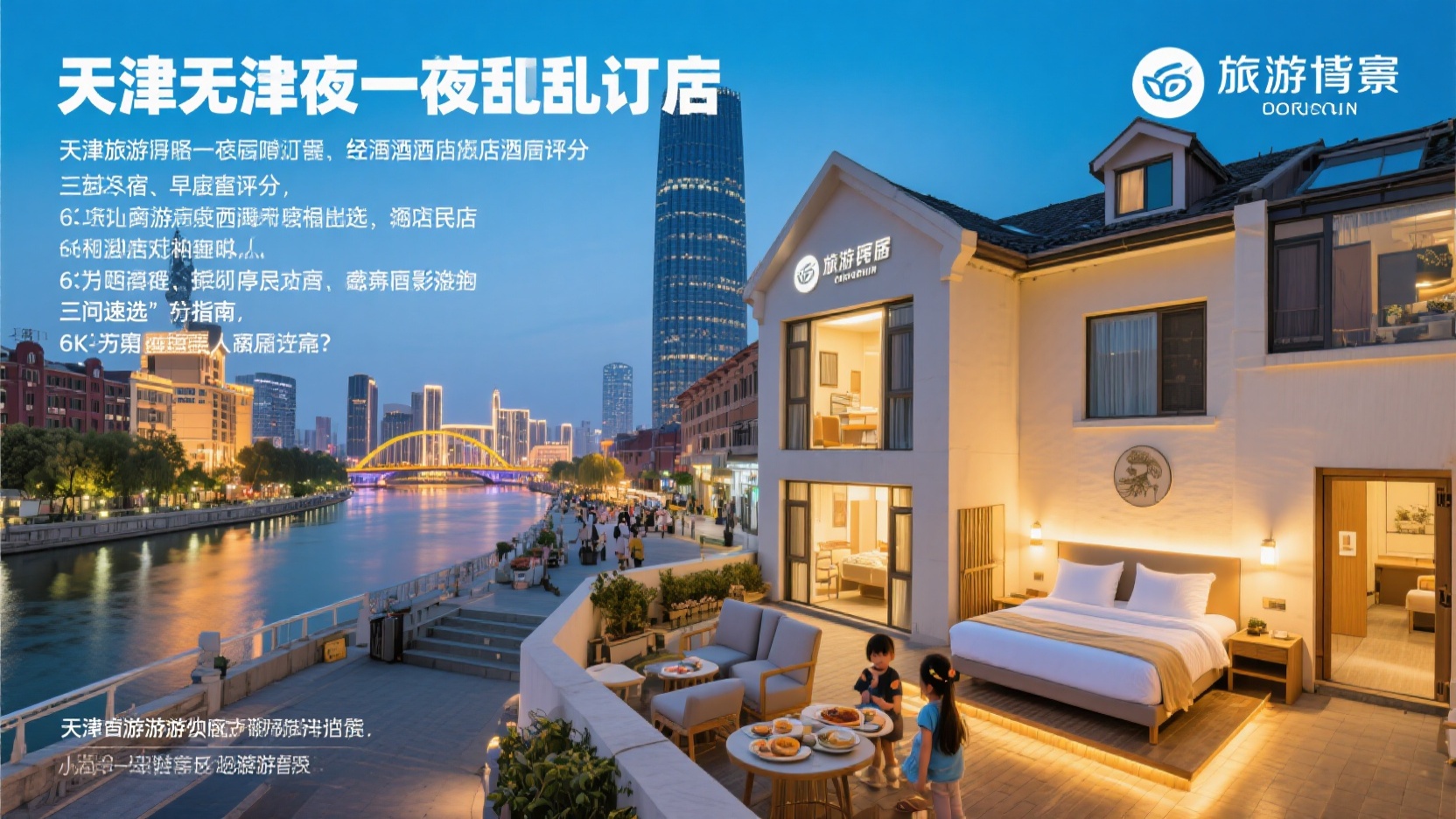
For most people in Tianjin who struggle with choosing where to stay overnight, the struggle often involves repeatedly switching between guesthouses and chain hotels. Due to filming needs, I frequently changed accommodations within the same area, staying in alleyway guesthouses in the old city, high-rise apartments along the Haihe River, and even trendy rooms converted from old Western-style buildings in the Five Avenues area. The more I stayed, the more I realized that discussing "guesthouses vs. hotels" without considering price and location is essentially meaningless. This article will provide a side-by-side comparison of boutique guesthouses and chain hotels within the same area across three price ranges, focusing solely on six aspects: location, soundproofing, cleanliness, breakfast, parking, and luggage storage.
I. Budget-Friendly: The Backpackers' Dilemma of "Soundproofing and Invoices" in the Old Town/Ancient Culture Street Area
When budgets are kept around 100 RMB per person, guesthouses near the old city and Ancient Culture Street are almost all hidden in old residential buildings or alleyway bungalows. Location is their biggest advantage; just steps away are traditional Tianjin breakfast stalls and night markets, and they're not far from the subway station. However, in reality, soundproofing in old buildings is generally a major flaw; conversations next door and footsteps in the hallway are amplified at night. Cleanliness depends entirely on the landlord's maintenance skills; diligent landlords keep it very clean, while those who only change the sheets often leave dusty messes. Don't expect breakfast; the better ones might provide two packets of instant coffee, but most guests will need to go out and get their own.
Chain hotels in the same price range have a significant presence in this area, but their rooms are usually small, and windows may face the courtyard. The advantages are that soundproofing meets at least basic standards, hygiene procedures are standardized, luggage can be stored at the front desk, and issuing invoices is convenient. Parking is inconvenient on both sides; the old town streets are narrow and parking spaces are scarce, and chain hotels may only have two or three free or low-cost parking spaces, available on a first-come, first-served basis. If you need to catch an early train the next day and require luggage storage and expense receipts, chain hotels are more reliable; if you're just visiting the ancient cultural street at night and only need to sleep afterward, the location advantage of a guesthouse is more appealing.
II. Comfort Level: Five Avenues/Xiaobailou Area - A Showdown Between "Atmosphere and Sleep Quality" for Couples and Best Friends
With a budget of 200-400 yuan, two types of accommodations appear in the Five Avenues and Xiaobailou area: boutique guesthouses in old Western-style buildings and mid-range chain brands. Guesthouses in this price range offer courtyards, patterned tiles, old steel windows, and street views; many rooms are very photogenic, and they are located deep within the neighborhood, with cafes and bars right outside. However, while the wooden floors and high ceilings of the old Western-style buildings are beautiful, soundproofing is often a problem, with footsteps and pipe noises particularly noticeable late at night. Breakfast is mostly delivered by takeout or simple meals prepared by the host, parking is extremely difficult, and while some courtyards offer parking, it needs to be confirmed in advance. Luggage storage generally requires communication with the host.
Mid-range chain hotels in the same area are usually located near office buildings or main roads, which may be a short walk from the Five Great Avenues, but the sleep quality is stable. Soundproofing and cleanliness are more reliable than in old-style guesthouses. Breakfast is mostly buffet or simple meals, with limited variety but enough to fill you up. Luggage storage at the front desk is handled according to standard procedures, and invoices are issued readily. Parking is slightly better than in old-style guesthouses, but city center hotels may only offer paid parking spaces. My advice for this price range is: if you're specifically here for photography, leisurely strolling through cafes, and can accept the "breathing" feel of old buildings, choose a guesthouse; if you're a light sleeper and plan to visit multiple locations the next day, chain hotels are less likely to ruin your itinerary.
III. Quality Tier: Haihe Riverfront/Italian Style Area, a "certainty" choice for families and light business needs.
For budgets increasing to 500-600 or even 700-800 yuan, most high-end guesthouses along the Haihe River and in the Italian-style area offer apartment-style or river-view accommodations. Their advantages include generally larger spaces than hotels in the same price range, with living rooms or simple kitchens suitable for families with children to wash fruit and heat milk; their locations are often first-row riverfront, offering views of the Tianjin Eye or cruise ships at night. However, the "non-standard" issues of guesthouses remain: hygiene depends on the stability of the cleaning team, breakfast may be unavailable or require extra payment, parking, while underground garages exist, is narrow and expensive, and luggage storage needs to be confirmed in advance and may not be available for a full day after check-out like hotels.
In this area, chain brands in the same price range focus more on service and standards. Rooms may be smaller than guesthouses, but the bedding, soundproofing, and hygiene are backed by the chain system; breakfast is usually included, which is suitable for families who don't need to go out early to find food; invoices, luggage storage, and lobby waiting areas are also more standardized. Most offer paid underground parking, but traffic along the Haihe River can be heavy on weekends, so there may be queues at the entrances and exits. If you are traveling with elderly people or children, or on business trips, and need invoices, breakfast, and luggage storage, chain brands offer greater assurance; if it's for anniversaries or traveling with friends, and you want a spacious stay with river views, high-end guesthouses can provide a ambiance that hotels cannot offer.
IV. Six-Dimensional Comparative Review: Where Exactly Did the Failure Lie?
Looking at the three price points together, in terms of location, guesthouses tend to be closer to old neighborhoods or river views, while chains rely more on transportation hubs and commercial areas. Regarding soundproofing and hygiene, chains are generally more stable, while guesthouses fluctuate more, and higher prices don't necessarily mean better soundproofing; old buildings and apartments can also have issues with their walls. For breakfast, chains offer a higher inclusion rate for the same price, while guesthouses often require guests to go out or order takeout. In terms of parking, neither guesthouses nor chains offer ample space in city centers, but chains usually provide clearer information on parking availability and pricing.
Luggage storage is the most easily overlooked aspect. Whether or not a guesthouse can store luggage after check-out depends entirely on the host's or manager's schedule for the day; chain hotels generally offer free or nominal fee storage, which is more convenient for people taking late flights or high-speed trains. Regarding invoices, chain hotels issue them immediately, while individual hosts often cannot provide them; some platforms can issue them on your behalf, but the process is slow. To avoid pitfalls, my habit is to prioritize "soundproofing, breakfast, and invoices" as the hard criteria, then consider location and space as secondary considerations.
V. Blogger's Summary: Three quick questions to choose the right product; don't pay for selling points you won't use.
When choosing accommodation in Tianjin, don't immediately ask "Is a guesthouse better or a hotel better?" First, ask yourself three questions: Do you need social interaction? Do you need breakfast? Do you need an invoice? If you enjoy chatting with the host, learning about local experiences, are okay with simple breakfasts or eating out on your own, and don't need expense receipts, then boutique guesthouses will likely offer a more authentic local experience, especially in the old city, the Five Avenues area, and the Haihe River area. If you're a light sleeper, don't want the hassle of finding food in the morning, and need to store your luggage and get an invoice after check-out, then chain hotels are a more reliable option.
Finally, here are a few practical tips: Parking fees along the Haihe River in Tianjin are quite high on weekends, so if you're driving, try to find out if it's free or paid; for guesthouses, always ask to see recent videos of the actual accommodations, don't just look at the retouched photos; for chain hotels, choosing those near subway stations can save you a lot on taxi fares; when traveling with elderly people or children, prioritize accommodations that include breakfast, whether it's a guesthouse or a hotel, confirm the breakfast type and end time first. By checking against these three questions and the criteria above, you can basically avoid most of the pitfalls I encountered in Tianjin.