
Shanghai Food Avoidance: Don't Go to the City God Temple | Local's Guide to Avoiding Disasters: These 8 Restaurants Have No Queues for Locals
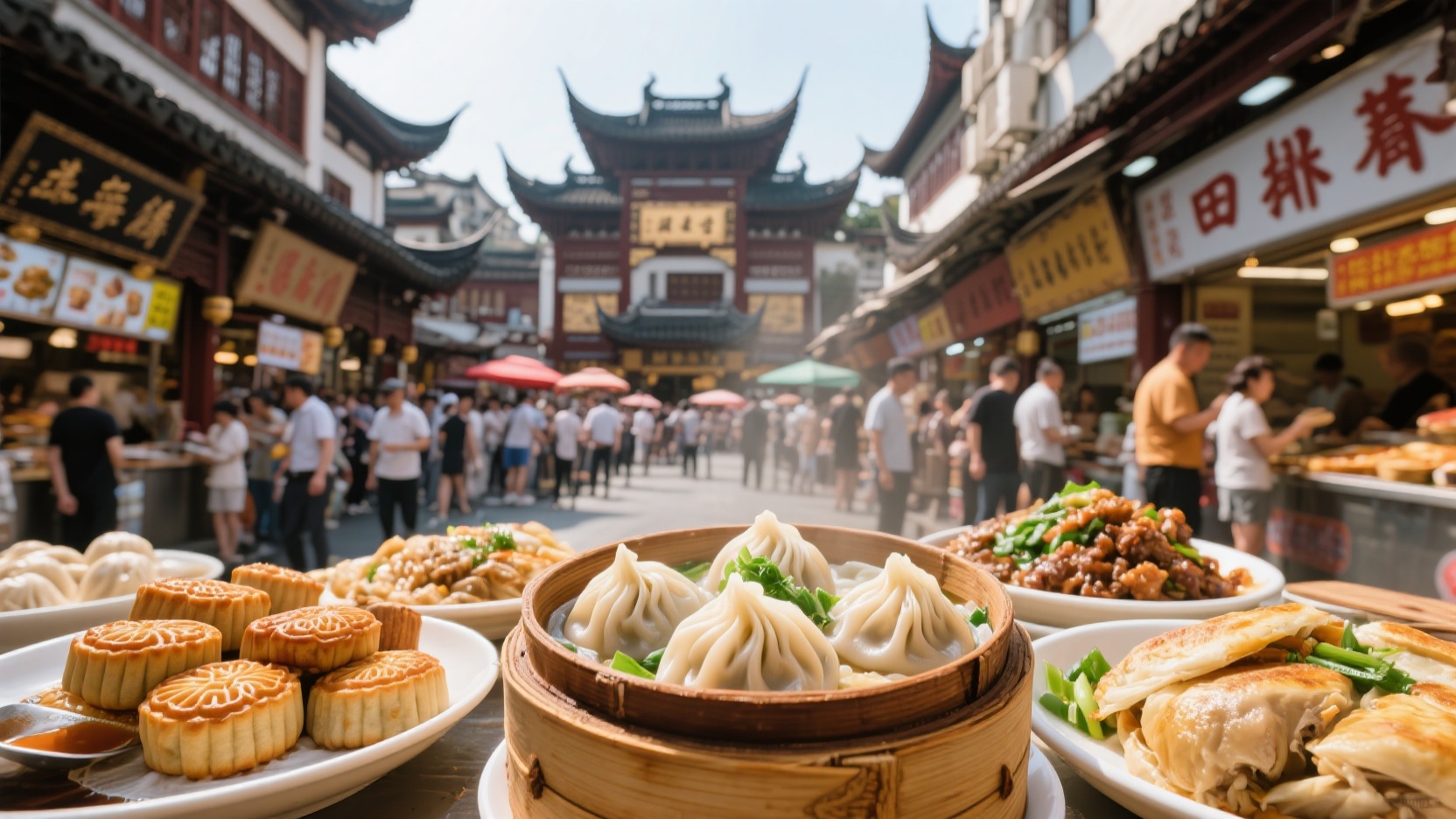
The first time I waited for someone at the entrance of the City God Temple food plaza, I saw a basket of xiaolongbao (soup dumplings) surrounded by tourists with selfie sticks, and I had only one thought: locals really don't touch this stuff. Half of those online "must-eat in Shanghai" lists are for tourists queuing up, and the other half are just for adding lighting to short videos. Real Shanghainese don't care about lists; they only care about the second floor of the market, the alleyway entrance, and the plastic stools of old-fashioned eateries. Today, I'll first avoid a few places rarely visited by locals, and then reveal my personal favorite food stalls that I've been eating at for five years.
First, a dose of reality: these four locals on the online "must-eat list" don't actually queue.
The City God Temple snack plaza. Aside from buying tangyuan (sweet rice balls) during the Lantern Festival or taking out-of-town relatives on a quick tour, Shanghainese rarely go there to eat. The xiaolongbao (soup dumplings) have thick skins and cloyingly sweet fillings, priced at around several tens of yuan per person (mid-range), yet the taste is like a tour group canteen. I can't understand why there's always a long queue outside; probably not for the taste, but for a good photo opportunity.
The old Shanghai-style spare ribs and rice cakes in Tianzifang were disappointing. The spare ribs were frozen, the rice cakes were hard, and the sweet bean sauce was overly thickened, leaving only a cloying sweetness. Locals would definitely go to a small alleyway shop to eat spare ribs and rice cakes; they wouldn't carry a cardboard box around in a tourist area and eat it as they walk.
Vacuum-packed xiaolongbao (soup dumplings) and fresh meat mooncake gift boxes are sold on Nanjing East Road Pedestrian Street. Once the fresh meat mooncakes are sealed in plastic boxes, the flaky crust is completely ruined. Locals only buy freshly baked, loose items, eating one and then buying another a few steps later. The "Shanghai specialties" in gift boxes are for people rushing to catch a flight, not for their taste buds.
The chain "Shanghai Rice and Scallion Oil Noodles" located in a shopping mall. The scallion oil isn't caramelized enough, and they're stingy with the lard. A bowl of noodles is priced at mid-range, and all you taste in your mouth afterward is soy sauce. They can't replicate the wok hei (wok aroma) of a neighborhood noodle shop.
The clay pot wontons on the second floor of the market are only open in the morning; the soup is even more popular than the wontons.
On the second floor of an old market in Jing'an, at the corner of the cooked food section, there's no sign; the clay pot dishes are served directly to the table. The wonton wrappers are so thin you can see the filling through them. The soup contains lard, egg skin, chopped green onions, and a small spoonful of pickled mustard greens for added flavor. They close around 11 a.m., and if you go late, only empty clay pot dishes are left.
How to order without making a mistake: The small portion of the "vegetable and meat + fresh meat" combo, with a fried pork chop, and you add your own chili oil. Don't order the mushroom soup base or the large portion; the casserole is more fragrant in a small pot, and the soup is more worth drinking than the wontons.
The scallion pancake stall at the alley entrance and the Qiang pancake stall in the corner of the market
At the entrance of an alley near Hongkou Football Stadium, the stall only opens in the afternoon. The pancakes are first fried and then baked, with so many scallions that it's practically free, and the lard mixed with flour sizzles on the griddle. Local uncles wearing slippers queue up, and it's common for them to buy five at a time.
How to order without making a mistake: Just order scallion pancakes with an egg, don't add ham sausage, pork tenderloin skewers or other random things. Take the first bite while it's hot, it's so crispy it crumbles, the taste is halved when it cools down.
In a corner of the market, just two streets away, thick slices of Qiang flatbread are generously topped with sesame seeds and scallions, while rice cakes have a slightly sour taste from fermented rice. These stalls don't have names; just follow the aunties carrying their shopping baskets.
How to avoid making a mistake: Buy freshly baked, thick-edged Qiang biscuits, not thin slices that have been cut and left to dry for a while; rice cakes with a fried dough stick are the carb pleasures that Shanghai kids understand best.
In the old town, a bowl of fried tofu and vermicelli soup with pan-fried buns is enough.
A shop in an alleyway in the old Nanshi district serves delicious stuffed tofu with firm meat filling, tightly wrapped tofu skin, and clear broth that's made especially flavorful with a sprinkle of white pepper. The pan-fried buns are made with semi-leavened dough, resulting in a crispy bottom and firm filling, with just the right amount of broth.
How to order without making a mistake: order fried tofu with vermicelli and one tofu skin roll; order only one ounce of pan-fried buns, don't be greedy and order two ounces. Be sure to put white pepper powder in the soup, and drink it until you sweat slightly on the tip of your nose.
The spicy pork noodles at the neighborhood noodle shop: "Diced pork," not "minced pork."
Located near the entrance of an old workers' residential area in Putuo District, this restaurant has been open for over twenty years. It offers two types of spicy pork: diced and minced. Local regulars usually order the diced pork, while the minced pork is just for those in a hurry to quickly prepare.
How to order without making a mistake: Spicy minced pork noodles with pickled vegetables and vegetarian chicken. The noodles are more skillfully prepared than the soup noodles. If you find it too rich, add a small bowl of curry beef soup. This set meal costs less than a few dozen yuan per person but is very satisfying.
Cold noodles and cold wontons, only available in summer, as well as poached chicken and smoked fish from the market.
At a street food stall in Xuhui District, the cold noodles are dried with an electric fan, and the peanut sauce and vinegar dressing are perfectly seasoned. The cold wontons are filled with shepherd's purse and pork, the wrappers are smooth, and they're perfect for summer when dipped in vinegar.
How to order without making a mistake: Cold noodles with shredded vegetables or spicy pork topping, extra peanut sauce, and a bowl of curry beef soup. Order a small portion of cold wontons, not a large one, to save room for poached chicken.
In the cooked food section of a market in Yangpu District, the three-yellow chickens are cooked that day, with shiny yellow skin and slightly reddish bone marrow. This kind of stall only operates in the morning and afternoon; if you go in the afternoon, you'll basically only have chicken feet left.
How to avoid making a mistake: The quarter of a chicken leg is the most tender, served with a bowl of chicken congee or blood soup. Don't buy a sealed gift box; have the chef cut it fresh. The layer of jelly between the skin and the meat is the freshest.
At the deli counter of an old food store near Huaihai Road, smoked fish is freshly fried and then dipped in sauce, available in sweet and sour and five-spice flavors. Smoked fish should be eaten cold, not steamed, as it will fall apart if steamed.
How to avoid making a bad choice: Buy freshly cut mid-section slices, not the overly sweet packaged kind. Eat them cold at home, or microwave for ten seconds; they're absolutely delicious with rice porridge.
In closing: Don't ask the locals if I didn't tell you.
First, don't ask if it's spicy. The spiciness in Shanghai cuisine is "mild" and "enhances the freshness." If you ask, the answer will be "it's a little bit spicy." You still have to taste it yourself after asking.
Second, avoid going during mealtimes. Most of these hidden gem shops only operate during the morning and afternoon hours, and the queues during mealtimes are mainly for nearby office workers. 10 AM and 2 PM are the most comfortable times.
Third, don't wear white clothes. The sauce from pan-fried dumplings, smoked fish, and spicy meat noodles will splatter precisely onto light-colored clothes, especially the bite from a scallion pancake. Don't ask me how I know.
Fourth, don't use reviews to find shops. Some of these shops don't even have a storefront; their low ratings are because the owners don't inflate their reviews. Look for wet markets, alleyways, and locals queuing in slippers.
5. Don't order large portions. Small portions of double-portion snacks, a small portion of pan-fried buns, or a small bowl of wontons allow you to try more things. The essence of Shanghai snacks is to "try a little of everything," not to eat your fill in one serving.