
Hidden Gems in Nantong | A Local Must-Have List I Made Three Trips On (Not the Infamous Spots)
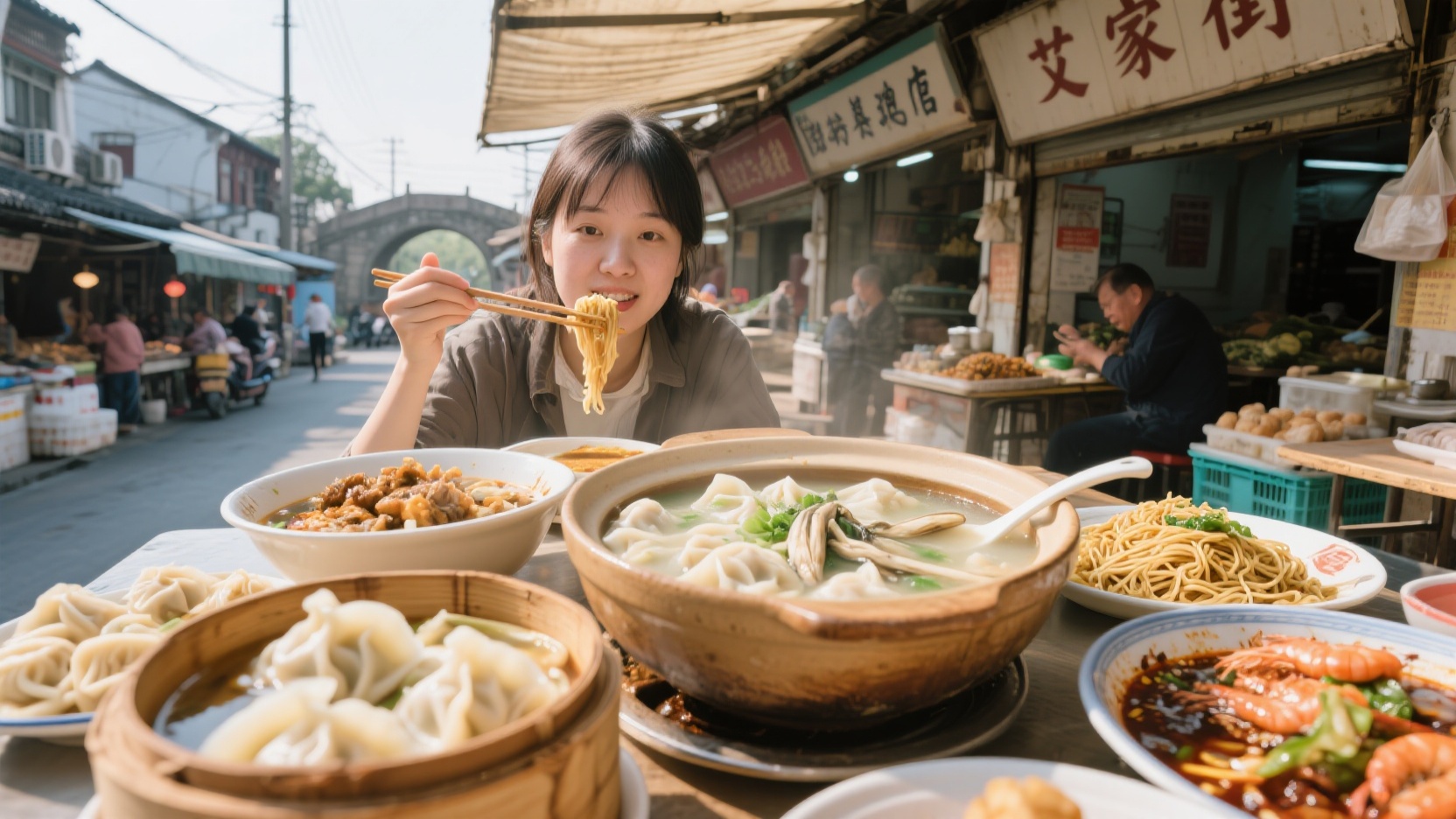
After exiting Nantong West Railway Station on my third trip, I took a taxi directly to Yijiaqiao Market. During my first two trips, I scouted out almost every "must-eat" and "trendy" restaurant I could find online. Frankly, it wasn't that they were bad, but they lacked the raw, uninhibited enthusiasm of locals. Later, at the market entrance, I struck up a conversation with an old man carrying a large earthenware jar. He waved his hand and said, "For these shops, just follow the ones wearing slippers." The following eight small restaurants and stalls—none of them do any marketing, none are on any must-eat lists, but they are the ones I most want to revisit during my three trips to Nantong.
1. Morning Market: Steamed Bun Stalls and Bubble Wontons are the Alarm Clock for Locals
The stall selling "gangpian" (a type of fried dough) at the west alley entrance of Yijiaqiao Market has a sign that's almost illegible; it only operates in the morning. Out-of-towners often mistake "gangpian" for a flatbread, but it's actually thinner and crispier, with a fragrant, slightly charred edge. The owner only makes two batches a day, half sweet and half savory; if you go late, only empty iron plates are left. My way of eating it is to tear it open right after it's baked, spread a spoonful of shrimp paste I bought from the stall next door, and then add half a fried dough stick—the sweet and savory flavors clash and are incredibly delicious. Just ten steps away from the stall is a condiment shop selling Shigang fermented bean curd and Baipu dried tofu. I buy a couple of pieces of dried tofu on the way and chew them as I walk; they're so much fresher than the vacuum-packed versions from the supermarket.
Turning from the market into Qifengqiao Alley, you'll find an old-fashioned wonton shop that only opens until noon. It has no name, just two tables set up outside; locals call it "Bubble Wonton." The wonton wrappers are so thin you can see through them, and they puff up like little balloons as soon as they're cooked. The soup base is simply lard, scallions, and dried shrimp—as simple as it gets. The signature way to eat it is to order a bowl of Bubble Wonton and a poached egg; don't skimp on the chili oil on the table. After you finish eating, if you see an auntie selling "straw sandal soles" (a type of fried dough) from her cart at the alley entrance, buy one sweet and one savory to snack on in the afternoon.
II. Tangzha Old Street and Old Residential Areas: Chicken Pot and Dumplings Don't Need Signboards
The chicken hot pot restaurant on Tangzha Old Street looks like an ordinary residence during the day, but they only set up a few tables at the entrance as dusk falls. When my local friend took me there for the first time, he specifically advised, "They don't care what you order, they care which table you sit at." The chicken hot pot is served dry-pot first, using local Sanhuang chicken. The sauce is so rich it clings to the chicken skin. Don't rush to add vegetables; first, eat the chicken pieces and garlic. The owner only adds broth halfway through the meal. At this point, you must order a side of water chestnuts and hand-pulled noodles; the noodles, soaked in the broth, are even more sought after than the chicken. Walking further down the old street from the restaurant, there's a small shop selling Xiting crispy cakes. They sell half a jin of the sweet kind, perfect for pairing with tea the next day.
At the fried food stalls near the entrances of old residential areas in Nantong, scallion dumplings are the most easily overlooked hidden gem. Fresh meat filling is wrapped in scalded dough and deep-fried until the surface bubbles and the outer shell is so crisp you can hear it crackling. During the evening rush hour after school and get off work, students in uniforms and those carrying briefcases crowd around the stall. Don't order more than two meat dumplings at a time, and pair them with a bowl of the stall owner's homemade mung bean soup to cleanse your palate. The lotus root cakes from the fried skewers cart next door are also worth grabbing a couple; the batter is thin, and the lotus root slices are thick, unlike those in other cities.
3. Restaurants only available outside the city: Pengcha Clam Soup and Lüsi Restaurant
The razor clam soup in Rudong's Bincha Town is truly something that "loses its flavor once it leaves the town." There's a restaurant in town, located in a family courtyard, with its menu displayed only on a small blackboard. Their most popular dish is simmered razor clam soup. They use local bamboo razor clams, meticulously cleaned, resulting in a milky white broth that's almost unbelievably fresh. When ordering, don't just order the soup; ask the owner for a plate of stir-fried razor clam snouts with chives, and a small dish of cold steamed razor clams as a main course. After your meal, take a stroll along Bincha Old Street. Freshly baked shrimp roe sesame cakes, with their crispy crust and shrimp roe filling that crumbles when you bite into them, are the perfect "living advertisement" to take home.
The hole-in-the-wall restaurants near Lüsi Fishing Port are my go-to "seafood blind box" on every trip to Nantong. There's no fixed menu; you eat whatever the fishing boats have on board. Locals often order not lobster or abalone, but a plate of braised ribbonfish, a steamed small yellow croaker, and stir-fried clams in soy sauce. The ribbonfish are local, small-eyed, and slender, with meat so tender you can barely pick them up with chopsticks; the clams have thin shells and thick meat, and the sauce is so good you can easily eat two bowls of rice with them. After you're done, don't rush off. Buy some dried shrimp and seaweed at the seafood market next door; they'll add a special flavor to your soup.
IV. Finish with a bowl of noodles: Hai'an shrimp paste noodles and noodles from an old neighborhood noodle shop.
Nantong "jumping noodles" are somewhat similar to Suzhou-style noodles, but the noodles are firmer, supposedly made by the chef jumping on bamboo poles to press them down. There's a shop in the old town that's only open in the mornings, its sign simply displaying the word "jumping," frequented mostly by regulars. The red broth is served with a piece of braised pork or a pork chop. Don't take too long to take pictures when the noodles are served; first, pick up a small piece to taste the original flavor, then add the chili sauce and vinegar from the table. Locals in Nantong are very particular about the noodles being "just cooked"—a little firm so they hold the broth well. There's a shop next door selling fried dough twists; buying a handful to soak in brown sugar water at home is a common memory for many Nantong residents, a meal eaten when they were sick.
In Hai'an, there's a small neighborhood noodle shop with shrimp paste, so tiny it only has four tables and closes down as soon as the morning market is over. The shrimp paste is a fermented sauce made from small shrimp, unique to the Nantong coast, with a salty and savory flavor and a hint of sweetness. The noodles are made with thin alkaline noodles, and the sauce is generously provided, making each noodle glisten with a reddish sheen after mixing. Those who know their stuff will also order a side of shrimp-stuffed egg, with a layer of sauce on top of the tender egg noodles—a perfect combination of soft and savory textures. Before leaving, I bought a bottle of the same shrimp paste they use at the grocery store next door; it's perfect for mixing with noodles or tofu at home, giving it a authentic Nantong feel.
V. Blogger's Summary and 3 Tips to Avoid Pitfalls
After three trips, what impressed me most about Nantong wasn't any particular elaborate dish, but rather the "unconventional answers" hidden in markets, alleyways, and old neighborhoods. These places have no marketing budgets or elaborate plating, yet they steadily and reliably deliver the most natural freshness and aroma of the confluence of the river and the sea to those who appreciate it. If it's your first time in Nantong, following this list will be more reassuring than chasing any ranking list.
First rule to avoid these pitfalls: Don't go during peak meal times. These small shops usually have limited seating, and the owners prepare food at a set pace. Queuing during peak hours is a minor issue; some even close down once they're sold out. True regulars go before opening or after 1:30 PM. Second rule: Don't just order the signature dishes. While the signature dishes are reliable, each shop's hidden side dishes are what locals enjoy, like water chestnuts in chicken hot pot or poached eggs in wonton shops. Not ordering them is like only experiencing half the meal. Third rule: Remember to bring cash. Many established stalls only accept cash or offer local QR code payments. Since internet connections can be unstable for those from out of town, having a few dollars in change will save you a lot of trouble.