
Lhasa locals don't recommend it | Don't be fooled by the "3-day, 2-night classic route": A local breaks down the pitfalls and lists things to avoid.
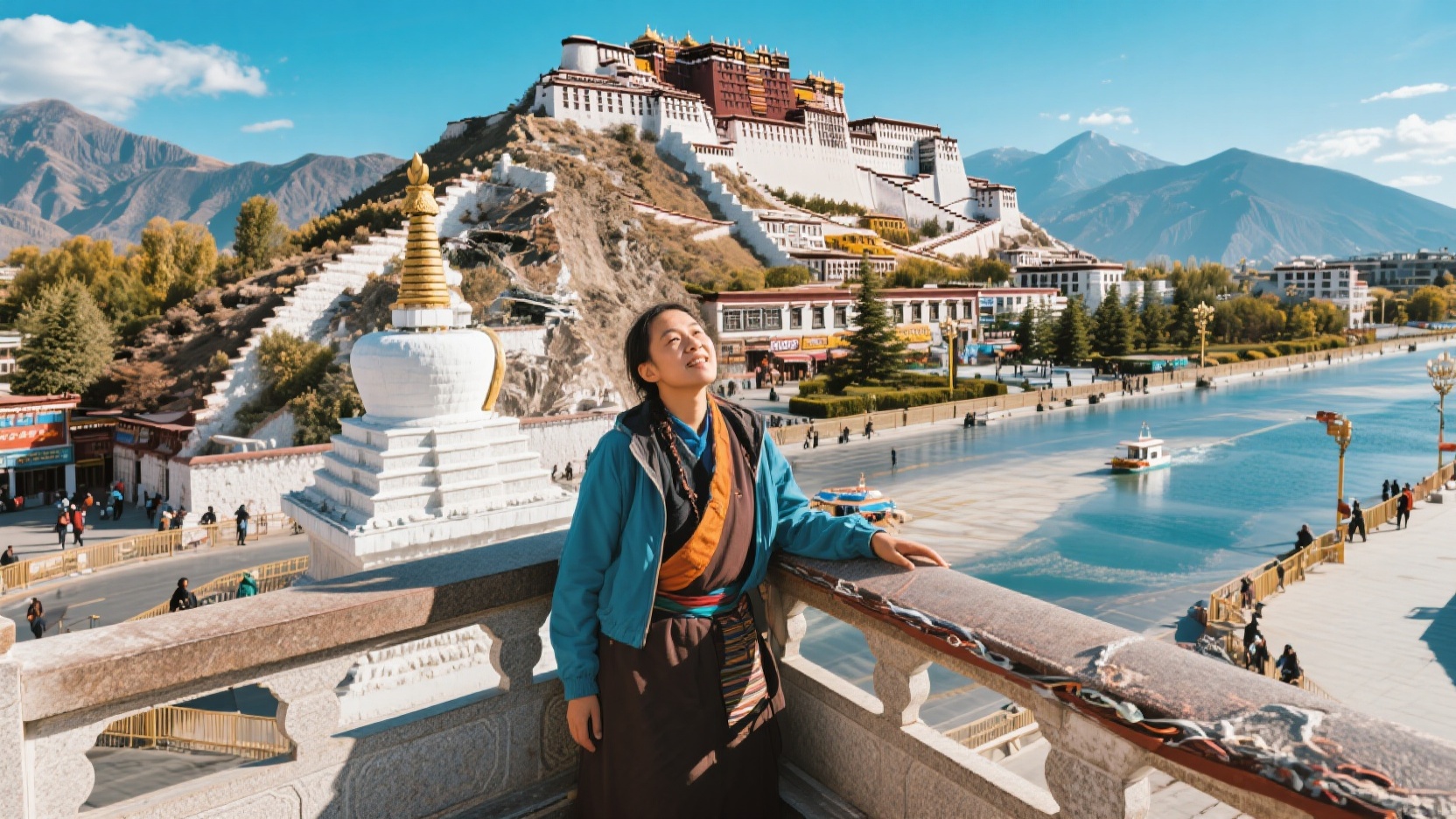
After waiting for the third time at the Potala Palace exit until my legs were numb, while my companions were still queuing for good photo spots at the Chakpori Hill viewing platform, I finally decided to write this unconventional revised version. The "3-day, 2-night classic route" in Lhasa is essentially a package deal combining rushing, queuing, and the risk of severe altitude sickness, making it unsuitable for most first-time visitors to Tibet.
Online itineraries often cram the Potala Palace, Jokhang Temple, and Barkhor Street into a single half-day, followed by Yamdrok Lake or Namtso Lake on the second day, and Sera Monastery and Norbulingka on the third. While this looks rushed, most of the time is actually spent on security checks, traffic jams, queues, and backtracking. The most worthwhile experience in Lhasa isn't the number of things to see, but rather the moments of leisure spent circumambulating prayer wheels, enjoying sweet tea, and soaking up the sunshine.
The idea of taking half a day to visit the Potala Palace, Jokhang Temple, and Barkhor Street is a major deception in terms of travel itinerary.
Visiting the Potala Palace usually requires reservations for either the morning or afternoon, but regardless of the time, it takes at least two hours to walk from the entrance to the Red Palace and then to the exit. If you enter at nine o'clock, you won't come out until noon. The midday sun in Lhasa is most likely to make you dizzy, and the security checkpoint at Jokhang Temple Square has the longest queue of the day.
Not to mention the area from the east side of the Potala Palace to Barkhor Street, where tour buses, taxis, and pilgrims throng Beijing Middle Road, often causing traffic jams near Longwangtan. By the time you finally reach Barkhor Street, your energy and patience are completely exhausted. You can only take a few tourist photos before finding a place to sit down, with no energy left to follow the locals on their pilgrimage.
The indigenous people's plan: Dedicate a whole morning to the Potala Palace, then go back to the hotel for an hour's nap in the afternoon, and then head back to Barkhor Street around 7 pm. At that time, the tourist rush has subsided, and more locals are circumambulating the temple, making for the most pleasant lighting.
Chakpori Hill Viewpoint, Norbulingka, and Sera Monastery: Three Overrated "Must-Visit" Spots
The small platform at the Yaowang Mountain viewing area is always crowded with people carrying tripods, yet the angle of the Potala Palace captured in photos is not much different from that in the square. You don't need to get up early to queue; just go up and take a look when you pass by, and thirty minutes is already a good amount of time.
Norbulingka is perfect for locals to enjoy in the summer, but it can easily feel underwhelming for the average tourist. Combining it with Sera Monastery in a half-day itinerary will only leave you feeling rushed. Instead of Norbulingka, consider visiting Zongjiao Lukang Park to see the Guozhuang dance and feed the pigeons; the authentic experience is far more appealing than a park surrounded by walls.
Half an hour is enough for the debating sessions at Sera Monastery, but some guides suggest making a special afternoon trip just to take a few blurry photos. If you're not fixated on the debating, Pabangka is a better option, offering panoramic views of Lhasa and avoiding the hassle of competing with tour groups.
Two-hour wait at Makye Ame? Locals just take a picture for their friends at the entrance and leave.
Most guides that include Makye Ame in their "must-eat" lists ignore the cost of queuing. This restaurant is located in the heart of Barkhor Street, and during mealtimes it's packed with tourists. After taking a number, you often have to stand and wait, usually for two hours. The food itself isn't bad, but it's become too touristy, with mid-to-high-end dishes, making it not very cost-effective.
If you really want to experience Tibetan cuisine, head to the old alleys on the north side of Barkhor Street and look for small restaurants with only Tibetan signs and no menus with pictures. Order a bowl of Tibetan noodles and a pot of sweet tea. There are also Tibetan restaurants frequented by locals in the eastern part of the city and Sun Island area, where you can eat comfortably for just a few dozen yuan per person.
A day trip to Yamdrok Lake and Namtso Lake is the part of the itinerary that most needs to be modified.
The "classic three days and two nights" tour often crams Yamdrok Lake or Namtso Lake into the second day, which sounds grand, but is actually a disaster. A day trip to Yamdrok Lake takes at least six hours round trip by car. Regular tours only stop at the Gangbala Pass viewpoint and designated spots on the lake, giving you 20 to 30 minutes to take photos at each spot. The rest of the time is spent either on the road or at shopping stops.
Namtso is even less practical, taking four to five hours one way, with the pass at an altitude of over 5,000 meters. A day trip could easily trigger altitude sickness. Many tourists arrive at the lake in the afternoon exhausted and have to rush back after less than an hour. It would be better to skip Namtso and dedicate two days to it on a separate trip. As for Yamdrok Lake, you should bypass the usual viewing platforms and take the western loop route, where there are fewer people and cars, and the lake's colors and gradations are completely different.
Indigenous Optimized Version: 3 Days 2 Nights + 1 Day Flexible Alternative
Day 1: Don't plan any sightseeing in the morning. First, go to Zongjiao Lukang Park to watch the locals dance the Guozhuang dance and feed the pigeons, allowing your body to acclimatize to the altitude. Have Tibetan noodles for lunch. In the afternoon, go to Pabangka or Zhaqi Temple. After 7 pm, go to Barkhor Street and walk around the prayer wheel three times with the crowds. Then, go to a small alley to drink sweet tea.
Day 2: Make a reservation at the Potala Palace in the early morning. After leaving, walk to the east side of the Potala Palace Square to take pictures of the reflection. Arrive at Sera Monastery before 3 PM. Half an hour is enough for the debating session. After watching, don't rush to leave; go to the path behind the monastery for a panoramic view of Lhasa. In the evening, you can stroll through the western suburbs night market and enjoy barbecue and yogurt.
Day 3: If you feel well, visit the western section of Yamdrok Lake or Ganden Monastery. Ganden Monastery is relatively close to the city, built on a hillside, and has a very strong aura. After returning in the afternoon, you can also visit Norbulingka or the area around the Tibet Museum.
An extra day of flexibility: Choose according to the season. In winter, visit Linzhou County to see black-necked cranes; in summer, make a day trip to Samye Monastery in Shannan; in autumn, hike the section from Ganden Monastery to Samye Monastery. Don't schedule this day as a "rush to see attractions"; let your body and the weather decide.
10 things you shouldn't do in Lhasa
1. Do not rush to the Potala Palace on the first morning. Climbing the steps can cause dizziness and weakness in the legs because the blood oxygen level is not yet adjusted. 2. Do not wear short skirts or shorts into temples. Some halls may refuse entry. Do not argue at the entrance.
Third, don't follow the crowd and queue for two hours at the entrance of Makye Ame; the sweet tea and Tibetan noodles in the nearby old alleys are more worthwhile. Fourth, don't walk counterclockwise on Barkhor Street; that's the direction for pilgrimage, not a route for tourists to take photos.
5. Do not book a day trip to Namtso Lake on the roadside at the last minute, as the risk of a same-day round trip is high; 6. Do not use a DSLR camera to take close-up photos of pilgrims' faces, as many people will find it offensive.
7. Don't think you don't need to bring a light down jacket when you come to Lhasa in the summer; the temperature difference between day and night will teach you a lesson. 8. Don't buy dzi beads and amber on Barkhor Street; you'll most likely buy tourist traps.
9. Don't take taxis the whole way; walking and using shared electric bikes in the old town is actually faster. 10. Don't schedule washing your hair and taking a shower on the first night in Tibet, as it can worsen altitude sickness.
In conclusion
Don't ask the locals if I haven't told you: 1. Potala Palace tickets must be booked in advance, as there are basically no tickets available if you queue on-site; 2. Don't shower on your first night in Tibet, it's not superstition, it's to prevent altitude sickness; 3. The real time for circumambulating the Barkhor Street is from 7 am to 9 am; 4. After finding a seat in a teahouse, leave your change on the table, and the waiter will come to refill your cup; 5. Don't pick at your dry nose, pharmacies sell saline nasal spray.