
Avoid the crowds at Yuehe in Jiaxing | A local's recommended list to avoid: This 5km old town art and culture route is definitely worth the effort.
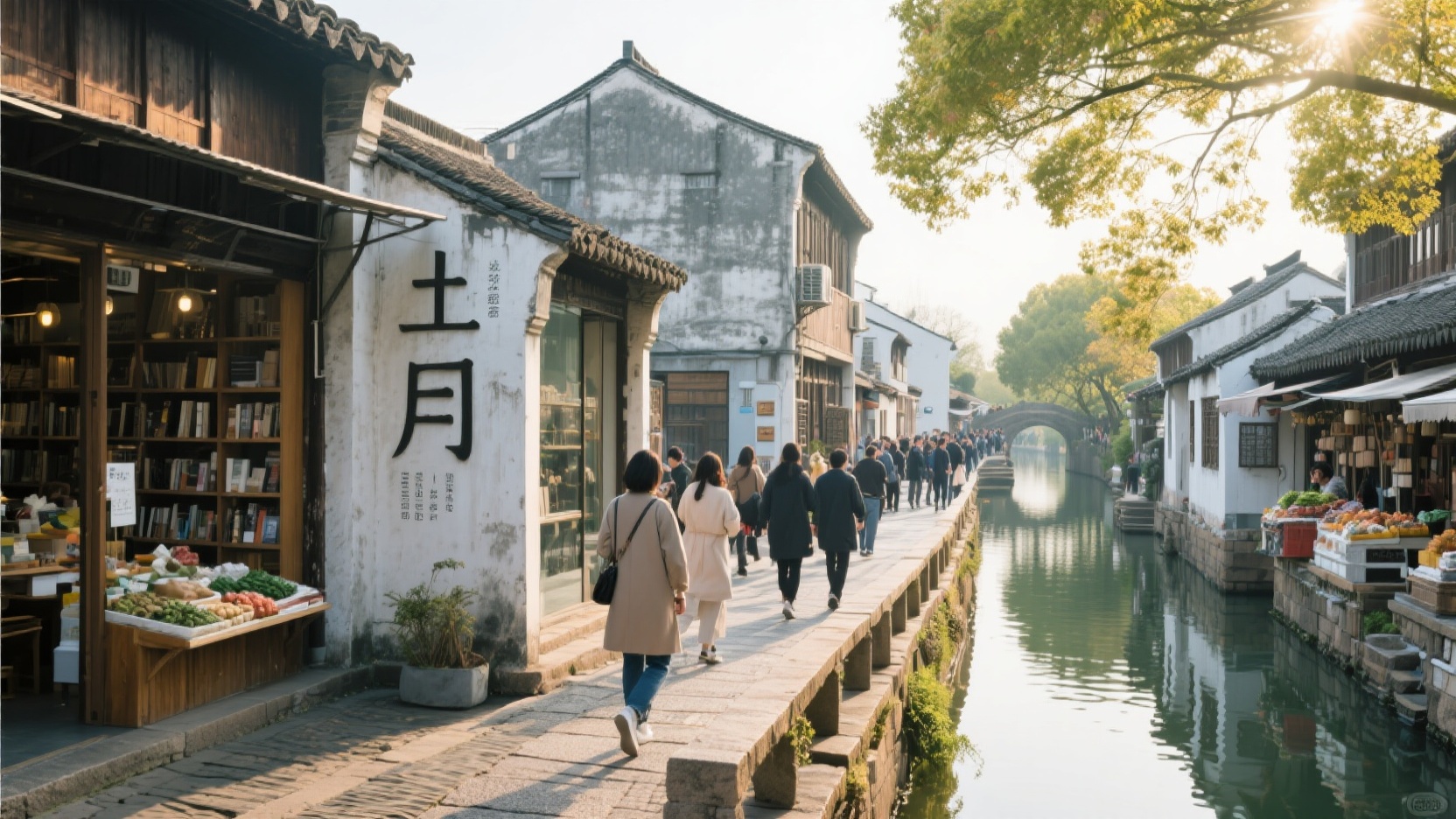
In Jiaxing, if someone makes a special trip to Yuehe Historical District to take stunning photos of an ancient Jiangnan town, I can pretty much say they haven't been treated to a real bowl of "luoguomian" (a type of noodle dish) by a local. Those artsy spots marked as "must-see" in travel guides are places locals wouldn't even glance at if they were just passing by.
Jiaxing's artistic charm isn't found at the entrances to scenic spots, but rather within the pedestrian-friendly old town. First, note down three common pitfalls, then follow a local's daily route, and you'll understand why locals don't like going to those places.
Don't be fooled by these three "artsy photo spots"
The first pitfall is the section of Yuehe Historical District near Jianguo Road. During the day, it's so crowded you can't even open an umbrella. The shops sell the same bracelets and nougat as those in all the ancient towns of Zhejiang. Locals usually just walk through to the flower and bird market behind Zhongji Road, or buy a few zongzi (sticky rice dumplings) before the Dragon Boat Festival. Want to take photos? The alleys are narrow, and the background is full of people, making it extremely difficult to get a good shot.
The second pitfall is the giant art installation near the lake in Nanhu Tiandi. The backlighting is severe in the evening, making faces appear dark in photos taken from the front, while the back is obscured by parking lots and construction barriers. The "art exhibitions" inside are often just mall decorations; you can see similar things in other cities, so don't waste your time queuing.
The third pitfall is the Luxi Hui antique-style street. At night, with the lights on, it looks like a photo studio set, and the glare from the stone pavement is blinding. The so-called intangible cultural heritage experience stores offer very little substance, and locals rarely go there for their evening strolls, preferring to enjoy the breeze under the nearby bridge instead.
Overview of Indigenous Walking Routes: 5km Through the Old Town
The perfect spot for a leisurely, artistic stroll is this 5-kilometer route from Fanli Lake Park to the North City Market. The entire walk takes about an hour and a half, but you'll stop many times. It's recommended to choose weekday mornings in spring or autumn, or early weekend mornings; avoid the afternoons in summer; and in winter, finish before 3 PM for the best lighting.
The route connects old streets and alleys, community parks, creative parks in old factory buildings, independent bookstores, art spaces, and farmers' markets. There are no queues, no tickets, and you don't need to pretend to know a lot about art; you'll find yourself naturally as you walk.
From Fanli Lake to Xiexi Street: Old Park and Old Alleyway
Our first stop was Fanli Lake Park, a popular spot for locals to exercise and walk their birds in the morning. We stopped for ten minutes to see the ruins of Xi Shi's Dressing Table and Jinming Temple. The lake is small but has a rustic charm. The best vantage point was near the stone bridge on the south side of the lake; before 8 am, you could capture the misty water and the reflections of the old willow trees. Nearby, we stopped for some winter bamboo shoot and pork shumai on Xiexi Street – thin wrappers and plenty of soup, all for a few dozen yuan per person.
From the north gate of the park, walk to the entrance of Xiexi Street, an old alleyway, but don't rush onto the main road. The alley is lined with residential buildings from the 1980s and 90s, clotheslines and osmanthus trees intertwined, with the occasional elderly person setting up a bamboo chair. Position your camera at the corner of the alley, using a telephoto lens to compress the clotheslines and old window frames. There are small stalls selling radish cakes by the roadside; they're crispy on the outside and tender on the inside when hot.
Zicheng and Pingshan: City Walls, Ginkgo Trees, and a Hidden Mini-Theater
The third stop was the Zicheng Ruins Park, the root of Jiaxing's ancient city. Although the city wall has been restored, it's spacious and less crowded, perfect for a ten-minute stop to admire the stone lions south of the watchtower and the ferns growing in the brick crevices. The best vantage point is on the central axis of the watchtower; the sidelight around 3 PM offers the most depth and dimension. Nearby on Jianguo Road, there's a Chinese pastry shop; their osmanthus cake isn't overly sweet.
Crossing Jianguo Road to Pingshan Park, you'll find a small hill, a rare find in the city, where ancient ginkgo trees carpet the entire steps in autumn. A ten-minute walk up to the pavilion at the top offers panoramic views of the old city's rooftops. The best spot is at the southwest corner of the steps, looking up at the ginkgo trees and pavilion eaves. Near the park entrance, there are small shops selling savory soy milk and glutinous rice balls; there's often a queue during breakfast hours.
There's a small theater in an alley next to Ping Mountain, where local drama clubs occasionally rehearse or put on impromptu performances on weekends. Whether you catch one depends entirely on luck, but the storefront itself looks like a 1990s movie theater, giving it an old poster feel for photos.
Xiuzhou Bookstore, the creative park in the old factory buildings and the vegetable market are nearing completion.
Heading north from Ping Mountain, Xiuzhou Bookstore is a haven for local book lovers. It's not one of those trendy bookstores with huge bookshelves for photos; it's a place where you can actually sit down and browse through old books. Take ten minutes to flip through local chronicles of Jiaxing or folk art magazines. The best spot is at the wooden table by the window, where natural light falls on the pages, making for great photos. The adjacent coffee shop is affordable and a good place to rest.
Walk about another kilometer to a creative park converted from an old factory in the north of the city. It used to be a textile factory, now dotted with independent design studios and pottery workshops. Stop for ten minutes to admire the old workshop ceilings and overhead crane tracks; the industrial feel is very strong. My camera spot is in the park's atrium; in the afternoon, the sunlight streams in through the high windows, making even the dust look like gold dust. There's a local noodle shop nearby; their braised mutton noodles are quite good.
The last stop is the farmers' market. Don't underestimate this place; the shouts and lights before the stalls close in the evening are more authentic than any immersive exhibition. Stop for ten minutes to buy some local Jiaxing braised duck or water chestnuts. The best spot is in the vegetable aisle; use a wide aperture to capture the water droplets and colors—they're more vibrant than the vendors in tourist areas. There's a wonton shop nearby where you can grab a bowl before heading home.
In closing: Don't ask the locals if I didn't tell you.
"1" You can go to Yuehe, but avoid entering from the main entrance on Jianguo Road during the day on weekends; if you want to buy flowers and birds, go to the latter part of Zhongji Road. "2" Most of the best shooting spots are at the corners of alleys, not under the archway. "3" This route is best when the ginkgo leaves turn yellow in autumn and the osmanthus flowers bloom in spring; avoid midday in summer.
"4" The wet market is more photogenic than the creative shops, but you have to put aside your pride and go for the smells. "5" Don't ask locals "Where are the best places to take photos?" We'll just tell you "There's a good noodle shop over there."