
These 7 Guilin Restaurants: A Local Must-Visit List Based on Three Trips (Not Popular Online Spots)
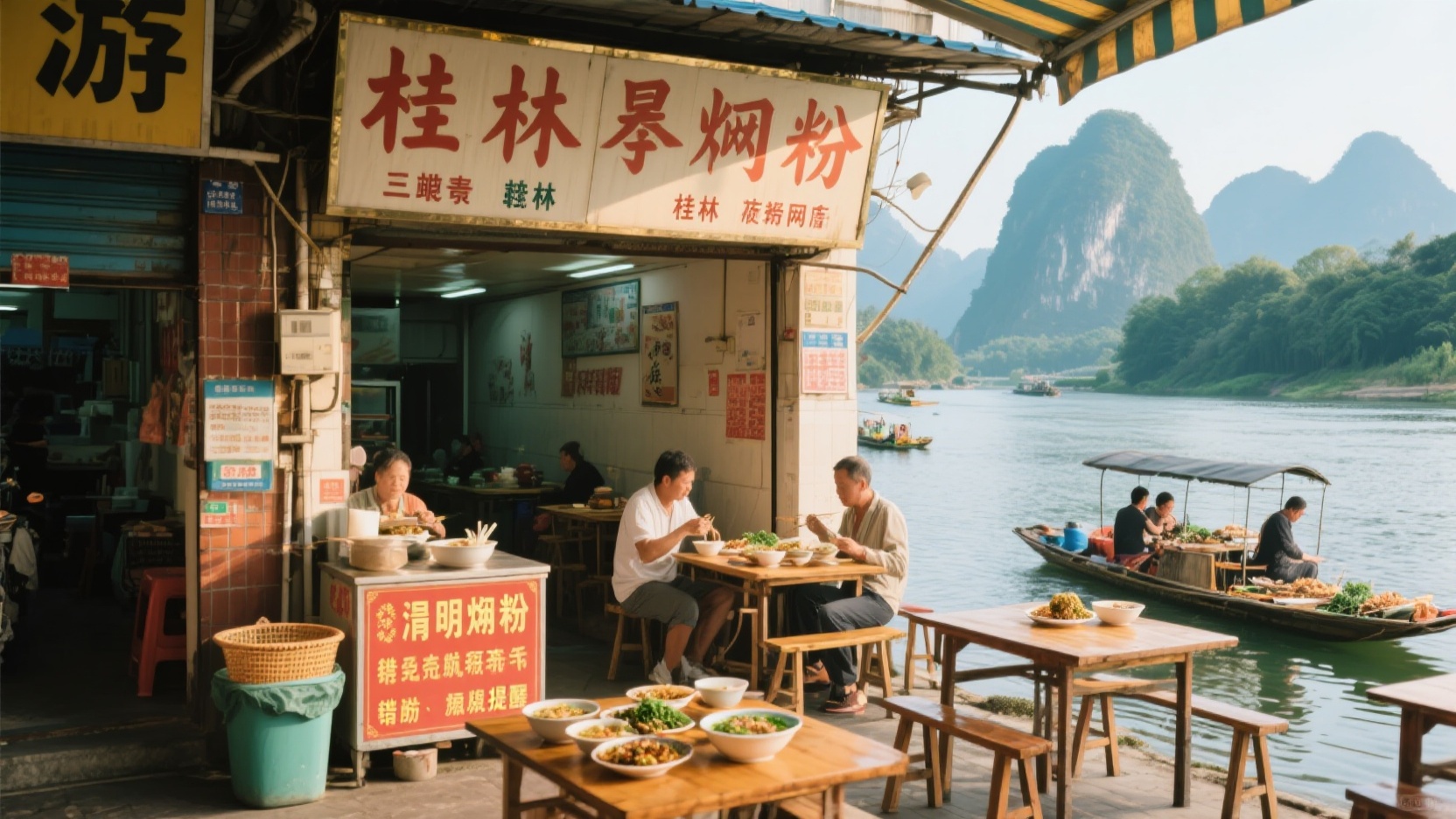
When looking for food in Guilin, the worst thing is to rely solely on must-eat lists and restaurants near tourist attractions. After three trips to scout locations, I followed several Guilin foodies through residential areas, markets, and riverside markets to compile this list of hidden gems, spoken only in the local dialect. None of the following seven restaurants do any marketing; some don't even have proper signs. They are the everyday flavors voted for by the locals.
This list is perfect for those who don't want to queue up for fancy restaurants and prefer to eat like a local. For each restaurant, I've labeled why you should go, what to order, and what to buy nearby. At the end, there are also three honest tips to avoid common pitfalls.
I go to the community to eat a bowl of rice noodles at six in the morning.
Li Ge's Rice Noodles, located in an old residential area on Canluan Road, is tucked away next to a storage room in an apartment building, with only a handwritten blackboard hanging on the wall. The broth is made by simmering pork bones and chicken frames until it turns milky white, and the baked flatbread is fried fresh daily, cut irregularly but with a crispy skin and juicy meat. Why it's worth going: the flatbread here isn't from a cold chain; it has a caramelized aroma and is bursting with meat juice when you bite into it.
How to order: Two ounces of rice noodles with roasted pork and dried bean curd. Eat a few bites dry first, then ask the owner to add bone broth for two different flavors. What to buy nearby: Turn right after exiting the alley, there's a cart selling water glutinous rice cakes, freshly made with sesame and peanut filling. Grab a couple to take with you.
Wayao Back Alley and Tiexi Residential Area—The Sour, Spicy, and Sticky Aroma Near the Vegetable Market
At 4 PM sharp, Sister Huang's beef intestine and sour soup cart appears in the back alley of Wayaoyao Wholesale Market. The broth is sour and spicy with a hint of sand ginger, the beef intestines are cleaned without any unpleasant smell, and the beef cartilage and radish are the hidden stars. Why it's worth going: the broth is cooked and poured out on the same day, and it's basically empty by 6:30 PM, with locals standing by the roadside eating from paper bowls.
How to order from their signature menu: Beef intestines with beef cartilage and radish, leave the spiciness to Sister Huang, and add a spoonful of pickled cowpeas at the end. What to buy nearby: There's an old-fashioned cold noodle stall across the street, with brown sugar water and mint—perfect for cooling down after the spiciness.
You have to get there early for Sister Liang's glutinous rice in Tiexi neighborhood. The glutinous rice is steamed to a firm consistency and filled with pickled cowpeas, dried radish, steamed pork, and fried dough sticks, giving it a satisfying texture. The signature dish is a glutinous rice ball with steamed pork and sausage, served mild or non-spicy. Nearby shops offer freshly ground sesame paste at the neighborhood entrance, so thick it clings to the spoon.
Ludi Road Oil Tea Shop – A bowl of oil tea and half a table of snacks
The Gongcheng Oil Tea and Local Cuisine Restaurant next to the Ludi Market has a small storefront that's easy to miss, but at lunchtime it's packed with elderly women coming out of grocery shopping. The oil tea is freshly made with old-leaf tea, ginger, and garlic; the first bowl is bitter, the second sweet. The rice cakes, sesame balls, sesame seed cakes, and boat-shaped cakes are all homemade. Why it's worth a visit: they don't accept tour groups, only serving locals, and the ginger flavor is strong enough.
What to order: First, order a pot of oil tea per person, plus boat cake and taro cake. Don't order too many stir-fried dishes. What to buy nearby: There's a stall selling handmade fermented bean curd at the back gate of the market. Buy a small bottle to dip in porridge or steam with ribs—it's delicious.
Riverside late-night snacks and Lingui Old Street – freshly caught fish and shrimp and stone-ground tofu pudding
Along the banks of the Li River at Liushizhou Island, there are a few boat families who, at night, hang a yellow light bulb, set up a few low plastic tables, and sell small fish and shrimp caught that day from the Li River. There are no fixed names for their stalls; just look for bamboo baskets and charcoal stoves by the river. Their stir-fried snails aren't heavily spicy; they're enhanced with perilla leaves, pickled bamboo shoots, and a touch of sugar for freshness. The snail meat is small but chewy. Why it's worth going: the ingredients are caught fresh daily, and the quantity is inconsistent, so arrive early to get what you need.
What to order from the signboard: stir-fried river shrimp with chives, stir-fried snails, and fried Li River small fish—very affordable at just a few dozen yuan per person. What to buy nearby: the riverside convenience store sells chilled monk fruit tea, naturally sweet.
Ertang Tofu Pudding in Lingui Old Street is another option. The tofu is ground with a stone mill and cooked in a large iron pot, resulting in a smooth texture with a slightly smoky flavor. The sweet version is drizzled with osmanthus syrup and crushed peanuts, while the savory version is topped with pickled cowpeas and chili oil. The recommended order is one bowl of sweet and one of savory, starting with the sweet and ending with the savory, served with freshly fried dough sticks. What to buy nearby: grab a small bag of pine pollen candy from the old shop next door as a souvenir.
Quanzhou Red Oil Rice Noodles on Dong'an Street—The Secret Breakfast Code in the Alley
This Quanzhou Red Oil Rice Noodles shop in Dong'an Street only serves breakfast and lunch. They make their own red oil, which is fragrant but not overly spicy. The soybean and bone broth is milky white, and the rice noodles are smooth and delicate. Why it's worth a visit: the red oil is just right, not too spicy, and the broth has a subtle, aged flavor. Nearby commuters often ride their electric scooters to get takeout and even add extra soybeans.
What to order from the signboard: Two ounces of red oil rice noodles with minced meat and soybeans. Drink the broth first, then mix in the red oil. What to buy nearby: There's a stall selling mugwort cakes at the alley entrance; they're glutinous with a slightly bitter mugwort aroma, perfect with the rice noodles.
Blogger's summary and three tips to avoid pitfalls
My biggest takeaway from three trips here: Guilin's small shops don't rely on marketing; they rely on the locals' word-of-mouth. Remember these three points.
First, avoid going during mealtimes. Rice noodle shops and oil tea shops often have long queues or sell out at noon. It's best to cook rice noodles before 7 a.m., glutinous rice before 8:30 a.m., and oil tea after 1:30 p.m.
Second, don't just order the signature dishes. The hidden gems are in the side dishes and toppings, such as pickled radish with beef intestines, boat-shaped rice cakes from a tea shop, and soybeans with red oil rice noodles. The signature dishes are just the starting point.
Third, remember to bring cash. Many boatmen along the river and vegetable market carts only accept cash, so having a few dozen yuan in change in your pocket can save you a lot of awkward situations.