
Avoid expensive tourist attractions | Local testimonial: Four days of free entry to Fuzhou's local communities is the real deal.
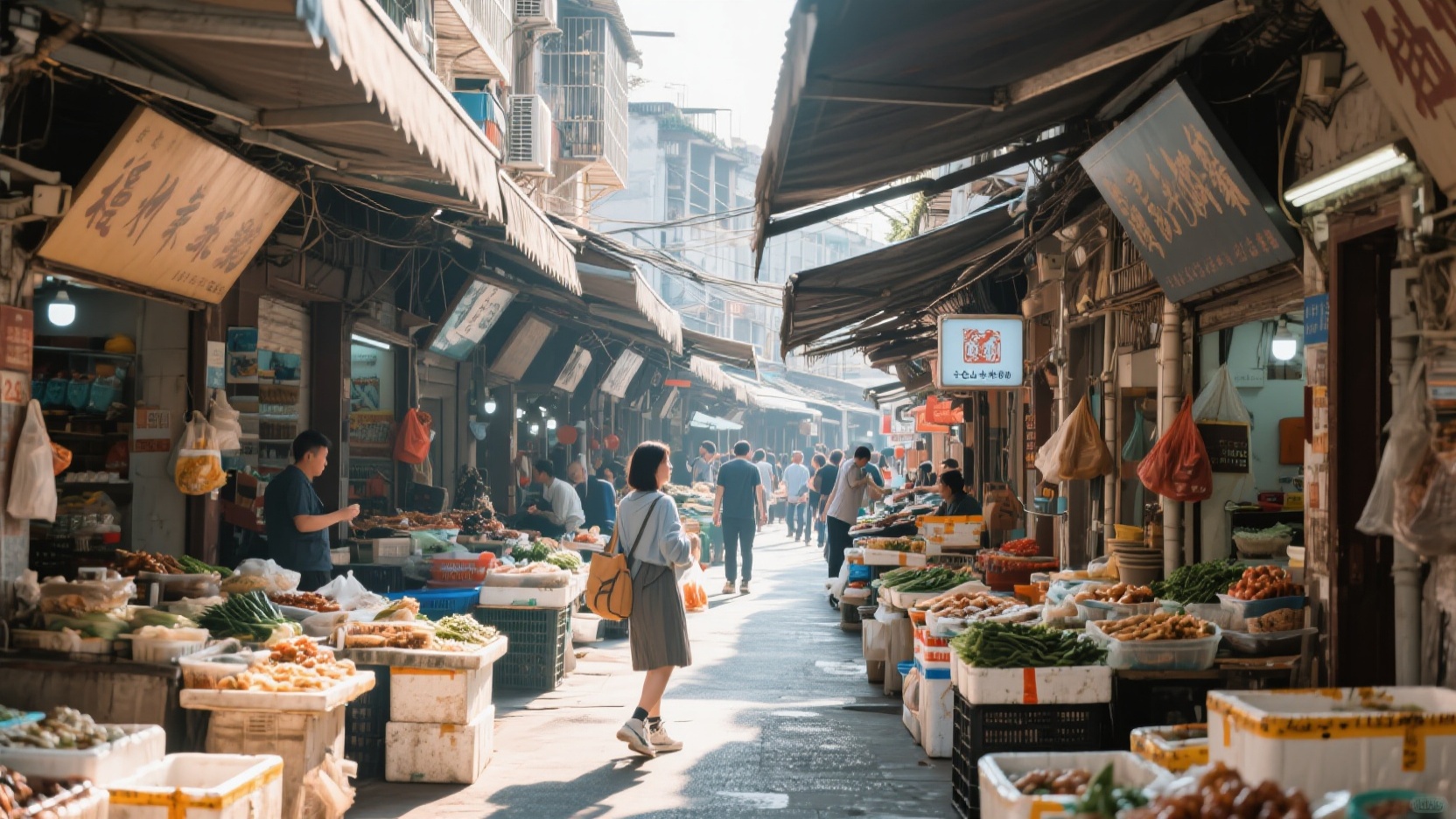
If you're visiting Fuzhou for the first time and are still debating whether the Three Lanes and Seven Alleys pass is worth it, I advise you to just give up on that idea—in these four days, I didn't even visit a single major paid attraction, but I still managed to eat my way through Fuzhou in ways that even locals might not be able to fully explore.
Many people think of Fuzhou as just "Three Lanes and Seven Alleys + Gushan Mountain + Xichan Temple," as if not buying an entrance fee means you've wasted your trip. But the most captivating aspects of Fuzhou are the misty atmosphere of its markets, the slopes of old Cangshan Mountain, the iron windows of old factories, and the bamboo chairs in its old alleyways. This guide won't take you to the major tourist attractions; it will only take you through communities, schools, industrial redevelopment zones, and alleyways. After four days, you'll understand that Fuzhou's everyday life is the true main attraction.
Why is it a big misunderstanding to say that "paid attractions are the only thing in Fuzhou"?
Most of the paid attractions in Fuzhou are cultural exhibits designed for day-trippers. They're not bad, but it's easy to get bogged down in the explanations. The main street of Sanfang Qixiang (Three Lanes and Seven Alleys) is actually free; the paid attractions are some of the courtyard exhibition halls. But once you buy a pass, it's hard to notice the clothes drying at the alley entrance, the bougainvillea on the walls, or the moss in the stone mortars.
This four-day itinerary barely involves any entrance fees. Accommodation will be in older neighborhoods along the subway line, and transportation will be by walking, public transport, and shared bikes. The biggest expense is food; a few dozen yuan per person per day is enough for a very satisfying meal, and transportation costs are negligible.
Day 1: Community Market Day, breakfast starts at the market entrance.
Don't eat breakfast at the hotel; go directly to the Qingcheng Road market. It's busiest around 7 or 8 am, with the few small tables at the entrance packed with people eating guobianhu (a type of rice noodle soup) with shrimp fritters. The guobianhu broth has a hint of oyster and celery flavor, and the shrimp fritters are freshly fried and crumble when you bite into them. There are also oyster pancakes at the nearby stalls; locals often order one of each.
For lunch, you can walk to a nearby traditional laohua (a type of noodle soup) shop. The soup base is clear but flavorful, and you can choose from ingredients like clams, pork liver, and squid. It's a very satisfying meal for just a few dozen yuan per person. In the afternoon, head to the market around Shanhuafang. It's quieter there, and you can see Fuzhou locals buying fish balls, meat dumplings, and thin noodles. In the evening, go to Laoyaozhou Street, where you can enjoy sweet glutinous rice balls and peanut soup.
There are no tickets or queues at popular tourist spots throughout the day, but you'll get closer to the daily life of Fuzhou locals than at any other tourist attraction.
Day 2: University Area Day - Day and Night in the Old Cangshan Student Street
Take the bus to the Cangshan Campus of Fujian Normal University. Don't rush to find the school gate; take your time exploring Kangshanli and Machang Street first. This area preserves old Western-style houses, old walls, and large camphor trees. Many houses are still inhabited, and flower pots are piled on the steps. It's much more authentic than the historical districts that charge admission fees.
If you go to the old student street at noon, you don't need to squeeze into the most popular stalls. Just walk a few steps further in, and you'll find fried chicken strips, Fuding pork slices, and four-fruit soup at student-friendly prices. Avoid weekend lunchtimes, as many local students will still be queuing up, but it's less crowded on weekdays.
You can come back in the evening, but don't enter through the main entrance. Instead, go around to the back alley; you'll see another side of the student street: used bookstores, pet shops, and fruit stalls before closing time. Your legs will be sore by the end of the day, but your stomach and eyes will be satisfied.
Day 3: Old Industrial Zone Renovation Day – Another Side of Fuzhou Hidden Within the Red Brick Factory Buildings
Some old factories in Fuzhou have been converted into cultural and creative parks, with free admission and few crowds. I visited the Fuda Yishan Cultural and Creative Park this morning; the red-brick workshops, old machine parts, and faded slogans are still there, and it's quieter than many paid art districts. There are secondhand shops in the park where you can browse for a long time even if you don't buy anything.
At noon, I found a local noodle and wonton shop near the park. The sauce was rich and flavorful, the noodles were chewy, and the price was very reasonable. In the afternoon, I went to Red Town Creative Park, which is more suitable for strolling and taking photos. The factory buildings are well preserved, and on a sunny day, the shadows of the trees cast on the red brick walls create beautiful photos.
Just a heads-up, there's no need to go to those trendy cafes just for a cup of coffee; the park itself is already quite appealing.
Day 4: Old Town Alleyway Day, winding through the main streets of Sanfang Qixiang and delving into its capillaries.
Spend your last day in the alleyways. Don't enter Sanfang Qixiang from the main entrance on Nanhou Street. Instead, start from the outer areas like Jibi Lane and Guanglu Lane, following the old walls to see the saddle-shaped walls and wooden doors. These alleys are free, have fewer tourists, and you can hear local children shouting in the courtyards.
Next, walk to Shangxiahang. Don't just walk along the main riverbanks; venture into the side alleys near Xing'anqiao Lane and Santongqiao Bridge. The old shopfronts, the damp stone slabs, and the shadows cast by the arcade buildings are all quite charming. Continue towards Cangxia, cross Jiefang Bridge to see the exterior of Zhongzhou Island, and enjoy the river breeze.
This route is entirely accessible by walking or taking one or two bus stops, with no entrance fee, yet it connects the rivers, bridges, alleys, and houses of Fuzhou.
In conclusion: 6 tips for the easiest way to travel alone
1. Choose accommodation near Gulou or Taijiang old communities. You'll find a market right outside in the morning and late-night snacks available upon returning home. There's no need to stay near tourist attractions. 2. On weekdays, try to avoid rush hour traffic. While Fuzhou's subway and buses are convenient, the old city's alleyways are better explored on foot; wear durable walking shoes.
3. The wet market and old student street are most crowded on weekends. For solo travelers, Tuesday to Thursday is the most comfortable time to visit, and you won't be rushed by the vendors. 4. Don't rush into the "Local Food Area". Walk 30 to 50 meters in before deciding which place to eat. The real old shops usually don't use loudspeakers.
5. Fuzhou has a humid and muggy climate, so bring your own water. However, there's no need to buy expensive bottled water at tourist attractions; there are plenty of affordable options at local convenience stores. 6. Free admission doesn't mean you can wander around aimlessly. Many old factories and alleyways are residential areas, so avoid taking photos facing other people's doors and windows, and speak softly.