
Fuzhou Flavors in the Market: 9 Old-Style Foods Locals Frequently Buy in Qingcheng and Xuejun Road Markets
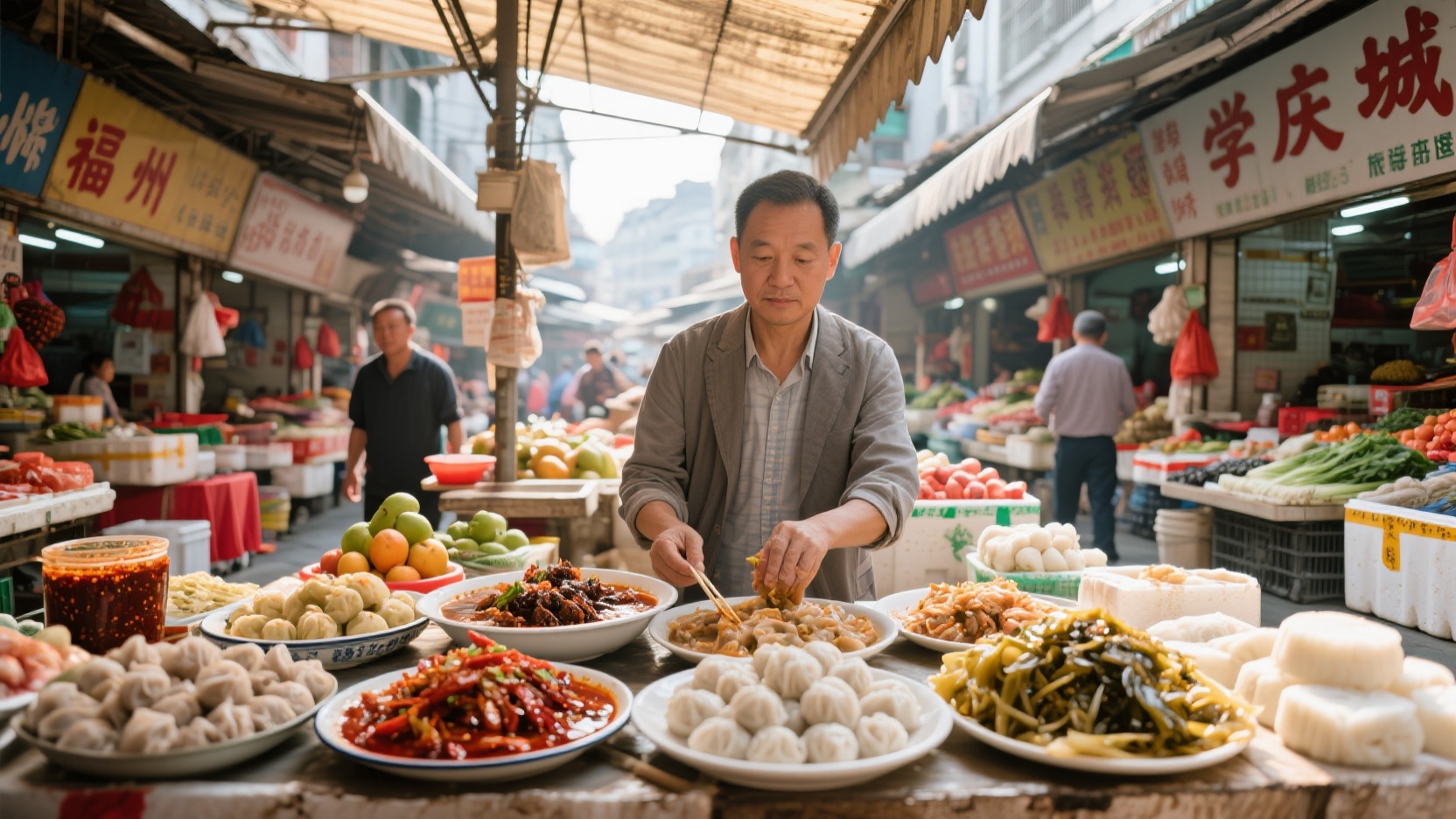
To truly understand Fuzhou, you don't need to start with the Three Lanes and Seven Alleys. The Qingcheng Farmers' Market and the Xuejun Road Farmers' Market, one nestled in an old community near Guloujing Avenue, and the other in an old alley near Taijiang Wharf, offer a true glimpse into the local life from 5:30 AM to 10:00 AM. The sounds of Fuzhou dialect, chopping meat, and the fishy odor fill these markets, providing a genuine glimpse into the city's unique character. For the following nine items, it's recommended to visit on an empty stomach and follow the market's layout in order.
Qingcheng Farmers Market: Cooked Food Stalls and Fermented Food
The red fermented rice wine at Qingcheng Market is mostly stored in white plastic buckets or enamel basins, ranging in color from light red to dark red. When selecting it, look for wine wine that is moist but not dripping water, and smells of wine rather than a pungent sour odor. You can make red fermented rice wine pork: blanch pork belly, cut it into chunks, stir-fry it with red fermented rice wine and ginger slices, then steam or braise it. Do not add salt; the flavor comes from the saltiness of the wine wine and the pork juices. For a simpler option, the market's cooked food stalls sell ready-made red fermented rice wine fish, which is best served heated with porridge.
Fish ball stalls often also sell meat swallow dumplings (rouyan). It's best to arrive before 8 AM to catch a freshly cooked pot. Handmade fish balls are not perfectly round and vary slightly in size. The filling contains meat juice; when you bite into them, first suck up the broth before eating the skin. To cook the fish balls at home, boil them in water. Once the water boils, add them; they're cooked when they float. Sprinkle only with white pepper and chopped green onions; do not add soy sauce. Meat swallow dumplings can be bought separately; they are paper-thin, translucent, and won't break. When wrapping the meat filling at home, use a small amount, seal the dumpling, and then add it directly to the broth. Drizzle with shrimp oil before serving. If you're eating on-site, ask the stall to combine the fish balls and meat swallow dumplings into one serving. The broth is clear and flavorful, so there's no need to add MSG.
Fish paste is made by grinding croaker or mackerel into a paste. The vendor scrapes it into boiling water with a bamboo skewer, resulting in irregular shapes and a loose, fishy texture. When selecting fish paste, look for a grayish-white color, not a stark white, with visible small pieces of fish skin or chopped scallions on the surface. To make fish paste at home, simply add it to simmering water for two minutes, then cook it with seaweed and dried shrimp to make fish paste soup. If buying ready-made fish paste from a cooked food stall, it's recommended to choose a portion with a few bones for a richer flavor.
Xuejun Road Farmers Market: Pickles, Rice Products and Seasonal Goods
At the sauce stalls in Xuejun Road Market, shrimp oil is usually sold in large earthenware jars, extracted in bulk. Locals call it "fish sauce," and it's the standard base flavor for laohua (a type of noodle soup) and guobian soup. When choosing it, select a deep amber color, with fine, slow-dissipating foam after shaking, and a mellow, non-pungent fermented flavor. Use sparingly; just a few drops are enough for blanched water spinach, squid, or noodles. Beginners often add too much, so it's best to fill a small bottle first and taste it at home.
The crab sauce is made from fermented small crabs. It's dark brown with bits of shell, and has a salty, slightly fermented aroma. It's best enjoyed with congee, as a dipping sauce for sliced pork, or mixed with jellyfish. It shouldn't be heated, as this will amplify the fishy smell. The adjacent Fuzhou pickled mustard greens are mostly made from locally grown mustard greens, with more stems than leaves, a yellowish-green color, and a clean, non-pungent sour aroma. After buying them, rinse them twice, chop them, and stir-fry them with pork intestines, or add them last when cooking rice noodles. The sourness enhances the flavor, making the whole bowl less greasy.
White rice cake is a staple of Fuzhou cuisine. Handmade white rice cakes are usually cut into uneven pieces, have a slightly soft texture, and smell of cooked rice. Some stalls in the market also sell stir-fried white rice cakes with cauliflower, carrots, pork belly, and a little shrimp oil, giving them a strong wok hei (wok aroma). You can buy semi-finished products at home, slice them, blanch them for ten seconds, and then stir-fry them quickly. Alternatively, you can cut them into small strips and cook them in sugar water with rock sugar and a little osmanthus, a common sweet treat for locals during seasonal changes.
The fruit stalls in the farmers' market reflect the seasons of Fuzhou better than the fruit vendors at tourist attractions. In late summer and early autumn, longans are sold in bunches; when choosing them, look for green stems, yellowish-brown shells, and a slightly firm yet elastic feel. Eat them directly or peel the flesh and make syrup. Local olives appear in autumn and winter; choose long, slender fruits with hard pits, and a slightly astringent taste followed by a sweet aftertaste. Smash them, add a little salt, and marinate for about ten minutes; they pair best with Wuyi rock tea. In winter, Fuzhou tangerines, and in early spring, loquats are also commonly found in both markets; simply buy what's in season.
Shopping strategy: First cooked food, then pickles, and finally fruit.
Both markets are small, but the layout is confusing, so it's recommended to proceed in order. First, buy cooked food and fish balls; eat them while they're hot or put them in an insulated bag. Next, look at pickles and preserved goods; the jars and bottles are heavy, so put them at the bottom of your backpack. Finally, buy fruit and white rice cakes, placing them gently on top. Buy your own wide-mouthed glass bottles for shrimp oil and crab sauce to reduce the use of single-use plastic bags. When you encounter a queue, don't rush to interrupt; first observe what the local person in front of you is ordering and how much they want. Usually, the stall owner will give suggestions based on the number of people. For fresh seafood like fish balls and meat dumplings, it's not recommended to buy vacuum-packed; buying them loose and consuming them on the same day is best for flavor.
Visiting the local market is the best way to experience a city. The aroma of shrimp oil, the fragrance of red yeast rice, and the bouncy texture of fish balls in Fuzhou aren't found in the replica stalls of tourist attractions, but in the steam rising from the steamers at Qingcheng Market, and on the salt frost on the edges of the pickle jars on Xuejun Road. Carrying a bag of white rice cakes, half a pound of crab sauce, and a few freshly poached fish balls back to your accommodation is closer to the city's daily life than any itinerary.