
Avoid Sanfang Qixiang in Fuzhou during thunderstorms | Local's test: A cultural and artistic route where you can stay dry all day.
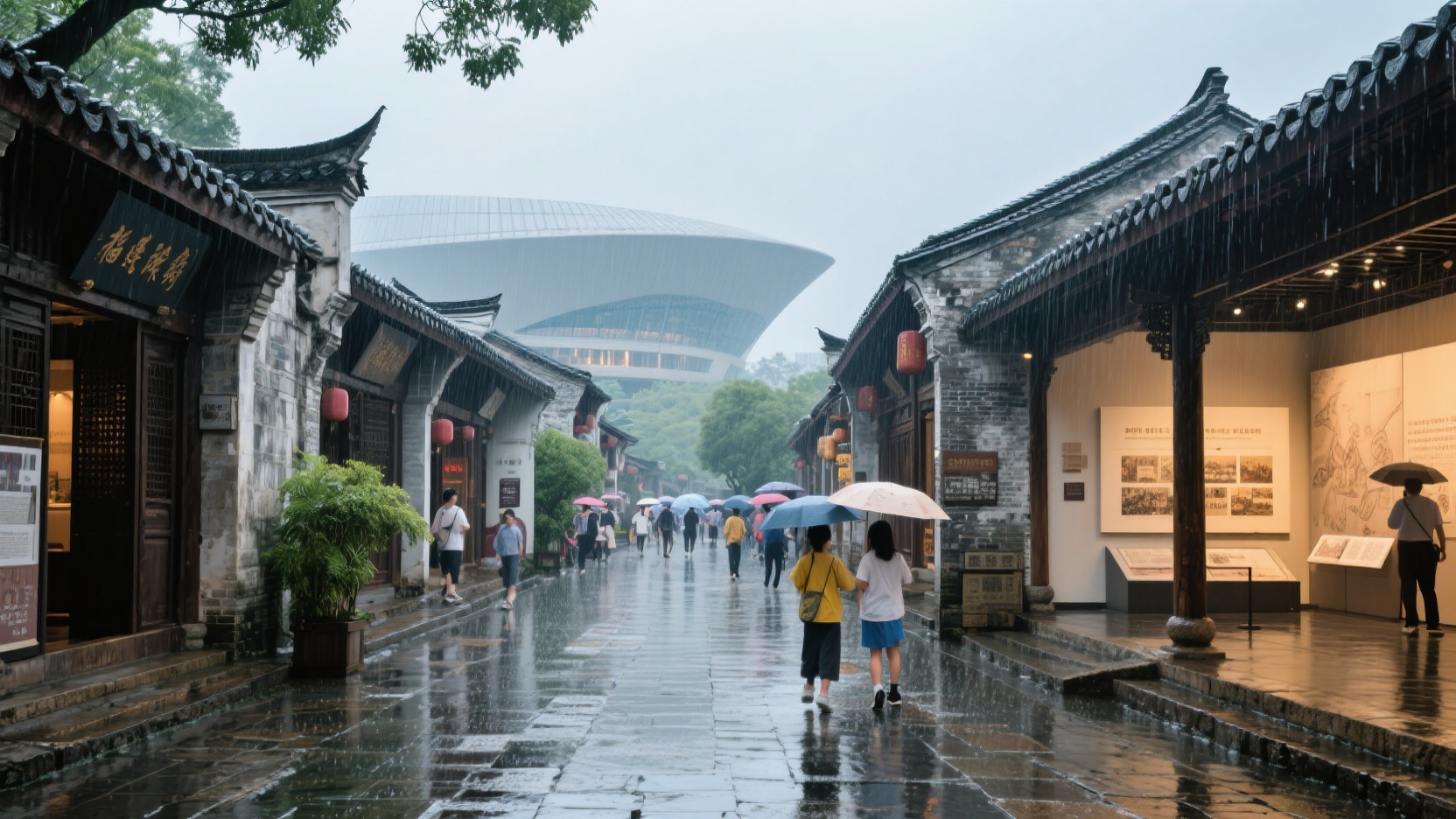
In Fuzhou, tourists who rush to Sanfang Qixiang whenever there is a rainstorm or a temperature of 40 degrees Celsius will most likely end up stepping into puddles, squeezing into open-air alleys like in a sauna, and then trying to post a picture of "Rainy Fuzhou" on social media.
Locals wouldn't consider Sanfang Qixiang (Three Lanes and Seven Alleys) as an indoor option in bad weather, because most of the paths on Nanhou Street are open-air, and the drainage on the stone-paved streets might not be able to keep up with heavy rain. Yet, many travel guides still recommend "strolling through the lanes on rainy days." If you want to spend a whole day without getting sunburned, wet, or your shoes wet, Fuzhou actually has a purely indoor or semi-indoor cultural route. Museums, libraries, planning exhibition halls, theaters, and inner streets are connected, offering a more authentic local experience than trendy photo spots.
Morning: Fujian Museum and Fujian Provincial Art Museum, laying the foundation for Fuzhou's cultural heritage.
The Fujian Provincial Museum and the Fujian Provincial Art Museum are adjacent to each other, both located by West Lake, making them ideal first stops. The Fujian Provincial Museum's permanent exhibition, "Ancient Civilization of Fujian," provides a comprehensive overview of the Minyue people, shipbuilding, and maritime trade. Its special exhibitions are also consistently high quality, easily taking at least two hours to explore. The Fujian Provincial Art Museum is relatively small; thirty to forty-five minutes is sufficient. It's a good place to catch a glimpse of local contemporary calligraphy and painting while you're there.
Both venues are free, but reservations must be made through the official platform. They are closed on Mondays. During summer vacation or typhoon season, locals also compete for weekend slots, so it's recommended to book a day in advance. After you've finished visiting, don't rush off. There are many traditional Fuzhou rice noodle shops, lao hua (a type of noodle soup), and stewed soup restaurants on nearby Hubin Road and Xihong Road. For just a few dozen yuan per person, you can enjoy authentic local soups that are unlikely to disappoint.
Noon: Gazing at the river from the Fuzhou City Library (Dewang Library), enjoying the cool air conditioning and free admission.
Moving from the West Lake to the Fuzhou City Library on the north bank of the Minjiang River is not far by car. Often overlooked by tourists, it's actually a great place to escape the midday heat or torrential rain. The library has large floor-to-ceiling windows that directly face the Minjiang River and Jinshan Temple. You can pick up a local document to browse through, or do nothing at all and just sit by the window watching the rain and the river.
Allow one to one and a half hours for your visit. No reservation is needed, but it's closed on Mondays. Unlike typical public libraries, it's multi-story with plenty of seating. Many people bring their laptops to work, so please keep your voice down. There's a large commercial complex nearby with dining options ranging from fast food to Fujian cuisine, costing anywhere from tens to hundreds of yuan per person. You won't get wet while walking to your next destination after your meal.
Afternoon: Fuzhou Urban Planning Museum – the model and digital images are more impressive than the trendy exhibitions.
Located on the south bank of the Yangtze River, the Fuzhou Urban Planning Exhibition Hall is surprisingly worthwhile to visit, even more so than some paid attractions. The first floor features a city model with lighting and film, clearly explaining Fuzhou's spatial layout of "three mountains, two pagodas, and one river." The second floor offers interactive digital displays and historical and cultural scenes, making it a popular spot for local families with children to spend a summer afternoon. The interior layout is comfortable, and a visit of one and a half hours is easily achievable.
It's free to enter but requires reservations, and it's closed on Mondays, so be careful not to book on the wrong day. Dining options near the planning museum aren't as convenient as in the old town, so it's recommended to go in the afternoon and have dinner near Yantai Mountain after the rain stops or by taxi. The planning museum itself is close to the river, but if the rain is too heavy, don't walk to the riverside; just leave after you've seen the interior.
Evening: Jasmine petals at the Straits Culture and Arts Center; you can spend a long time exploring the building.
The Fuzhou Strait Culture and Art Center itself is a large-scale installation; the architectural complex, shaped like several jasmine petals, has a futuristic feel, especially on a rainy day. Even without performance tickets, the public lobby and some exhibition areas are worth a special trip. The building's lighting and structure are perfect for taking photos, but don't just go there for photos; the opera house and concert hall corridors often host small art exhibitions.
Allow one to two hours for your visit. Entry to the public hall is usually not required without a performance ticket, but tickets must be purchased in advance for special exhibitions or performances. Most areas are closed on Mondays or only some areas are open. The venue offers light snacks and coffee at mid-range prices; for a more substantial meal, you can return to the commercial area near the South Railway Station, within a ten-minute drive or taxi ride.
In the evening: attending a Min Opera or Yue Opera performance at the Fanghua Theater or Fujian Grand Theater is the only way to truly connect with the local cultural heritage.
During the day, the museums offer a glimpse into the "form" of Fuzhou, but in the evening, sitting down to listen to a Min opera, Yue opera, or a local concert allows you to truly grasp its "spirit." The Fanghua Theater and Fujian Grand Theater are both located around May 1st Square, with stable performance schedules and a large audience of long-time Fuzhou residents, offering a much more authentic experience than many folk performances in tourist areas. A performance lasts about two hours, perfectly concluding a day's indoor activities.
Tickets must be purchased online in advance, and most performances are cancelled on Mondays, so avoid scheduling them. If you're not into traditional opera, you can also choose a concert at the Fujian Grand Theatre, which is also indoors and rainproof. Nearby tea houses and restaurants in Douchi area offer affordable stewed dishes, meat dumplings, and fried buns, costing only a few dozen yuan per person – perfect for a late-night snack before heading home.
Semi-indoor supplement: Yantaishan Inner Street and Zhuzifang Lacquer Space, on rainy days only walk along the covered corridor.
If you have some free time in the afternoon, the old buildings and inner streets of Yantaishan are more welcoming than the alleyways. Many creative shops, cafes, and boutiques along Lequn Road are housed in old colonial-era buildings. You can wander from one shop to another without getting your shoes wet, even in heavy rain. Reservations are not required for Yantaishan's street area; an hour and a half to two hours is just enough to follow up with dinner. However, some shops are closed on Mondays, and it's more popular on weekends.
If you'd like a quieter place, you can visit the lacquer art space in Zhuzifang, where you can experience and try out Fuzhou bodiless lacquerware. It's suitable for those interested in arts and crafts, and about 40 minutes is enough to explore. Both places are good to visit between the afternoon and evening. For meals, you can have them at Yantaishan, where you can find Fujian cuisine, Western food, and desserts, with an average cost of around 100 yuan per person.
In conclusion
Five indoor travel tips for bad weather that locals didn't tell you:
1. Sanfang Qixiang is not completely off-limits, but if the rain is moderate to heavy, don't treat it as an indoor route. Nanhou Street and some of the alleyways are long and open-air, and the chances of getting your shoes wet are very high.
Second, the most uncomfortable thing about winter in Fuzhou is not the temperature numbers, but the damp cold and the temperature difference between indoors and outdoors. Don't wear too thick clothes when going to the library or museum; a light jacket is more practical.
Third, almost all local public museums are closed on Mondays. Avoid scheduling your visit to museums, libraries, planning museums, and theaters on Mondays, or you will be turned away.
Fourth, during high temperatures of 40 degrees Celsius and typhoon days, locals also rush to book appointment slots. During summer vacation and extreme weather, try to book one day in advance, as tickets for afternoon slots are even more scarce.
5. The air conditioning at the Straits Culture and Arts Center is very strong. If you go to an exhibition or performance in the summer, remember to bring a light jacket so you don't get too cold and ruin your mood.