
Eating in Dongguan according to the solar terms | I only dared to share 7 seasonal delicacies after running around according to the 24 solar terms four times (with tips on avoiding pitfalls)
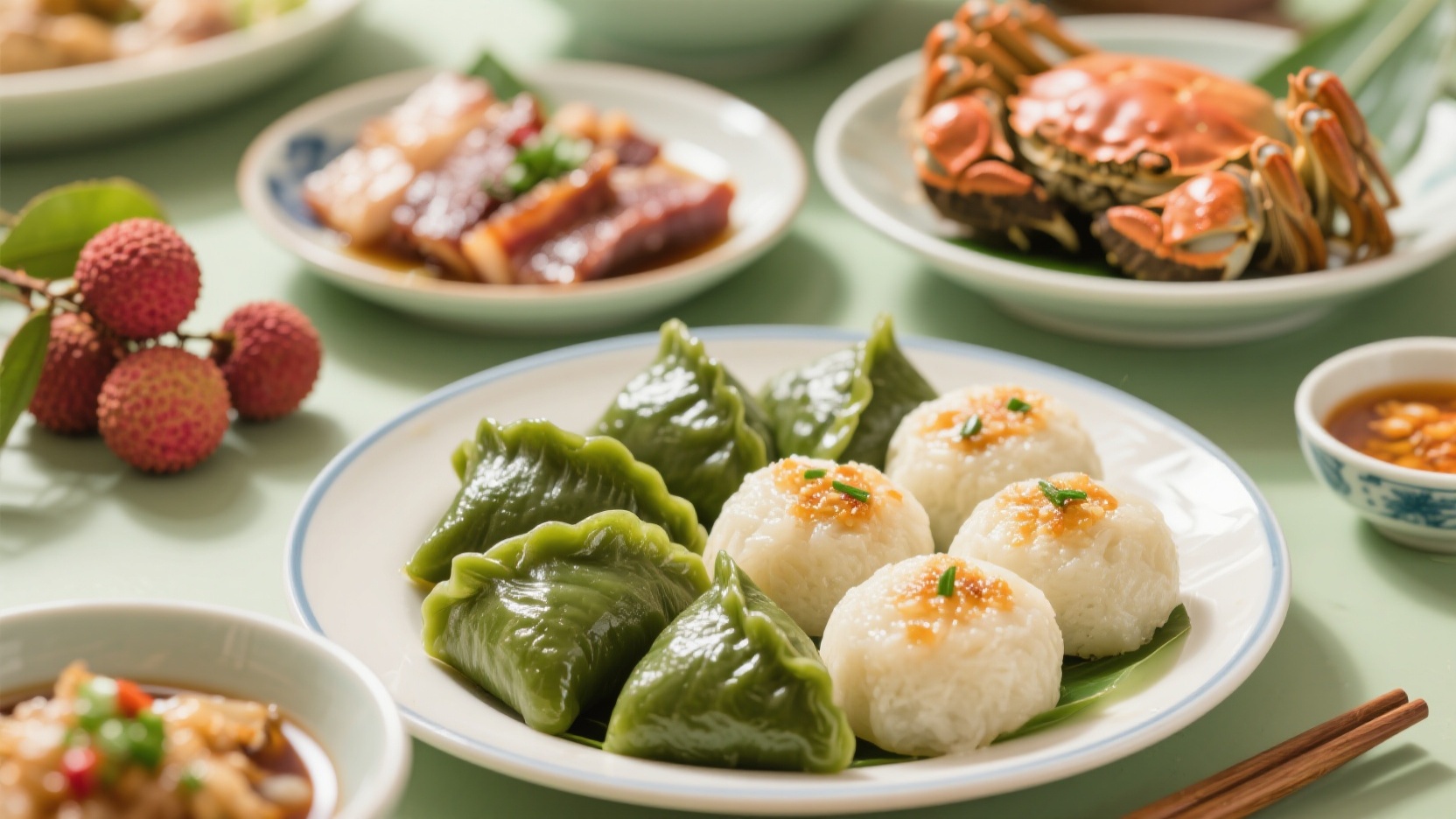
I made over a dozen trips to Dongguan and noticed that tourists almost exclusively focused on roast goose and rice noodles. But local friends always said, "Rice noodles are available anytime, but the seasons wait for no one." Later, I made special trips around Qingming Festival, Summer Solstice, Autumn Equinox, and Winter Solstice to find out how to enjoy them – they're only available once the season has passed. This post won't be about trendy restaurants, but rather about seven limited-edition flavors that just don't feel right once the season is over.
Around Qingming Festival: Artemisia argyi is the alarm clock of spring in the water towns.
In Dongguan's water towns, a Qingming-limited treat isn't qingtuan (green glutinous rice dumplings), but mugwort dumplings. These dumplings resemble plump dumplings, with the wrapper made from tender mugwort harvested before Qingming and glutinous rice flour. The fillings come in two varieties: sweet and savory. The sweet fillings often contain crushed peanuts and sesame seeds, while the savory fillings typically include dried radish, dried shrimp, and cured meat. Why are they only at this time of year? Because the mugwort must be harvested before it blooms; the tender shoots between Qingming and Guyu (Grain Rain) have the lowest bitterness and the strongest grassy aroma. After Guyu, they become too old to be used more than for foot baths.
Locals eat mugwort dumplings with the emphasis on steaming them until soft but not mushy. After steaming, they let them cool slightly and serve them with a bowl of white porridge or hot sugarcane juice for breakfast. A word of caution: street-side mugwort dumplings with a bright green color are often made with mugwort powder or food coloring. Genuine handmade dumplings have a darker green outer skin, and when you bite into them, you can see fine mugwort fibers, with a slightly bitter aftertaste. I observed this dish for three Qingming Festivals, and the conclusion is simple: about ten days before and after Qingming, mugwort dumplings are just a name.
From Dragon Boat Festival to Summer Solstice: The Relay of Daojiao Rice Dumplings and Lychees
Daojiao Zongzi (sticky rice dumplings) from Dongguan are quite famous, but a common mistake tourists make is buying vacuum-packed ones at the scenic area year-round. The soul of Daojiao Zongzi lies in its freshness around the Dragon Boat Festival: the late-season glutinous rice absorbs the fat from the pork belly, the peeled mung beans become sandy, the salted egg yolks are just beginning to ooze oil, and the aroma of the bamboo leaves hasn't yet dissipated. The ingredients may seem ordinary, but the combination is extremely particular about proportions; the meat must be slow-marinated pork belly—too lean and it's dry; too fatty and it's greasy.
Another unique feature of the Dragon Boat Festival in Dongguan's water towns is the "Dragon Boat Rice." On the day of the dragon boat races, the village prepares a dish of squid, dried shrimp, shiitake mushrooms, and preserved meat cooked in a large wok and mixes it with rice, which is then distributed free of charge to those rowing the dragon boats. Dragon Boat Rice isn't a fancy dish, but the unique wok-fried aroma from the open-air wok is something you can only experience around the Dragon Boat Festival when the water level is high. After finishing the Dragon Boat Rice, you unwrap a Daojiao zongzi (sticky rice dumpling), which locals call the "Dragon Boat Set Meal."
With the arrival of the summer solstice, the baton is passed to lychees. Dongguan's glutinous rice lychees and Guiwei lychees are at their best for about ten days between the summer solstice and the minor heat (Xiaoshu), with crisp flesh and a honeyed aroma carrying a hint of osmanthus. Locals don't like lychees chilled for too long; they prefer to soak freshly picked lychees in well water or lightly salted water in the morning, then peel and eat them while sitting in the shade, saying, "Being grounded is worse than freezing your throat." If you only eat one lychee in the summer, be sure to choose one picked that day with leaves still attached; the aroma of a lychee left overnight will be halved.
From the Autumn Equinox to Frost's Descent: When the north wind blows, preserved meats and roe crabs come to the fore.
People in Dongguan are extremely sensitive to the autumn winds, because both Baisha oil duck and Dongguan sausages are made using the principle of "when the north wind blows, it's time to dry the sausages." Baisha oil duck is not smoked; instead, it relies on the dry north winds after the autumnal equinox to ferment it in the sun. The duck meat tightens, and the subcutaneous fat slowly develops a sweet flavor, creating a savory aroma similar to ham. This dish can only be made during the north windy days between the autumnal equinox and the winter solstice. If it's a warm autumn or humid weather, locals prefer not to dry it.
The local way to eat it is to slice the Baisha oil duck thinly, place it on top of rice, and steam it, allowing the duck oil to seep into the rice grains. Alternatively, it can be steamed with taro, where the savory flavor is balanced by the starch. Another accompaniment to preserved meats is the Humen roe crab, which is eaten after the Autumn Equinox. Humen is located at the confluence of fresh and saltwater; after the Autumn Equinox, the water temperature drops, and the crabs begin to accumulate roe. Female crabs have firm, red roe, while male crabs have sticky, white roe. The saying goes, "Nine for females, ten for males," meaning that the roe inside the crab shell is eaten first, followed by the body, which is then dipped in ginger and Zhejiang vinegar to remove any fishy smell. A steamed roe crab with preserved meat rice on an autumn night completes the autumn experience for the people of Dongguan.
From the Winter Solstice to the Spring Festival: Winter dumplings and sugar ring fried dough sticks conclude the day.
In Dongguan, the celebrations for the Winter Solstice are no less elaborate than those for the Spring Festival. In the water towns, people make winter dumplings (dongtuan), while in the mountains, they make radish cakes (luobo ban). The outer layer of the winter dumplings is made of glutinous rice flour, filled with savory ingredients like shredded radish, cured pork, dried shrimp, and celery. After steaming, they are soft, chewy, and juicy. Local gourmets prefer to slice them and pan-fry them with a little oil until both sides are slightly browned, resulting in a crispy exterior and a soft, chewy interior. Why only on the Winter Solstice? Firstly, radishes are sweeter after being frosted; secondly, winter dumplings symbolize family reunion, making the Winter Solstice even more important than the Spring Festival, and few families make them after the Winter Solstice.
Before the Spring Festival, the old alleys of Dongguan are filled with the aroma of frying oil, with sugar rings and fried dumplings being the two main ingredients of the festive atmosphere. Sugar rings are made by rolling glutinous rice flour into rings and frying them until crispy, hard, and slightly sweet; fried dumplings have a flaky crust filled with coconut flakes, peanuts, and sesame seeds, and when you bite into them, you're greeted with a fragrant aroma of oil. For locals, frying fried dumplings is a collective ritual before the New Year. When eating a fried dumpling, you first bite a small hole to let the steam escape, and then drink strong tea to cut through the richness. These two treats are basically discontinued after the Lantern Festival (the 15th day of the first lunar month), and once the festive atmosphere fades, you have to wait until the next winter to enjoy them again.
Looking back, Dongguan's greatest strength isn't making a single dish a year-round signature dish, but rather locking in the best flavors of food according to the seasons. From mugwort dumplings during Qingming Festival, to lychees at the Summer Solstice, to oily duck in autumn, to winter dumplings at the Winter Solstice, every bite is like a seasonal snapshot of the city. Eating according to the seasons is the right way to experience a city.
Practical Tips: From Qingming to Guyu, go to the old market in the water town to catch the early morning market. It's best to buy mugwort pods in the morning, as they tend to harden in the afternoon. For lychees, choose the small-seeded glutinous rice berries, and those picked that day with leaves are the most fragrant. For preserved meats, choose the front leg sausage for a more moist texture when steaming rice, as lean sausages tend to be drier. For winter solstice, you can find glutinous rice dumplings steamed fresh at mobile stalls around the market, which are closer to home-style cooking than chain stores. During the Spring Festival, sugar rings and fried dumplings are quite sweet, so don't eat too many on an empty stomach; they're best enjoyed with strong tea.