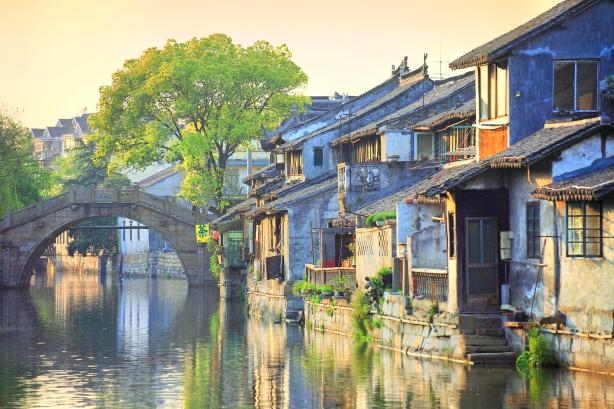
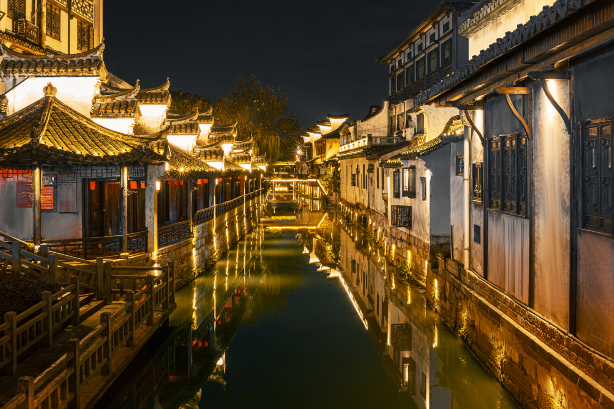
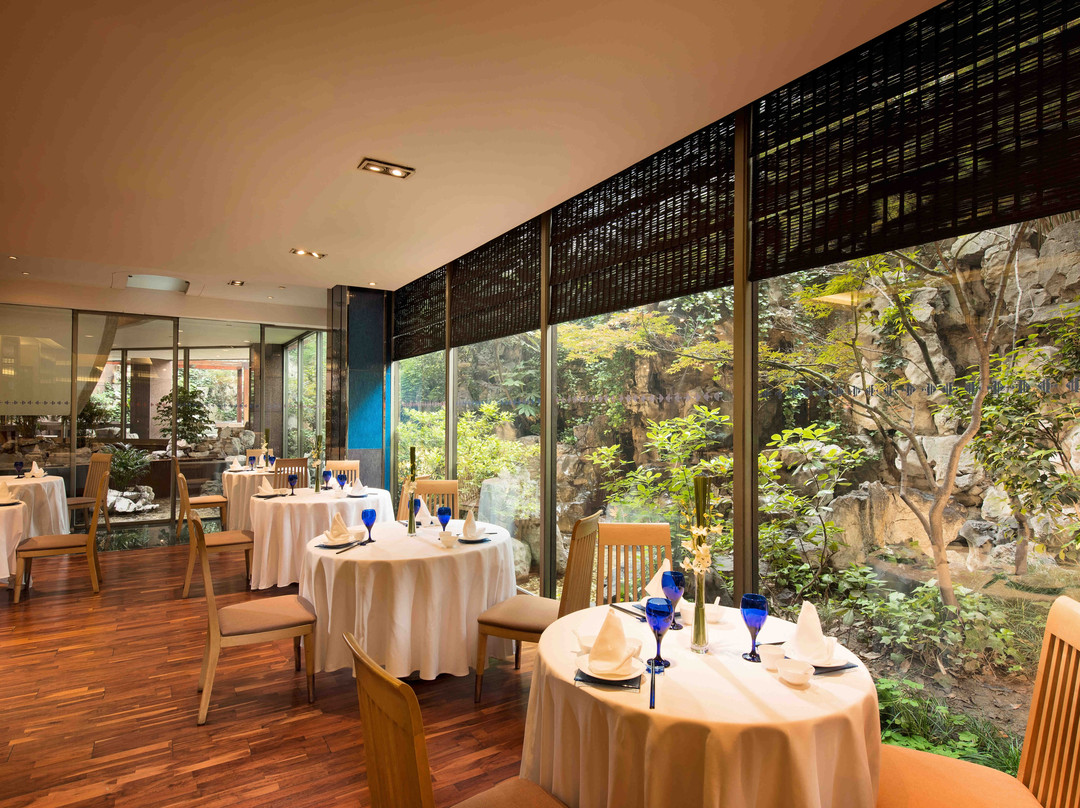
Fengjing Ancient Town is located at the southwest corner of Shanghai, a typical water town in regions south of the Yangtze River. As early as more than 2000 years ago, residents had lived here. The boundary river inside the town was the dividing line between the Wu State and Yue State during the Spring and Autumn Period. Spanning the territories of Wu and Yue, Fengjing Ancient Town is reputed as the "Famous Town of Wu and Yue". The ancient town has crisscrossing rivers and as many as 52 bridges, among which the Zhihe Bridge built in the Yuan Dynasty has a history of nearly 700 years. Compared with other popular water towns in regions south of the Yangtze River, Fengjing has far fewer tourists, so you can leisurely enjoy the scenery of small bridges over flowing water here. There are two main streets in the ancient town: one is a connected street with three named sections: South Street in the south, Middle Street in the center, and North Street in the north; the other is Heping Street. The two streets intersect at Fengjing Three Bridges, forming a "T" shape. Fengjing Three Bridges is the center of the ancient town, located at the confluence of two rivers, where you can see three bridges at the same time: Qingfeng Bridge, Zhuhang Bridge and Beifeng Bridge. Fengjing is the birthplace of Jinshan Peasant Paintings. You can appreciate a variety of rustic artworks at the Jinshan Peasant Painting Exhibition Center in Shengtang Lane, South Street. There are many painting galleries and former residences of famous painters in the ancient town. The Ding Cong Cartoon Exhibition Hall on North Street displays the furniture used by the late Mr. Ding, and you can see vivid satirical cartoons portraying various characters on the second floor. At the Lü Jiren Painting Gallery on Heping Street, you can view works by Lü Jiren, a classmate of Chen Yifei. The Former Residence of Cheng Shifa houses many traditional Chinese watercolor paintings by the late Mr. Cheng. Most tourists enter from the main entrance at the south of the ancient town, walk to South Street, and start wandering slowly along the river. Heading northeast along South Street, you will reach Middle Street after passing Zhihe Bridge. At the end of Middle Street, you can see the Wu-Yue Boundary Stele, and the inconspicuous small river in front of you is the former dividing line between Wu and Yue. Continue heading northeast, you will arrive at North Street after passing Fengjing Three Bridges. On North Street, you can visit the red-walled Shiwang Temple first built in the Ming Dynasty, the Ding Cong Cartoon Exhibition Hall and other attractions. You will also pass covered corridors on South Street, Middle Street and North Street. These antique corridors in the ancient town can shelter you from the sun on sunny days and keep you dry on rainy days. Walking on the bluestone paths, you will get back to Fengjing Three Bridges, then go to visit the other street, Heping Street. First visit the Three Hundred Garden (Hundred Baskets Hall, Hundred Lamps Hall, Hundred Trades Hall), next to which is the Lü Jiren Painting Gallery. Walk a little southeast, the Former Site of Fengjing People's Commune is well worth a visit, where you can see old-fashioned thermos flasks and telephones from that era, with red sun murals on the walls. Further ahead is Fengjing Ancient Stage, which faces the street on one side and the river on the other. During peak tourist seasons and holidays, free traditional opera performances are staged on the stage. You can pick a window-side seat at the Chenshe Teahouse opposite the stage, sip tea while enjoying the opera, which is extremely pleasant. Walk along the street to the end to finish visiting the Former Residence of Cheng Shifa, finally cross the bridge to Shengchan Street on the other side of the river, where there is another former site of modern fire-fighting institution — the Eastern District Fire Administration Office. At the end of South Street in Fengjing Ancient Town, there is a cruise terminal, you can also take a boat to experience the unique charm of the water town. The top local delicacy in the ancient town is Ding Pork Hock. There is a Ding Pork Hock Workshop next to Zhihe Bridge on South Street, which introduces the development history and production techniques of this local specialty. The Wunuo Woli Restaurant (meaning "our own home" in Fengjing dialect) on Shengchan Street near Fengjing Three Bridges is a well-reputed restaurant in the ancient town, with a long patio designed as a small bridge over flowing water scene. Its signature dishes are stuffed river snails and Wu-Yue Tofu. The covered corridor along the river on Shengchan Street is lined with shops selling Fengjing shaomai, gorgon fruit cakes and other snacks. The smoked calabash frog is a very distinctive local snack, which means "smoked toad" in the local Shanghai suburb dialect, with amazing taste, but you need to be brave enough to try it. About 4km away from the ancient town, near Zhonghong Road, there is also a Chinese Peasant Painting Village with unique features, which can be visited together with Fengjing Ancient Town.