
Understanding Yantai's Everyday Flavors: 8 Local Delicacies Locals Can't Live Without From Morning to Night
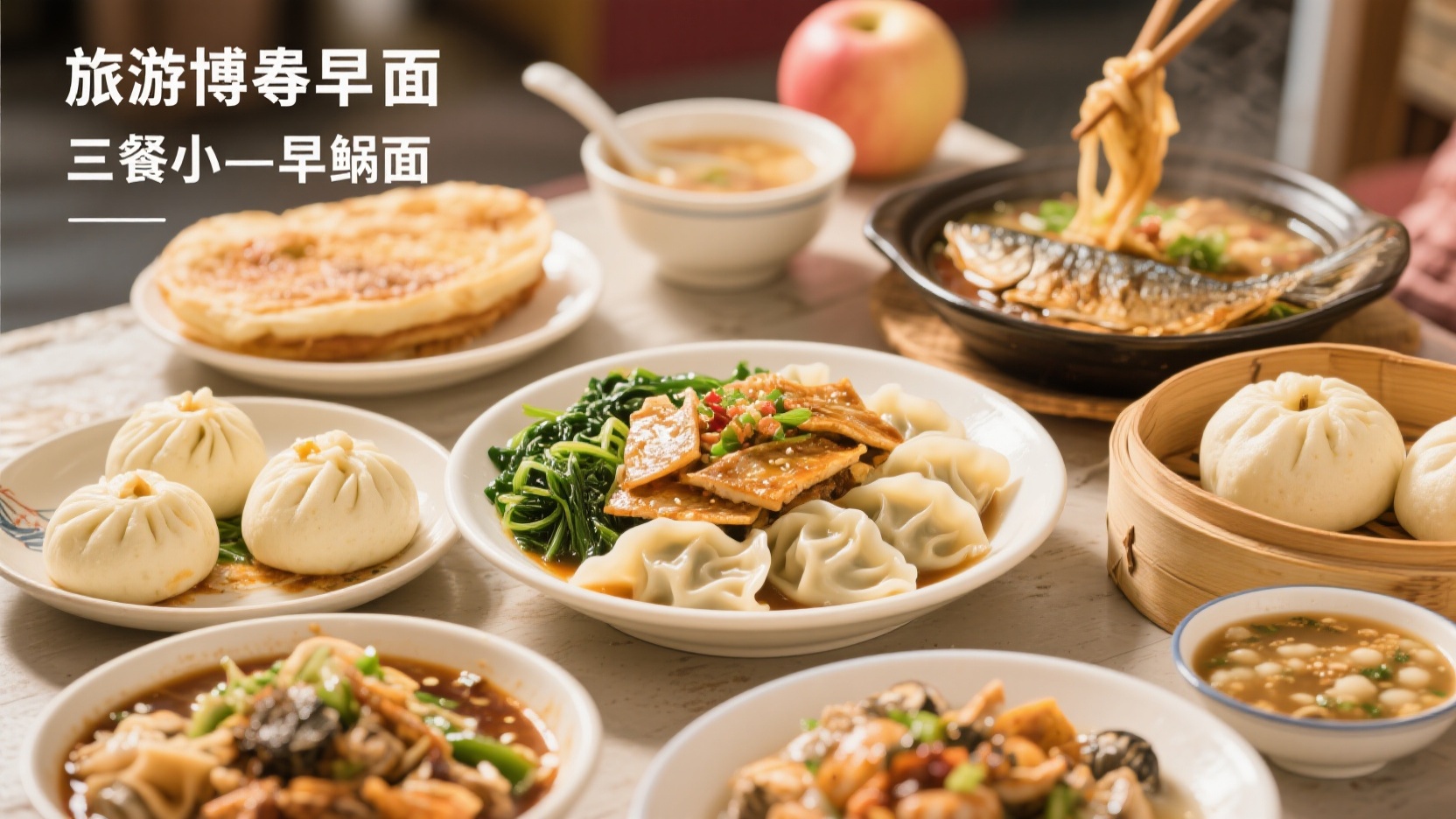
A Yantai resident's day rarely begins with a menu, but rather with the rising steam from the steamer, the cornbread stuck to the side of the iron pot, and the sizzling frying pan in the late-night food stalls. Following the locals' mealtime routines, one day is enough to understand the city's savory and salty essence.
Early morning: Penglai noodles, brimming with the spirit of the sea.
At 5:30 a.m., breakfast stalls in the old town are already setting up their large pots. Penglai noodles are the first hot meal for most Yantai residents after waking up. The noodles are made by repeatedly kneading and pressing high-gluten flour with salt and alkaline water, creating a chewy texture, and then quickly cooking them before placing them in a bowl. The soul of the dish lies in the broth: a milky white soup base made from fresh red snapper or braided fish, topped with beaten eggs, thickened with a light cornstarch slurry, and garnished with diced wood ear mushrooms and chopped scallions. The noodles are thin and smooth, the fish broth is fresh and clear, with a subtle aroma of Sichuan peppercorns. This bowl of noodles was once the "boarding noodles" for Penglai fishermen before they went out to sea, and it remains a comforting taste for office workers rushing to work in the morning.
Early morning: Seaweed buns wrapped around the freshness of the intertidal zone
A seaweed bun is often served with Penglai noodles. Yantai locals chop up wakame, nori, or sea lettuce (intertidal seaweed), mix it with pork cracklings, minced garlic, and a small amount of dried shrimp, then wrap it in leavened dough and steam it. The seaweed releases its gelatinous substance when heated, making the filling smooth and juicy, and the aroma bursts through your nose when you bite into it. Older generations eat it because seaweed is readily available and keeps well; younger people treat it as a breakfast staple, often paired with a bowl of millet porridge or soy milk, a satisfying meal that keeps them from getting tired of it all morning.
Lunch: Mackerel dumplings are a specialty of Jiaodong families.
At lunchtime, stepping into a local eatery, mackerel dumplings are almost a must-order at every table. Yantai locals use fresh mackerel, removing the head and bones, then using only the white meat from the back. This meat is slowly scraped into a paste with the back of a knife, then mixed with a mixture of scallion and ginger water and minced pork fat, stirred in one direction until it becomes sticky. Finally, chopped chives are added. The dumpling wrappers are rolled thin yet resilient, and after cooking, the bluish-white filling is subtly visible through. Biting into the wrapper reveals the fish filling, as tender as tofu, with a juicy sweetness from the sea. For Yantai families, making mackerel dumplings is a sign of hospitality and a standard for judging the quality of a restaurant.
Lunch: Fish stew with slices of fish, showcasing the rustic charm of a fisherman's home.
For a more authentic Jiaodong experience, order a fish hot pot with sliced fish. The bottom of a large iron pot is sautéed with scallions, ginger, and garlic until fragrant. Small yellow croaker, sea catfish, or braided fish are then added, followed by soy sauce and fermented bean paste, and finally water to simmer. Once the fish broth boils, a dough made from a mixture of cornmeal and soybean flour is patted into oval cakes and then stuck directly to the pot's side for a half-steaming, half-baking process. As the fish cooks, a crispy crust forms on the bottom of the cakes, resulting in a soft top and a crispy bottom. The way to eat it is to break off a cake with one hand and pick up a piece of fish with the other, dipping the cake in the savory fish broth before eating. This dish used to be a one-pot meal on fishermen's boats, and it remains a staple lunch in old restaurants.
Afternoon tea: Sugar-coated pastries with Yantai apples
In Yantai, afternoon tea isn't found in cafes, but rather in old-fashioned snack shops and fruit stalls on street corners. Sugar-coated flatbread, known as "tangsu gangzitou," is a type of hard-crusted baked bun, named for the repeated pressing of the dough with a wooden lever during its preparation. The dough, mixed with sugar, oil, and a small amount of sesame seeds, is pressed very firmly, resulting in a golden-brown crust after baking. It makes a satisfying "crunch" sound when you bite into it, and the more you chew, the more fragrant the wheat becomes. It's paired with Yantai apples. The large temperature difference between day and night in the Jiaodong hills produces crisp, sweet, and juicy apples. A bite of tangzitou followed by a bite of apple creates a perfect balance of dryness and freshness in the mouth—the easiest and most comforting snack for the people of old Yantai.
Late at night: Yantai-style braised pork belly is fried to a crispy and soft texture.
As night falls, the flat iron griddles at the food stalls gleam, and Yantai-style braised noodles begin to appear. These noodles are made by simmering sweet potato starch in water until it becomes a jelly-like consistency. After being cut into pieces, they are slowly pan-fried in oil until the outer layer forms a golden-brown crust, while the inside remains soft and chewy. Once plated, they are always topped with a sauce made of minced garlic, sesame paste, and shrimp oil. Crispy on the outside and soft on the inside, with the aroma of sauce, garlic, and seafood, it's a street food memory that Yantai locals have enjoyed since childhood. It may not be a fancy dish, but it always awakens the most immediate appetite late at night.
Late at night: Seafood dumpling soup warms you up at the last stop
The meal usually ends with a bowl of seafood dumpling soup. The dumplings are stirred with a thin stream of water to create small strands, then added to a clear broth made from clams, shrimp, or scallops. Finally, beaten eggs are tossed in and chopped cilantro is sprinkled on top. Served piping hot, the dumplings are chewy, and the seafood releases a subtle sweetness. Diners at the food stalls often treat it as a warming and soothing way to finish a meal, and after a bowl, even the cool sea breeze doesn't feel so cold.
From the streets to the alleys, the people of Yantai have made "living off the sea" a tangible and down-to-earth way of life through their daily meals. Understanding these eight dishes is to understand the tides and the everyday life of this city.