
Why is there such a big price difference for the same souvenirs from Xi'an? We've compared six items from scenic spots and local supermarkets to show you.
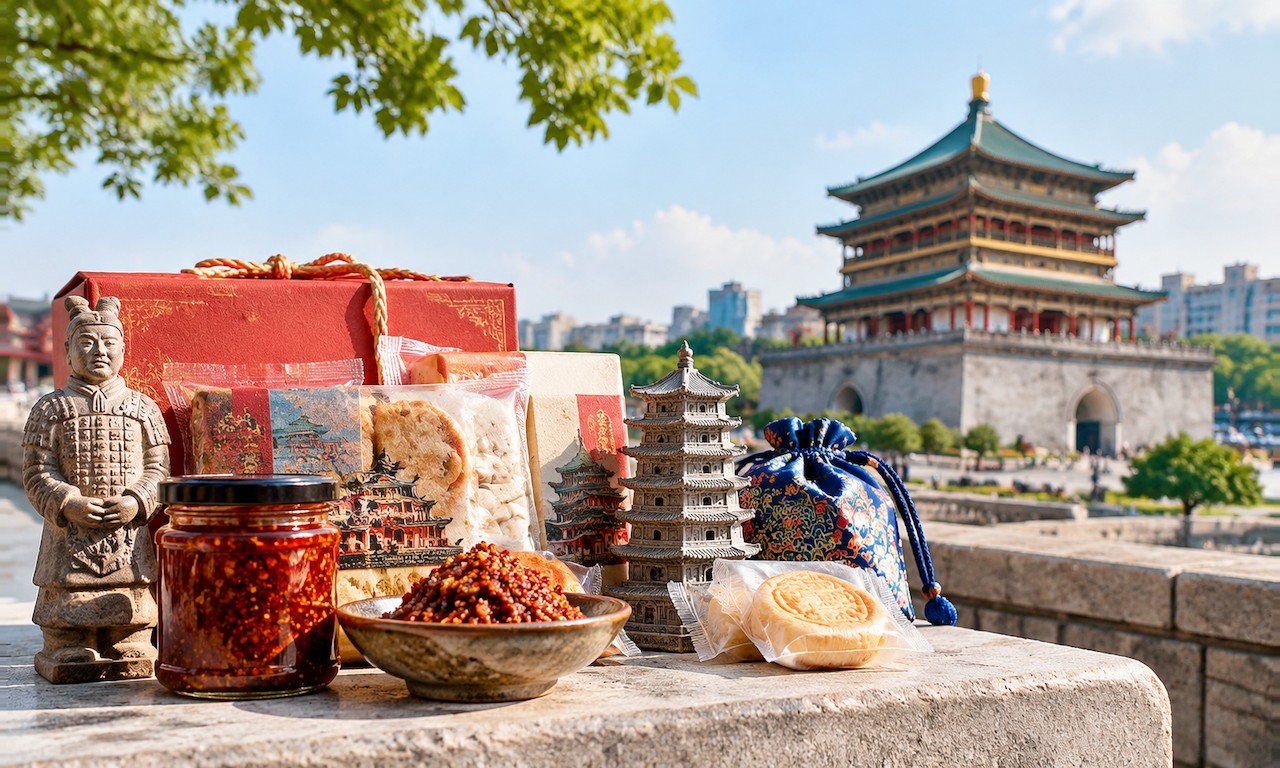
The core question this article aims to answer is: why are there such significant price and quality differences between tourist attraction shops and local supermarkets, and between established brands and trendy new brands of Xi'an souvenirs? And how should you choose and where to buy them before your trip to avoid wasting money? This question deserves a serious answer because most people only have one opportunity to buy souvenirs. Buying the wrong thing isn't just about spending a few extra dollars; it's about bringing back something that doesn't truly represent Xi'an.
Group 1: Are packaged mutton stewed in bread the same thing sold at tourist attractions and on supermarket shelves?
Most travel guides will tell you that buying packaged paomo (pita bread soaked in mutton soup) at the Muslim Quarter or the Terracotta Warriors exit is the most convenient, as the packaging is attractive and makes a good impression. However, many of these packaged paomo sold in tourist areas are tourist-only versions, heavily seasoned, oily, and with little meat, yet they are significantly more expensive than in local supermarkets. Several well-established brands commonly found in local supermarkets have simpler packaging, but their ingredient lists are clearer, and the ratio of meat to bread pieces is more substantial, resulting in a paomo closer to the original restaurant version. How to quickly distinguish them: Look at the back of the packaging. Tourist area versions often have large photos of the attraction and the words "Xi'an Specialty" in bold, while supermarket versions usually only have the brand name and product name. When is it more cost-effective to buy from which: If it looks nice as a gift, buying from tourist area stores is fine, but for yourself or for knowledgeable friends and family, it's more reliable to buy from supermarkets like CR Vanguard or Renrenle.
Group 2: Cured beef, what's the difference between the time-honored brand with long queues and the popular vacuum-packed version?
Most travel guides will tell you that the authentic cured beef from the time-honored shops in the Muslim Quarter is only available if you arrive late. In reality, the advantage of these established shops lies in their freshly cut and sold meat, resulting in a rich aroma, moderate saltiness, and tender texture. However, vacuum packaging diminishes the flavor, and long queues and shelf life become issues. Trendy new brands, on the other hand, tend to offer smaller, lower-salt versions that look more refined and are priced mid-to-high range. However, the source of the meat and the braising time are often inconsistent, and the flavor of the spices may feel superficial after a while. How to quickly distinguish them: At the counters of established shops, locals are mostly buying loose cuts, while at trendy shops, young people are mostly taking photos. When is it more cost-effective to buy from one of these shops? If you can finish it on the same day or get it home within one or two days, buying loose cuts from established shops is the best deal. If you need to store it for a few days or ship it out of town, choose the vacuum-packed version from established shops; don't spend extra money on trendy packaging.
Group 3: Chili oil, which smells better, the local specialty store in the scenic area or the community grain and oil shop?
Most travel guides will tell you to buy Xi'an chili oil in glass bottles, with clear red oil and labeled "handmade." However, many local shops in tourist areas use salad oil and regular chili powder in these bottles; they smell pungent, taste only spicy without any aroma, and tend to separate. Local shops in neighborhood grain and oil stores or vegetable markets often sell freshly ground chili powder mixed with the owner's own chili oil, resulting in a complex aroma with sesame and spices at the base, and at a much lower price. How to quickly distinguish them: Open the bottle and smell it; the tourist area version has a single spicy flavor, while the neighborhood version has a distinct roasted and nutty aroma. When is it more cost-effective to buy one or the other? Buying bottled chili oil as gifts, buying loose chili oil from neighborhood stores to bottle yourself, or buying chili powder recognized by locals to make your own chili oil at home, are all more economical than buying from tourist shops.
Group 4: Crystal cakes, what's the difference between them and the "Xi'an Specialty" sold at the entrance of Demao Gonghe Scenic Area?
Most travel guides will tell you that crystal cakes are a traditional Xi'an pastry, and that buying Demaogong is the right choice. However, Demaogong, as a long-established brand, has a crisp crust and delicate filling. The ratio of candied fruit peel and sugar-preserved rose petals has been refined over many years, resulting in a sweet but not cloying flavor. Many of the fancy-packaged "Xi'an specialty crystal cakes" sold at tourist attractions are made in factories, with thick crusts, little filling, and a strong sugary taste, leaving your mouth full of sugar granules with every bite. How to quickly distinguish them: Check the production address. Demaogong's origin is clearly stated, while generic brands sold at tourist attractions often list "consignor" and "contractor," with addresses not located in Xi'an. When is it more cost-effective to buy from Demaogong: For gifts for elders or discerning relatives, choose Demaogong, even if it's just a simple cardboard box, it's better than the aluminum boxes sold at tourist attractions; for personal enjoyment, buy small, loose pieces to save luggage space.
Group 5: Huang Gui Thick Wine, how to choose between the old shop's free-style version and the supermarket bottled version?
Most travel guides will tell you that thick rice wine is a Xi'an specialty, and it's convenient to buy bottled versions. However, the loose-served thick rice wine from traditional shops has a vibrant rice aroma, a slightly sour and sweet taste, and a natural fragrance of fermented osmanthus. But it has a short shelf life and must be consumed on the same day or within one or two days of refrigeration. Supermarket bottled versions undergo deactivation and flavoring for preservation and stability, resulting in a thinner consistency, a weaker osmanthus aroma, and a more beverage-like texture than rice wine. How to quickly distinguish: Loose-served wine will show fine rice grain sediment, while bottled wine is usually completely clear. When is it more cost-effective to buy which: If you're drinking it locally in Xi'an, buying a pot from a traditional shop is the best way to enjoy it; if you want to take some back for your family, supermarket bottled wine is acceptable, but don't expect too much.
Group 6: Which is more worthwhile to bring back: creative and cultural pastries, trendy new brands or traditional time-honored brands?
Most travel guides will tell you that Xi'an now has many attractive cultural and creative pastries shaped like terracotta warriors, the Big Wild Goose Pagoda, and the city wall, perfect for taking photos and posting on social media. In reality, the majority of the cost of these trendy new brands is in the molds and packaging; the pastries themselves often use generic fillings like red bean paste, jujube paste, and pineapple, tasting little different from ordinary shortbread, yet costing two to three times more than similar products from established brands. Traditional brands like Demao Gong and Quanshengzhai also offer small-packaged pastries. While their appearance is simple, the fillings and crusts are more refined, offering authentic local flavor. How to quickly distinguish them: Trendy cultural and creative pastries have a heavier outer box than the contents, while established brands have a heavier contents than the outer box. When is it more cost-effective to buy one? For gifts for younger friends or clients, cultural and creative pastries are more newsworthy; for personal enjoyment or as gifts for discerning elders, choosing established brands is always a safe bet.
Group 7: Persimmon cakes and stone-baked buns, what's the price difference between the scenic area entrance and the local morning market?
Most travel guides will tell you that persimmon cakes and stone-baked bread are cheap local specialties, and you can just buy a few packs at the entrance of the scenic area. In reality, the persimmon cakes sold at scenic area entrances are often from out of town, small, with little frost, and dry. The stone-baked bread is harder and saltier, like a mass-produced item. Persimmon cakes from local morning markets or community vegetable markets mostly come from Fuping, with thick frost and a soft, chewy texture. Stone-baked bread comes in original, pepper leaf, and fennel flavors, and is thin and moderately crisp. How to quickly distinguish them: Fuping persimmon cakes feel soft and elastic to the touch, with a naturally uneven white frost on the surface; those from scenic areas feel hard, have little frost, or are artificially powdered. When is it more cost-effective to buy either: Both are not expensive; the price difference mainly lies in quality. It's recommended to buy them all at the morning market, which is both cheaper and allows for more selection.
Group 8: Tea and Fuzhuan tea, which is more reliable: tea shops in scenic areas or tea wholesale markets?
Most travel guides will tell you that Xi'an is the starting point of the Silk Road, and bringing back some Fu brick tea adds a touch of cultural sophistication. However, much of the Fu brick tea sold in tourist area tea shops is actually tightly compressed border-trade tea, with coarse, old tea leaves and a weak aroma, yet it's not cheap. Locals can find clean, freshly brewed, and naturally fragrant Fu brick tea for a few dozen yuan at wholesale tea markets or old tea cities. The brewed tea has a bright color and a clean aftertaste. How to quickly distinguish them: look at the side of the tea brick. Tourist area tea often contains coarse stems and yellow leaves, while wholesale market tea has relatively uniform leaves and naturally distributed golden flowers. When is it more cost-effective to buy from a tourist area tea shop? If you're a tea connoisseur and want to drink it yourself, go to the wholesale market. If you're buying it as a gift and need packaging and explanation, tourist area tea shops can provide these services, but the actual value of the tea itself is questionable.