
Avoid lightning strikes in Tangshan | Don't get caught in the rain at Nanhu Lake; locals have tested this indoor cultural and artistic route and will keep your shoes dry.
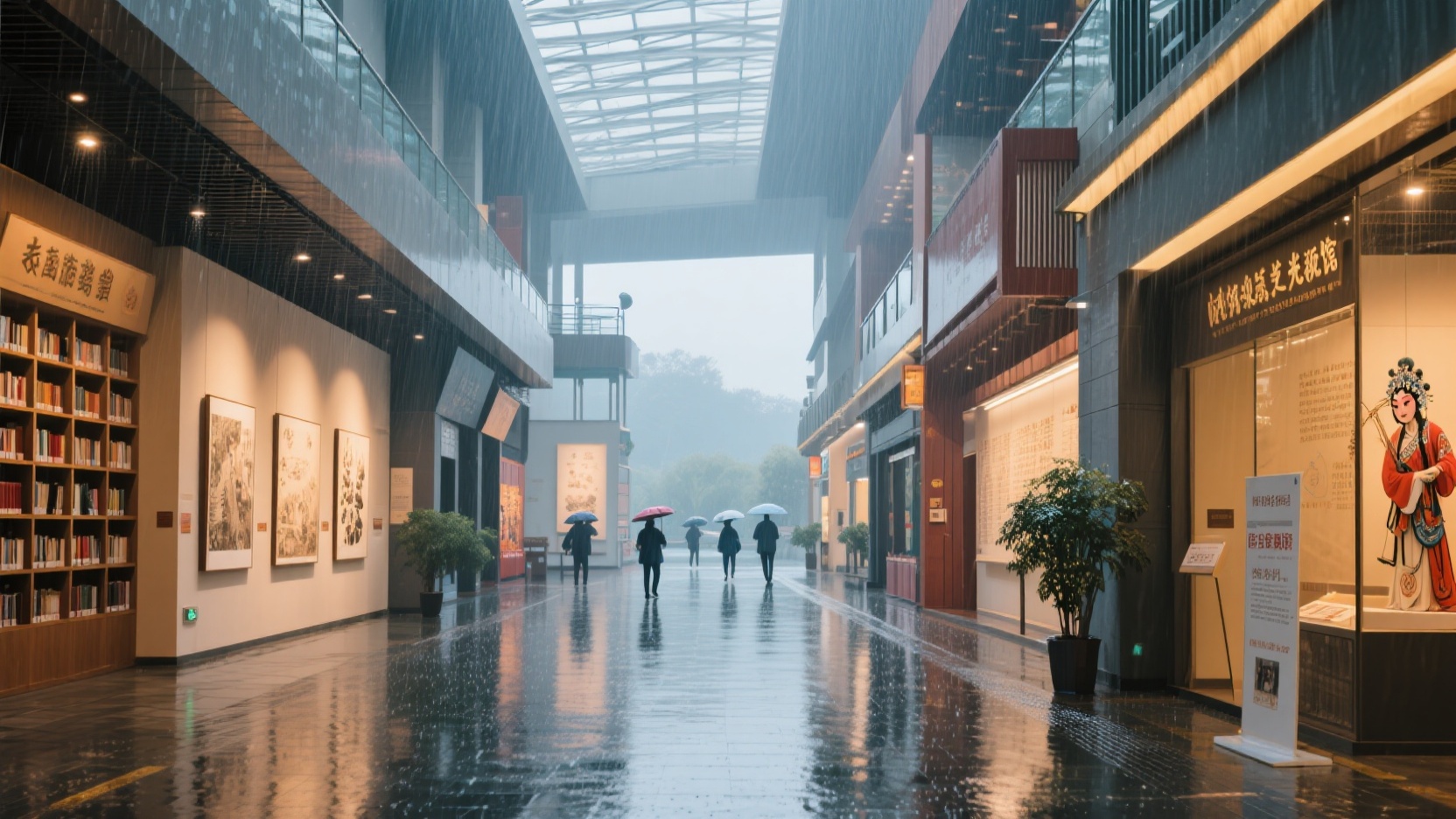
If someone in Tangshan tries to brave the rain and go to the outdoor areas of Nanhu Lake or Kailuan National Mining Park, eight out of ten will come back cursing, and the remaining two will be locals wearing rain boots.
Many people think that Tangshan's culture and art are limited to the Earthquake Memorial Hall and Nanhu Lake, leaving them clueless when bad weather hits. Actually, the most worthwhile places to explore in this industrial city are its indoor cultural spaces—offering shelter from the sun, rain, and wet shoes, allowing you to thoroughly understand shadow puppetry, Pingju opera, and modern industrial history all at once. The route below is one I've explored repeatedly during my five years living in Tangshan, through rain, snow, and scorching heat.
First stop: Tangshan Museum Cluster – Don't rush to the earthquake memorial hall to squeeze in with umbrellas yet.
The Tangshan Museum, located at the foot of Phoenix Mountain, features permanent exhibition halls on "Tangshan History," "Pingju Opera," and "Shadow Puppetry," and is much quieter than the Earthquake Memorial Hall. Arriving early on a rainy day means fewer crowds and better lighting, making it ideal for a leisurely visit. A visit takes about two hours. Admission is free, but reservations must be made in advance via the museum's official WeChat account. It is closed on Mondays.
Avoid going into shopping malls for meals nearby. Walk a few minutes to the northwest to the bottom of an old residential area, where there are several noodle and pancake shops frequented by locals. The price is only a few dozen yuan per person, and the food is hot and delicious.
Second stop: Tangshan City Library and Tangshan Art Museum – a half-day rain shelter connected by a corridor.
The second stop was the Cultural Square area, where the Tangshan City Library and Tangshan Art Museum are next to each other, connected by semi-indoor passageways, allowing people to switch between the two museums even in heavy rain.
The library's floor-to-ceiling window reading area is perfect for watching the snow in winter and the rain in summer; you can easily lose track of time once you sit there. A total of about two and a half to three hours is needed for both museums. Reservations or ID cards are required for the library. Most exhibitions at the art museum are free, but it's best to book in advance; avoid going on Mondays when it's closed.
For dining nearby, head to Nanhu Food Plaza or the light food area inside the venue. The price is only a few dozen yuan per person. Avoid buying "Tangshan sesame candy" from mobile stalls outside the plaza, as it's overly sweet and may be stale.
Third stop: Tangshan Urban Planning Exhibition Hall – -10 degrees Celsius is the perfect time to look at the model and daydream.
The Tangshan Urban Planning Exhibition Hall is often overlooked by tourists, but its large indoor model and video materials can quickly help you understand the logic behind the post-earthquake reconstruction. In winter, when temperatures drop to minus or forty degrees Celsius, the air conditioning is stable and there are very few people, making it a perfect place to relax and unwind. On weekdays at lunchtime, it's practically the whole place to yourself.
It takes about an hour and a half. You need to bring your ID card to register on-site. The museum is usually closed on Sundays, so it's best to check before you go to see if there are any government receptions that day.
For dining options nearby, you can head to the old Jiaotong University area or Xinhua Road area, where you can find local favorites like stir-fried pancakes and mutton soup. The prices are only a few dozen yuan per person, and the food is warm and filling.
Fourth stop: Peirenli Historical and Cultural District – the inner street that most resembles Beiping on a rainy day.
Peirenli isn't your typical fake ancient town. It contains several old buildings converted into urban study rooms, educational museums, and small handicraft shops. The inner streets have covered walkways, so you can stroll slowly without getting your shoes wet, even in rain or snow. On rainy days, with fewer people, it's actually more photogenic.
This place is perfect for whiling away an hour and a half in the afternoon. No reservation is needed, but some exhibition halls are closed on Mondays. The street itself is open every day, and the light is most stable at 3 pm on the inner street near the old church.
For dining, I recommend the community canteen at the entrance of the neighborhood or the small restaurant on Longze Road next door. Locals eat stewed flatbread and geza soup, which cost only a few dozen yuan per person. Don't buy ready-made "Tangshan souvenirs" in the neighborhood; they are significantly more expensive than in supermarkets.
Fifth stop: Tangshan Poly Grand Theatre and Opera Culture Park – Leave bad nights to Pingju opera and music.
After 5 PM, performances move indoors. Tangshan Poly Grand Theatre and Opera Culture Park often host Pingju opera, Leting drum ballad, and symphony performances. On rainy or snowy days, there are fewer audience members, and tickets are not difficult to buy.
Performances typically last one and a half to two hours. Tickets need to be purchased in advance through ticketing platforms. There are usually no performances on Mondays; for other times, check the schedule. Check the week's schedule before you go, and you can still sit comfortably even if you buy the cheapest ticket at the last minute.
For dining near the theater, you can try the area around Cultural Square or Ocean City. Mid-range restaurants there cost around 100 RMB per person, and there are also affordable fast food options. Don't wait until after the show to look for a taxi; it's hardest to get one in this area on rainy nights.
Stop 6: Tangshan Banquet Indoor Food Museum – Solve your dinner and late-night snack without getting wet in the rain.
If you don't want to watch a proper performance, you can make Tangshan Banquet your last stop. It's an indoor food and culture street, complete with a chessboard street, a shadow puppet stage, and scenes of old Tangshan, allowing you to eat and visit exhibitions all in one place.
The stroll and food take about one and a half to two hours. No reservation is needed. It's basically open all year round and is suitable for ending a rainy or snowy day. However, it gets very crowded on weekend evenings, so try to arrive before 5:30 pm.
The quality of the stalls inside varies. Locals don't recommend the few "internet-famous chess piece pancake" stalls near the entrance; instead, head further in for freshly made meat pies and hot and sour noodles. Prices range from tens to hundreds of yuan per person, catering to different budgets.
In closing: Don't ask the locals if I didn't tell you.
1. Many venues in Tangshan are closed on Mondays. If you encounter bad weather on a Monday, prioritize going to neighborhoods like Tangshan Banquet and Peirenli. Don't try to go to museums and libraries, otherwise you'll spend the whole day being turned away and getting soaked in the rain.
Second, try to make a reservation one day in advance. In winter, when the temperature is below zero or during heavy rain, there are fewer spots available on-site, especially at libraries and art galleries. If you go on the spur of the moment, you may only be able to get in for the afternoon session or you may not be able to get in at all. Don't gamble with your luck.
Third, avoid wearing white shoes and long skirts. The floor tiles at the entrances of some old indoor buildings in Tangshan's old city are damp, making your feet muddy on rainy or snowy days, and it's also not a good place to take photos in the cultural and creative streets.
Fourth, don't assume that no one will go out in bad weather. Locals will also flock to Tangshan Banquet Hall and shopping malls. Arrive half an hour early during mealtimes to avoid queues, and parking spaces will be even more scarce.
5. Taking a taxi to the Cultural Square area is more convenient than driving. Parking is very tight on rainy days, but be sure to call a taxi in advance when the show ends, otherwise it is common to stand in front of the theater for half an hour on a snowy night.