
The Artistic Side of the Steel City: 8 Spiritual Corners of Tangshan's Niche Culture Map
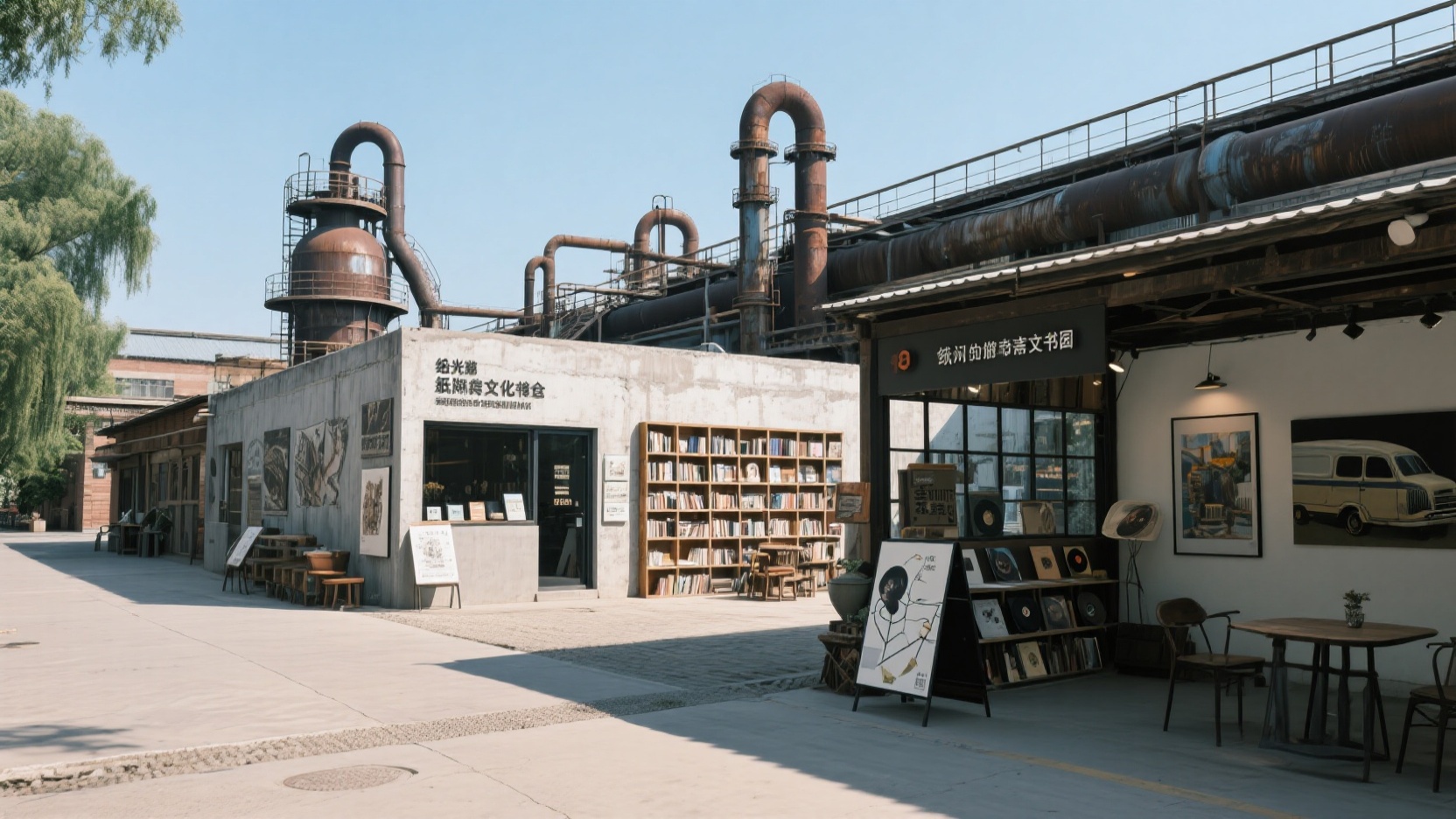
In Tangshan, instead of the usual destinations like Nanhu Lake and the Earthquake Memorial, another route connecting old factories, independent bookstores, and community cafes offers a closer look at the city's creative pulse. The following eight locations can be linked together to form a half-day to full-day walking route, suitable for those who appreciate the old industrial fabric and quiet cultural scenes.
Gray Wall Art Space: An Independent Gallery in an Old Factory
The space has an "unfinished" feel, with the steel beams, cement floors, and weathered walls of the original machine shop deliberately preserved. The exhibition primarily features installations, paintings, and photography by local young artists. Highlights include a large-scale permanent installation at the entrance and a brick wall that retains the original factory slogans. Natural light from the skylight above changes the outlines of the exhibits at different times of day. For photography, it's recommended to go around 3 or 4 pm to take photos of the installation projections using the sidelight from the skylight. For portraits, stand in front of the slogan wall and use a medium telephoto lens to compress the background, avoiding wide-angle shots that could make the space feel empty.
Paper Room Bookstore: An independent bookstore on a neighborhood corner
The storefront is unassuming, but behind the door lies a floor-to-ceiling bookshelf and a quiet reading staircase. The selection primarily focuses on Hebei local history, architecture, and art. Highlights include the owner's handwritten recommendation cards and a special "Tangshan Industrial History Shelf" in the corner, featuring factory chronicles, old photo collections, and local documents. For photography, it's recommended to take low-angle shots from the reading staircase to capture the depth of the bookshelves, and use natural light from window seats to take close-up photos of people turning pages. Be careful to avoid photographing other readers' faces.
Gangyao Cultural and Creative Commune: A multi-functional space transformed from an old ceramic factory.
Converted from an old ceramics factory, the site features red brick chimneys and old kilns as its main visual elements, with paths paved with broken ceramic shards connecting several workshops. Highlights include the pottery-throwing process, the plant-dyed workshop, and the walls in the public area pieced together from ceramic fragments. For photography, it's recommended to capture the silhouettes of the chimneys and red brick walls in the warm evening light, using the broken ceramic shard path as a leading line extending to the old kilns for a clearer visual depth.
Tiexi Old Goods Warehouse: A Site for Collecting Industrial Memories
The museum houses a large collection of everyday objects from Tangshan's industrial era, ranging from old machine tools and enamel mugs to vintage radios, creating a vivid record of daily life from the last century. Highlights include a well-preserved "Factory Safety Rules" signboard, rows of old bicycles lining the passageways, and a display of old factory newspapers that can be browsed. For photography, it's recommended to turn off the flash, use a wide aperture to capture details of metal objects, and avoid excessive reflections. When photographing people, using depth of field in front of the bicycle rows can create a sense of time.
Shiguang Art Museum: A private collection space within a community building
The exhibition is small in size with a low density of exhibits, featuring prints, ink paintings, and contemporary photography from local collectors. A handwritten guide by the curator is available at the entrance. The key to its appeal lies in the use of negative space and the spatial rhythm; each piece offers ample independent viewing distance. For photography, it's recommended to use the negative space on the walls to capture the viewer's back, and for people, use side lighting to photograph their upper body, avoiding direct shadows on their faces from the overhead spotlights.
Nanhu Pop-Up Coffee: A community coffee shop on the ground floor of an old residential building.
During the day, they offer hand-drip coffee and light meals, and occasionally host small screenings or sharing sessions in the evenings. The walls are adorned with works by local illustrators. Highlights include "local specialties" made with local jujubes or chestnuts, independent magazines on old wooden tables, and glimpses of the community's daily life through the glass windows. For photography, it's recommended to sit by the window in the morning when the soft lighting is perfect for shooting the coffee and tabletop from above; in the evening during the blue hour, take photos of the warm-lit entrance from the outside to create a contrast between warm and cool tones.
Turnpoint Record Store: An auditory corner deep within an old factory
Hidden on the second floor of the cultural park, you need to follow the stairs to enter the old office area. Two walls are covered with a wall of vinyl records and a wall of cassette tapes. The highlights are mainly rock, folk, and urban field recordings. Old headphones are provided for listening sessions where you can choose your own records. There are also recording archives showcasing the environmental sounds of Tangshan from different eras. For photography, it's recommended to use symmetrical composition in front of the record wall, use a wide aperture to capture the texture of the vinyl covers, and avoid using flash to prevent glare.
Carport Community Gallery: Miniature Exhibition Spaces Under Residential Buildings
Converted from an old neighborhood bike shed, this small space features frequently changing exhibitions, mostly themed around "neighborhood memories." Highlights include photography and illustrations by nearby residents and young artists, as well as a guestbook at the entrance. For photography, it's recommended to use the colorful bike shed lines to frame your shot, and to capture the contrast between the light inside and outside the gallery after the neighborhood lights come on in the evening for a more immersive atmosphere.
These eight locations are connected by walking or cycling, so it's recommended to allow at least half a day and not rush. They're not about quick check-ins, but rather like slices of Tangshan's different eras, perfect for leisurely exploration alone, or with friends who share a love for vintage items, paper, and quiet spaces. Explore the city's spiritual corners on foot.