
Suzhou Avoidance Guide | Local Testimonial: Don't Be Fooled by "3 Days 2 Nights Classic Tours"
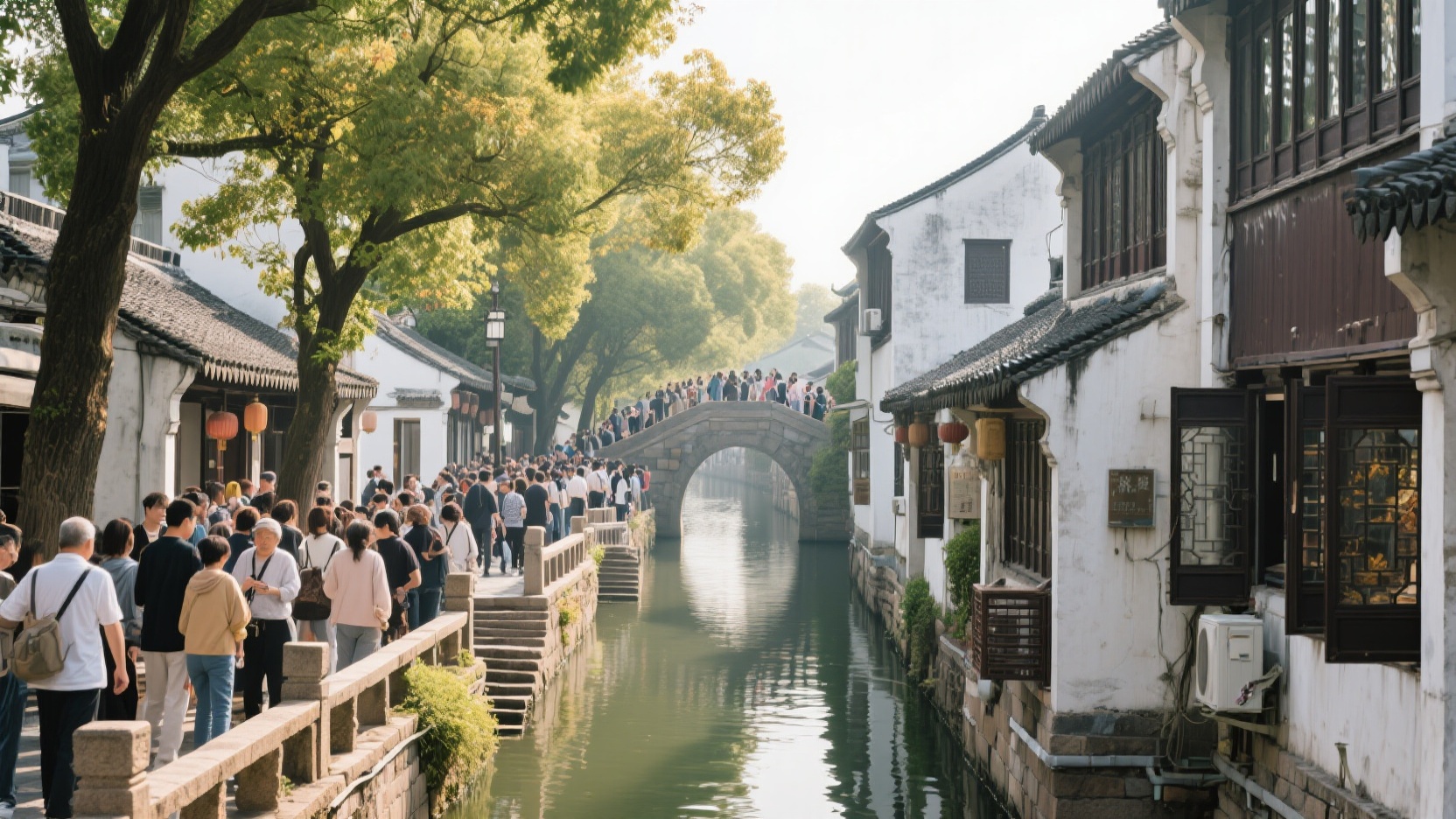
Having lived in Suzhou for six years, I took a friend on a three-day, two-night "classic itinerary" tour. After waiting in line for forty minutes at the entrance of the Humble Administrator's Garden, he said, "This garden isn't even as nice as the alley behind my guesthouse." I still remember that sentence, and it's become my opening line for dissuading countless netizens.
The three-day Suzhou itinerary circulating online is essentially a traffic flow map that crams everyone into the same route. It doesn't tell you which gate to enter to avoid tour groups, nor does it mention which roads turn into parking lots after 4 PM. Below, I'll break down that "classic route" point by point, revealing the truth from a local's perspective, and providing a version of the itinerary that truly allows you to experience Suzhou.
Day 1: Humble Administrator's Garden - Suzhou Museum - Pingjiang Road: A self-torturing closed loop of queuing.
The Humble Administrator's Garden isn't bad; most people visit at the wrong time. Between 9 and 11 AM, the crowds from the East Gate to the South Gate can overwhelm the experience, turning it into a mere "head-to-head" experience. The truly worthwhile parts of the garden are the central water garden and the western supplementary garden; the northeastern bonsai garden and the garden museum can be quickly skipped. If you must visit, go during the first wave of opening hours or an hour and a half before closing; otherwise, skipping them won't be a big loss.
Suzhou Museum's main building is free, but the reservation system causes many people to get stuck at the entrance scanning their phones. Even worse, once inside, you'll find yourself spending a lot of time avoiding photo queues rather than actually seeing the exhibits. Locals tend to frequent the West Wing, where the exhibition layout is more relaxed, and the quality of the permanent folk art and calligraphy exhibitions is severely underestimated.
During the day, Pingjiang Road is a street lined with milk tea shops and small commodities, and has little to do with the "small bridges, flowing water, and traditional houses" scenery. If you really want to walk on the stone-paved streets, the parallel Daru Lane, Lujia Lane, and Dongqilin Lane are the ones that retain the old-fashioned texture, and there are so few people that you can hear the old people chatting by the well.
Day 2: Tiger Hill - Shantang Street - Lingering Garden: Reverse the order for double the experience.
The classic route takes you to Tiger Hill in the morning, Shantang Street in the afternoon, and Lingering Garden in the evening, resulting in being crammed into Shantang Street at midday. Tiger Hill Pagoda itself is worth seeing, but the Sword Pool and the tree-lined path behind the hill are where locals will repeatedly visit. It's recommended to head straight to the back gate early in the morning and avoid the main commercial area.
The right way to experience Shantang Street is at the end of the night. The section from Xinmin Bridge to Xing Bridge is the most commercialized, and you can practically stop there. Further west past Xing Bridge is the true old Shantang, with its vegetable market, cooked food shops, and old houses along the river. Don't come before 6 PM; after 8 PM, you'll see the waterways in their quieter state.
Lingering Garden is severely undervalued, but many people are too tired after walking the first two stops and only stay for ten minutes before leaving. Lingering Garden should be visited in the morning or evening when you have the most energy, sitting in front of the "Hanbi Mountain House" and watching the light and shadows through the latticed windows – that's where its true value lies.
Day 3: Zhouzhuang or Tongli: Don't waste your last day in a "fake ancient town".
If you only have three days and two nights, making a special trip to Zhouzhuang or Tongli means a one-way trip of more than an hour, and you'll have to compete with tour groups for a good flight spot. On weekends, the Shen Hall and Zhang Hall in Zhouzhuang are practically "queuing to see furniture," and while the Tuisi Garden in Tongli is nice, most of the scenery included in the all-inclusive ticket is newly built and not worth spending a whole day there.
What truly needs replacing is the "alleyway version of a water town" within Suzhou's ancient city—the areas around Panmen, Changmen, and Fengmen Hengjie. These places are free to enter, yet offer the most authentic glimpse into life along the river. Fengmen Hengjie, in particular, is a bustling market scene for Suzhou locals from 7 to 9 am; a bowl of first-broth noodles and a serving of soup dumplings are more comforting than any travel guide.
If you really want to see a water town, go to Luzhi or Jinxi, and enter after 3 pm on a weekday. Have a bowl of Aozao noodles and stroll around at your leisure. But within a three-day trip, I would suggest reserving your last day for the ancient town rather than spending time on the highway.
Which of these "must-eat" restaurants popular with online influencers are not worth the two-hour wait?
Some long-established restaurants in the Guanqian Street commercial district are touted in travel guides as "a wasted trip if you don't eat there," but in reality, you still have to wait in line at 2 pm on a weekday afternoon, and the sweet porridge and pastries served are essentially no different from those at street stalls. Locals don't make a special trip to queue; they mostly just buy something on their way and leave.
The truly authentic Suzhou flavors are hidden in the backstreets and alleys: a bowl of first-broth noodles, a serving of seasonal stir-fried meat dumplings, and a plate of freshly sliced boiled mutton. These dishes are all about seasonality and cooking time, not about the number of queues. Don't miss the green rice dumplings in spring, the water chestnuts in autumn, and a bowl of Fengzhen braised pork noodles in summer—it's more satisfying than any marketing ploy.
When friends ask me which noodle shop is the best, I only say, "The one near where you live, the one that opens at 6:30 in the morning." Because the soul of Suzhou-style noodles lies in the time difference between the soup and the noodles; you have to finish it within half an hour to truly enjoy it.
The optimized version for indigenous travelers includes "3 days 2 nights" and "+1 day flexible alternative".
The optimized first day: Enter the Humble Administrator's Garden at 7:00 AM, or go directly to the smaller Yipu Garden; leave before 9:00 AM; walk along Daru Lane and Dongqilin Lane in the morning; have a bowl of noodles near Lindun Road at noon; go to the Suzhou Museum West Branch or Eslite Bookstore in the afternoon; watch the sunset at Jinji Lake in the evening.
Day 2: After breakfast, go to Lingering Garden, arrive before 10:00 AM; at noon, find food on the western section of Shantang Street; in the afternoon, walk along the back of Tiger Hill; in the evening, return to the ancient city and walk along the southern section of Pingjiang Road. Day 3: Get up early to have breakfast at Fengmen Hengjie, then walk through Panmen and Changmen, and finally return home with a box of seasonal pastries.
A flexible day can be divided into seasonal versions: In spring, visit Dongyuan Garden and Shangfang Mountain to see the cherry blossoms; in summer, escape to the night garden of Wangshi Garden or the cool path of Qionglong Mountain; in autumn, go to Tianping Mountain to see the red maple leaves but avoid weekends, or go cycling on Yangcheng Lake Peninsula; in winter, go to Taihu Lake to see the reed wetlands and migratory birds, and then finish with a hot spring.
For those traveling with elders, skip the evening shows and slow down the pace. For those with children, visit the Suzhou Museum West Wing and Suzhou Park more often than traditional gardens. Couples or solo travelers should dedicate their evenings to the ancient city's alleyways and not sacrifice leisure time for the sake of checking off landmarks. This version doesn't force everyone into the same queues, but rather lets you witness the true daily life of Suzhou residents: the morning market, the evening lake breeze, and the waterways late at night.
In closing: 5 tips I didn't tell you, don't ask the locals.
Here are five points I always post in advance when friends come to visit, but some people never listen: First, don't buy "Suzhou specialties" near tourist attractions, especially silk, pearls, and vacuum-packed pastries. Fengmen Hengjie or Xinminqiao Market are where locals buy souvenirs. Second, don't take taxis the whole time. The ancient city is best enjoyed by shared bikes and walking. Many alleys are inaccessible by car.
Third, don't believe in low-priced tours that include "all-inclusive one-day tours of Zhouzhuang and Tongli," as half the day will be spent at shopping spots; fourth, don't take a boat on the main street of Pingjiang Road, but rather take a rowing boat in the waterways near Panmen or Couple's Garden for a quieter experience; fifth, stop asking "which month is the best to visit," as Suzhou has different food and flowers in each season, and avoiding national holidays and weekend mornings is far more important than choosing the season.