
Exploring Suzhou's Local Flavors: 10 Must-Buy Authentic Products from Fengmen Hengjie and Loumen Farmers Markets
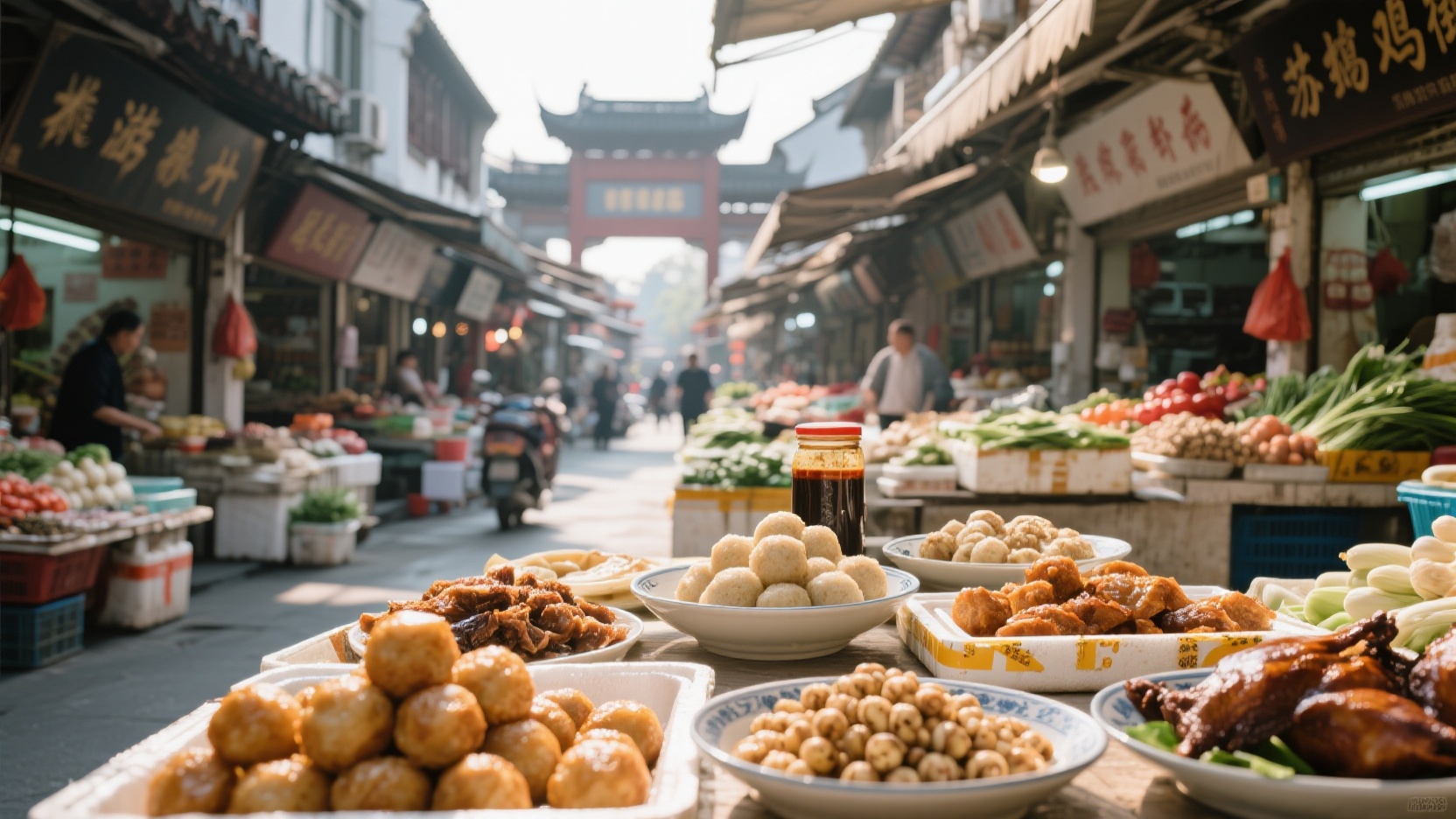
To truly understand Suzhou, you don't need to start with its gardens; begin with a stroll along Fengmen Hengjie Street in the early morning. This riverside old street preserves the most complete market layout in Suzhou's main urban area, with street-front shops, mobile vegetable vendors, and elderly people carrying baskets creating a authentic slice of life. Meanwhile, Loumen Farmers Market serves the daily meals of residents in the eastern part of the city, with stable stalls and many regular customers. These two markets lack the uniform lighting and elaborate displays of modern markets, yet they hold within them the most stable culinary order of Suzhou people's daily meals.
Cooked food section: Cold dishes and the perfect base for eating with rice
Suzhou-style braised duck: The braised duck sold at the street stalls has a glossy, jujube-red surface, firm yet tender meat, and a distinctly sweet aroma from the braising sauce. When choosing, check if the duck breast is plump and if there isn't too much fat between the skin and meat. It's best to ask the vendor to chop it into pieces and give you an extra spoonful of the original braising sauce. It's not recommended to eat it at high temperatures or for extended periods. It's best eaten cold or warmed in the microwave on low. Mixing the braising sauce with plain congee or noodles is a common accompaniment for many locals.
Spiced Fried Fish: Fish stalls at the market often use freshly killed grass carp or silver carp, frying them until crispy on the outside before soaking them in a five-spice sauce. When selecting fish, observe whether the cut surface is even, and whether the sauce is amber rather than dark black, with a fragrant aroma rather than a burnt or bitter smell. It can be served cold or as a topping for Suzhou-style noodles. The fried fish, after absorbing the sauce, is crispy on the outside and tender on the inside, with a perfect balance of sweet and savory.
Handmade snacks: Suzhou street food flavors best enjoyed hot
Deep-fried glutinous rice balls: the most authentic local breakfast in the Fengmen Hengjie area. Glutinous rice dough balls are filled with fresh meat and deep-fried until golden brown. The outer shell is crispy, while the inside is soft and chewy with juicy meat filling. When choosing, look for freshly fried ones with a skin that hasn't softened significantly. They must be eaten hot. They can be paired with light soy milk or tea to cut through the richness and enhance the aroma of the rice and meat.
Sweet Osmanthus Lotus Root: Most sweet lotus root sold in the market is freshly cooked that day. The lotus root holes are stuffed with glutinous rice, and then slowly simmered with brown sugar and osmanthus flowers. When choosing lotus root, select those with intact bodies, where the glutinous rice filling isn't hollow when cut open, and where the sugar syrup can be pulled into thin threads. At home, slice and eat cold, or steam and drizzle with the syrup. The texture is chewy yet crisp, and the osmanthus fragrance is natural and not overpowering. Do not microwave cooled sweet lotus root, as it will harden.
Arrowhead slices: An easily overlooked fried snack in Suzhou markets, considered by locals as a substitute for potato chips. Slice arrowhead thinly and fry until lightly golden brown, then sprinkle with a little salt or five-spice powder. When selecting slices, check for even thickness; thin slices are crispy and not chewy, while thicker slices have a distinct starchy aroma. Store uncovered after purchase to prevent moisture absorption; best enjoyed on the same day.
Pickled and preserved vegetables and seasonings: the invisible soul of the dining table
Shrimp roe soy sauce: Bulk shrimp roe soy sauce is commonly found at pickle stalls or condiment stands in wet markets. Suzhou locals use it as a dipping sauce for boiled pork, mixed with wontons, and drizzled over blanched vegetables. When selecting, shake the bottle; the shrimp roe should be evenly distributed and of a certain concentration. It should have a rich, fresh river flavor and be saltier than regular light soy sauce. Use only a small amount; it's suitable for enhancing umami rather than heavy seasoning. Refrigerate after opening.
Pickled daylily: A common sight in Suzhou markets during spring, pickled daylily is finely chopped and mixed with salt and a small amount of sugar, resulting in a slightly fermented, sour aroma. When selecting daylily, choose those that are still green and have clear juice; if the color is dark or the sour smell is pungent, it indicates over-fermentation. It can be mixed with shredded tofu skin or edamame and served as a side dish with congee or as an appetizer with drinks, offering a more refreshing herbal aroma than ordinary pickles.
Seasonal Goods: Buying according to the solar terms is the safest bet
Gorgon fruit: Late summer to early autumn is the peak trading season for gorgon fruit on Fengmen Heng Street. Freshly hulled gorgon fruit is more glutinous than frozen gorgon fruit. When selecting gorgon fruit, look for round, pale yellow grains that are elastic to the touch. The best way to eat it is to boil it in water with a little rock sugar. Do not overcook, otherwise it will lose its chewy texture. It can also be cooked with osmanthus and white fungus as a refreshing sweet soup to combat autumn dryness.
The Eight Aquatic Treasures: Water bamboo, lotus root, water caltrop, and water celery, among others, circulate seasonally in Suzhou markets. When selecting water bamboo, choose those with a bright green outer shell and no black core; select lotus root with short, thick segments and no mud inside the holes; and water caltrop is best eaten raw for its crispness and tenderness. These vegetables don't require complicated seasonings; blanching or stir-frying best brings out the natural sweetness of these aquatic plants. Process them as soon as possible after bringing them home.
Dongshan loquats and bayberries: The heart of the early summer fruit market is Dongshan loquats and bayberries. When selecting loquats, look for intact fuzz on the skin, a shriveled stem, and plenty of juice after peeling. For bayberries, choose firm flesh, a purplish-red color, but not excessively juicy. Do not store them for long after purchase. Uneaten portions can be refrigerated, but the flavor will deteriorate rapidly over time, so large stockpiles are not recommended.
Exploring the local market is the best way to experience a city. Gardens showcase Suzhou's past, but the market reveals its present—people select water chestnuts still covered in pond mud, discuss the saltiness of braised duck with vendors, and peel water chestnuts by the roadside. There's no rush of tourist attractions or standardized souvenir packaging. The true local flavor isn't in lists of specialties, but in the daily morning throngs of people carrying their baskets. Get to know Suzhou by thoroughly exploring one of its markets.