
Don't go to the Forbidden City in Shenyang, where it's crowded! A local's firsthand experience: 4 days with no entrance fee, exploring the local markets and old factories is the real Shenyang.
Traveling to Shenyang and making the Imperial Palace and Marshal Zhang's Mansion must-see attractions is basically like only seeing the city's gateway without ever entering its main hall. In my sixth year living in Shenyang, the biggest pitfall I encountered while accompanying friends from out of town wasn't a particular shop, but rather wasting all my time on combined tickets for major tourist attractions.
The truly interesting parts are hidden in places that don't require tickets: the steam rising from the morning market, the cracks in the red brick walls of the old factory, and the plastic benches on the back street of the university after six o'clock. The following four days, without spending a single penny on tickets and relying entirely on public transportation and shared bikes, actually brought me closer to the real Shenyang than any route involving tickets.
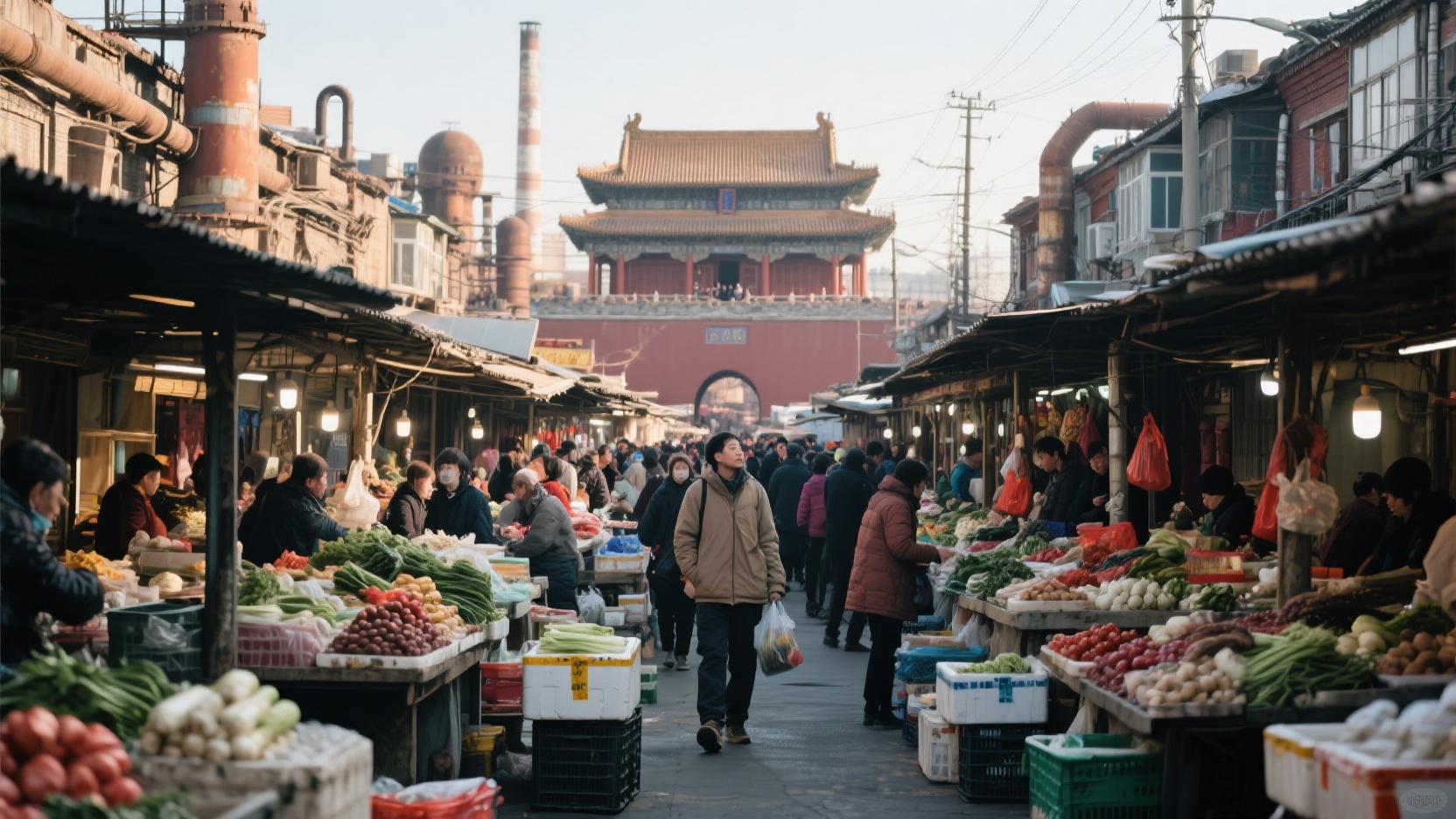
Day 1: Go to the Dadongmen morning market, avoid the crowds and waiting for a spot at the main entrance of Xiaoheyan.
The Xiaoheyan morning market has become somewhat of a social media sensation, with people holding up their phones at the main entrance. Only by turning into Wanquan Street on the east side can you see locals queuing up with aluminum basins to buy tofu pudding, sesame oil, and freshly made flatbread. There are no entrance fees or "tourist routes" here.
The essence of a typical day at the farmers' market isn't about eating, but about observation. People in Shenyang don't chat while buying groceries, but you can glean the city's character from a single sentence: "Give me two jin, no water included." This level of detail is something tourist guides can't provide.
Before 10 a.m., the morning market closes, then I head to the secondhand stalls and flower and bird market near Dadong Road to watch how a retired old man cultivates a potted clivia with the look of an antique. Walking slowly alone is much more relaxing than rushing to tourist attractions.
Day 2: Tiexi Old Industrial Zone Renovation Day – The Red Brick Walls Are More Honest Than the Tourist Guides
Hongmei Cultural and Creative Park, Fengtian Factory, and 1905 Cultural and Creative Park—these three places together represent half of Northeast China's industrial history, and none of them charge admission. The large fermentation tanks of the Hongmei MSG Factory still stand there, and the iron stairs creak as you walk up them. New exhibitions are displayed in the old workshops, but you can see them without making a purchase.
The red brick walls of Fengtian Factory are most beautiful around 3 PM, when there are fewer people taking photos and more people just sitting there. I recommend taking Metro Line 1 to Qigong Street, walking along the Weigong Canal, and finally reaching the Heavy Industry Cultural Square to see the giant gear sculpture.
Don't think of this place as a "creative cultural park photo spot"; it's more like an industrial museum without walls. Old workers will sit under the shade of trees playing chess, and occasionally look up to tell you what the factory used to do.
Day 3: University Surroundings Day - Eating Your Student Day Without Even Entering the Campus
Many universities now require facial recognition for entry and exit, but the real vicinity of universities lies precisely outside their walls. Nujiang Street north of Liaoning University's Chongshan Campus, Wenyi Road near Shenyin Temple, and the alley outside the south gate of Southeast University are all occupied by students and residents in the evening.
The pattern in these backstreets is this: the older the storefront, the more consistent the taste. A bowl of pulled noodles with chicken frame costs only a few dozen yuan per person, and you can mix and match cold dishes yourself. Sitting on a plastic stool and listening to the people at the next table chat about their theses and internships feels more authentic than in any youth hostel.
Take a stroll around the Lu Xun Academy of Fine Arts after dark. The used bookstores and art supply shops are still lit up, students are rushing to finish their assignments, and roadside barbecue stalls are emitting smoke. You don't need to spend any money to see the youthful yet carefree side of Shenyang.
Day 4: Old Town Alley Day; the outer perimeter of the city wall is more complete than the ticket area.
Instead of going inside the Forbidden City, walk around the outer perimeter of the Forbidden City along Shengjing Road, Chengde Road, and Beizhong Street. The blue brick walls, old bank buildings, and gray-tiled roofs are visible from many angles, offering a more complete view than if you bought a ticket to go inside, and you can also avoid tour groups carrying flags.
Walking from Danan Street to Xiaonan Street, passing the outer walls of Prajna Temple and Ci'en Temple, you can hear the chanting of sutras mixed with the bickering of people at the roadside chess stalls. This blend is the very breath of Shenyang's old town.
In the evening, I went back to the back of Zhongjie Street and wandered into Zhongyangli Toutiao Hutong, not to buy local specialties, but just to see the old buildings converted into community spaces and the elderly people playing chess and relaxing in the cool air. You suddenly understand: Shenyang's history is not locked away, it is alive.
The general principle for a four-day trip: Choose the right season, and you won't be bored even when you're alone.
The best time to visit is from May to June and from September to mid-October, when the weather is cool and the morning markets have cantaloupes and corn. Avoid the crowds during New Year's Day and Chinese New Year, as the markets close early, public transportation is crowded, and there are often discounts at the experience centers.
This way of traveling is best suited for solo travelers because you can set your own pace; it also works well with parents or your partner. You can admire the red bricks in the old industrial area and sample cooked food at the market, which is much more comfortable than queuing at tourist attractions.
In closing: Don't ask the locals if I didn't tell you.
First, don't be swayed by the "must-see in Shenyang: the Forbidden City and the Marshal's Mansion" list. Mondays are often closed to many venues, so use the time to explore the local markets instead.
Second, choose accommodation along the line from Tiexi Square to Yunfeng Street on Metro Line 1. It's cheap to go anywhere, and there are many old bathhouses and night markets nearby.
Third, use Shengjing Tong to scan codes on buses and subways, and buy a weekly pass for shared bikes; the transportation costs for four days are negligible.
Fourth, go to the morning market early; it's busiest around 8 or 9 am, but after 10 am it's a completely different world. In the afternoon, the lighting is best in the old factory renovation area.
Fifth, don't just focus on the trendy food stalls on the back streets of universities; head to the small shops near the entrances of residential areas. The older the tables, the less likely you are to be disappointed.
Sixth, when ordering food for one person, don't be greedy for large portions. Northeastern cuisine is known for its generous portions, so choosing a dumpling restaurant, a noodle shop, or a boxed meal that is sold by portion is the most convenient option.