
How can I make my first two days in Shanghai look like a tourist's?
Arrival time 2 PM | Don't rush out yet, have you chosen the right place to stay?
Many friends ask me what the first thing I do when I arrive in Shanghai, and my answer is always: find a place to stay. Shanghai isn't a city surrounded by tourist attractions; its charm lies in walkable neighborhoods. Staying on Nanjing Road or near People's Square means confining yourself to the least walkable area. I recommend choosing the outskirts of your local area, such as Tianshan Road in Changning, Linping Road in Hongkou, or Xietu Road in Xuhui. These places have convenient subway access, reasonable prices, and you'll find long-established noodle shops and fruit stores downstairs. Even walking back at 11 pm, it won't feel deserted. If you stay in the right place, you won't need to rush for the next two days.
Arrival time 16:30 | First walk, strolling along a "breathing" street
After dropping off your luggage, don't rush to tourist attractions. The light begins to soften at this time, making it the perfect time to stroll along a street that's both old and new. I often recommend the section from Tianping Road to Guangyuan Road, or the eastern section of Nanchang Road. These streets aren't as crowded as Wukang Road, but the density of plane trees is just as high. Along the street, you'll find shoe repair stalls, tobacco shops, newly renovated small markets, and newly opened cafes run by young people. As you walk and observe, you'll quickly form your first impression of Shanghai's "street life." This impression is crucial; it will influence your intuition when choosing shops and streets later on.
Arrival time 18:30 | First dinner: Don't wait in line at trendy restaurants.
The first meal should be a "taste test," not a "photo check-in." I usually recommend finding a local Shanghainese restaurant that's been open for over ten years and ordering braised fish tail, braised pork belly with clover, or pickled bamboo shoots with pork—if the season is right. These dishes aren't cheap, but they're not outrageous either; you can eat very comfortably for around 100 yuan per person. Why eat local Shanghainese cuisine? Because the foundation of Shanghai's flavors is the alternation of "rich, dark sauces" and seasonal fresh vegetables. After this meal, you'll know what taste standards to use to judge the pan-fried dumplings, noodles, and dim sum you'll enjoy in the following days. Waiting two hours in line at a trendy restaurant won't make you understand Shanghai better; it will only make you so hungry you lose patience.
Day 2, 7:00 AM | Visit a local farmers' market (not a tourist attraction)
Getting up early isn't the goal; it's about visiting the morning market. Almost every old neighborhood in Shanghai still retains one or two semi-indoor farmers' markets, such as Jiashan Road Market, Ningxia Road Market, and Yuping Market. Between seven and eight o'clock, vendors chat with regular customers while arranging their goods. You can see what vegetables are actually being sold this season, the locals' habits when buying fish and meat, and the types of pickled vegetables and bean products. This isn't a tourist attraction, but it's more authentic than any "traditional street." After visiting the market, buy a flatbread and fried dough sticks or a bowl of savory soy milk from the breakfast stalls near the market entrance. It won't cost ten yuan, but it's the most authentic half-hour of your day in Shanghai.
Day 2, 10:00 AM | Visit a "disappearing" area in the morning.
Around 10 AM, tourists begin flocking to Tianzifang and Xintiandi, but you should head in the opposite direction. I recommend Zhoushan Road in Hongkou, Pingliang Road in Yangpu, and Dongjiadu Road in Nanshi. These areas are undergoing urban renewal; some alleyways are only half-existing, and some shops have already closed. But it's precisely this "half-demolished, half-preserved" state that allows you to see the true urban fabric of Shanghai. Don't have too high expectations before you go; it's not about beauty, it's about the "real" reality. As you leave, pay attention to the relocation notices posted on the walls, the clothes drying at the alleyway entrances, and the bamboo chairs placed at the doorsteps of elderly people who haven't moved yet—these are all fragments of urban memory.
Day 2, 2 PM | In the afternoon, visit a shop that "only does one thing".
Afternoon can be tiring, and you might easily find yourself stopping at chain restaurants for a break. My suggestion is to find a long-established shop that specializes in a single item and sit down to enjoy your meal at a leisurely pace. For example, a shop that only sells cold noodles with mung bean soup, a shop that only makes potstickers, or a restaurant that only serves single or double servings. These kinds of shops usually open around noon, and even at two or three in the afternoon, there are still locals eating there. Order one thing, sit by the window or along the street, and watch the flow of people on the street. You'll understand why Shanghainese people say "eat dim sum" instead of "eat snacks"—it's a ritualistic pause. It's far more meaningful than checking off ten shops.
Day 2, 18:00 | After dinner, take a walk along the "waterside night path".
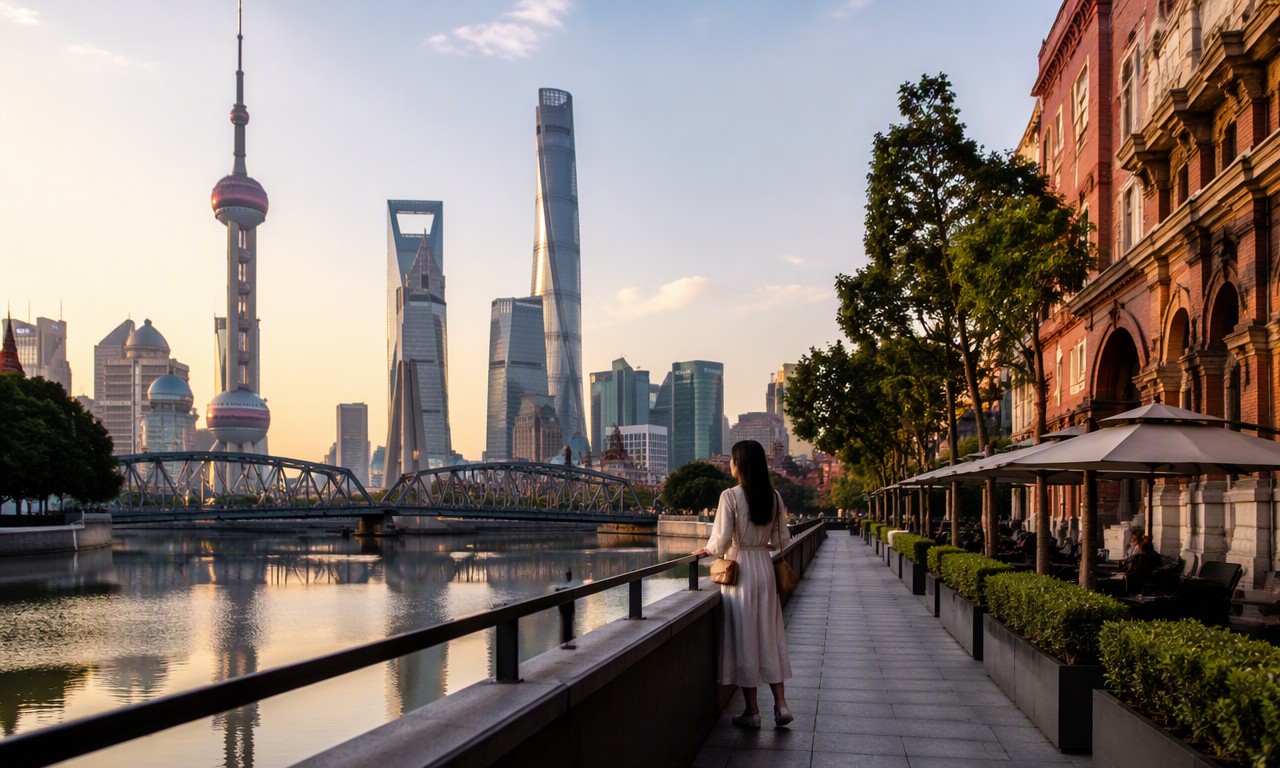
If you want to avoid the crowds at the Bund in the evening, consider the Suzhou Creek area. The section from Sichuan Road Bridge to Wuzhen Road Bridge is less crowded, the lights are muted, and the breeze from the river has a damp feel. Along the way, you'll see art spaces converted from old warehouses, and occasionally people jogging or walking their dogs. The biggest advantage of this route is its quietness; you can hear your own footsteps. When you get tired, find a bench by the river and sit for a while, watching the lights of the residential buildings on the opposite bank gradually illuminate. This kind of nighttime experience isn't spectacular, but it's very Shanghai.
Leave at 9:00 AM | Take one thing with you that you can "keep".
Don't overschedule your last day. Before checking out, stop by a nearby traditional food shop and buy some snacks, like tiao tou gao (a type of rice cake), shuang niang tuan (a type of sweet rice dumpling), or pine nut nougat. While you're buying, casually ask the clerk, "How long will this last?" They'll tell you the truth. I don't recommend buying those beautifully packaged "souvenir sets" from tourist attractions; those things look the same all over the country. What's truly worth taking home is that little bit of understanding of Shanghai you develop on a certain morning at the entrance of a market, beside a disappearing alleyway, or in a small shop that only sells potstickers. This won't spoil, and it won't expire.