
How can one schedule a day of cultural and artistic activities in Shanghai without feeling overwhelmed?
The most frequent question readers ask isn't "What are some must-see cultural and artistic spots in Shanghai?", but rather "How can I plan my day without feeling overwhelmed?" This question deserves a serious answer because the opening hours, peak visitor times, and lighting conditions of cultural and artistic venues conflict with each other: art galleries don't open until 10 a.m., museums see large group tours in the afternoon, historical buildings lose their charm under the midday sun, and evening performances clash with nighttime exhibitions. This article, organized by the changes in lighting throughout the day and opening hours, tells you which spots are best to visit at each time slot, why those spots are chosen, and how to follow the recommended itinerary.
6:20 Facade of the Bund's collection of international buildings
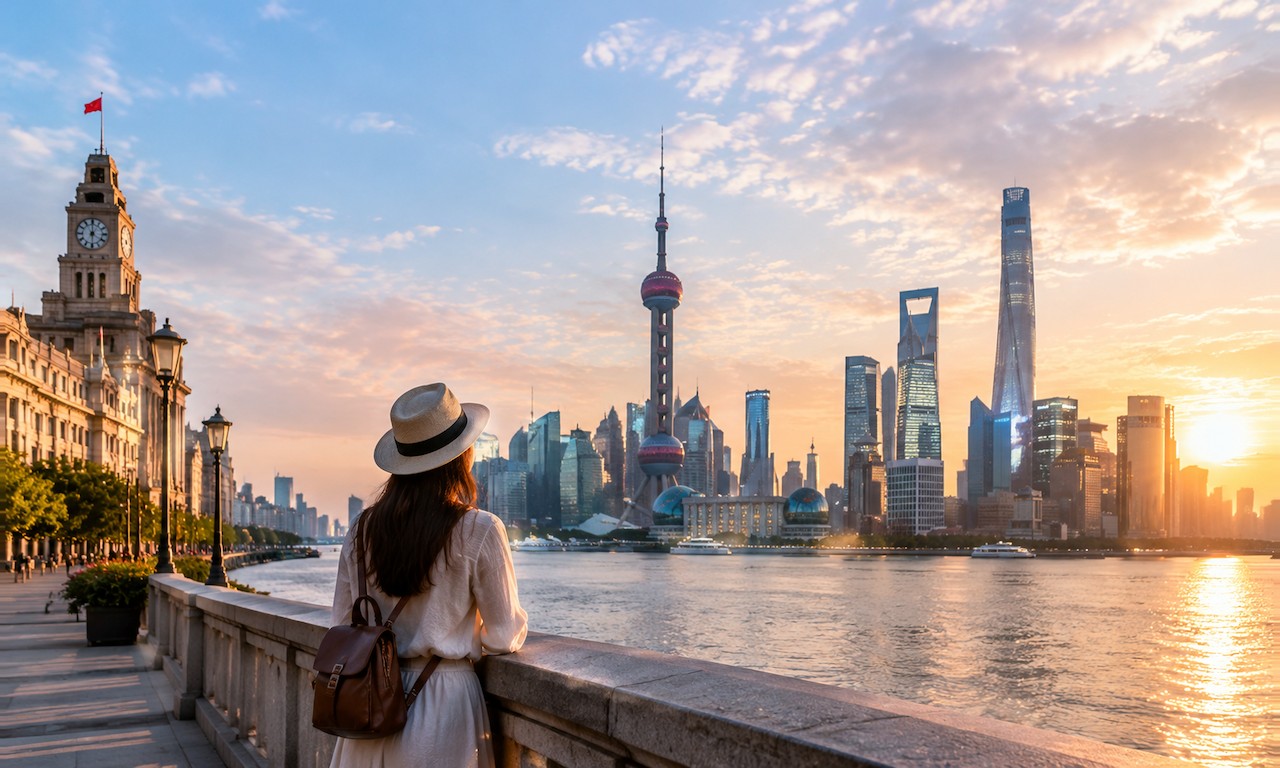
The Bund is chosen for early morning not because it's a "must-see," but because only at this time of day does it truly feel like a historical architectural exhibition. Around 6:20 AM, the sun shines low from the east side of the Huangpu River, casting sharp, clear shadows and decorative lines on the facades of the old buildings on the west side of Zhongshan East Road. Details like the clock face of the Customs House, the copper roof of the Peace Hotel, and the bronze lions at the former HSBC building are almost flattened by the midday sun. Crucially, there are almost no tour buses or flag-bearing groups along Zhongshan East Road at this time, allowing you to stand on the riverside and enjoy the view at your own pace without having to crane your neck and fight for a good spot.
This spot doesn't require tickets or reservations; it's a 20-minute walk. After 7:30, the light levels out, and crowds start pouring in, making it difficult to quietly observe the facade details. Treating the Bund as your opening act for the day is like first seeing a large, permanent exhibition that doesn't require queuing, before moving on to the more demanding indoor spaces.
9:30 Long Museum West Bund
The Long Museum West Bund opens at 10:00 AM, but arriving at 9:30 AM wasn't about being the first to arrive; it was about getting a glimpse of the building before it opened. The exposed concrete umbrella-shaped structure is most sculptural in the morning sidelight, but as the afternoon light shifts to a more central tone, the gray walls become somber. This half-hour is a warm-up of the space, which also helps in understanding the exhibits inside.
After the museum opens at 10:00 AM, I recommend going directly to the second floor to see the permanent exhibitions, and then going down to the basement level for the special exhibitions. The morning crowds are less than half that of the afternoon, especially on weekdays. The Long Museum is quite large; two hours is the minimum, don't expect to see everything in forty minutes. Closing time is 5:00 PM, so it's better to arrive early than to wait until the last two hours of the day, as your attention will be diverted and you won't get good lighting.
11:30 West Bund Art Museum or Tank Shanghai Art Center combined viewing
From Longmei Art Museum, you can walk to the West Bund Art Museum and Tank Shanghai. There's a reason I've scheduled them for the latter half of the morning. The West Bund Art Museum's exhibitions lean towards contemporary video and installation art. The space has ample natural light, and the light between 11 am and 1 pm won't interfere with viewing; in fact, it creates a softer environment for some video screenings. Tank Shanghai is a converted industrial site; its circular skylight casts a slowly moving patch of light around noon, an effect that disappears after 2 pm.
Seeing both galleries might be too rushed; choose one. If you're not particularly interested in contemporary art, just seeing the exterior of the oil tanks is perfectly acceptable. The cafes and light meals along the West Bund are sufficient for lunch, so there's no need to travel back to the city center for food. This arrangement naturally solves the "what to eat for lunch" problem, rather than turning it into an additional decision-making burden.
14:00 Shanghai Museum East Branch
The Shanghai Museum East Branch is open from 10:00 AM to 5:30 PM, but the best time to enter is after 2:00 PM. Morning tour groups typically disperse between 11:30 AM and 12:30 PM, leaving a gap between 1:00 PM and 2:00 PM. Entering at 2:00 PM avoids the last rush of visitors in the morning. The museum's exhibition environment is relatively stable, relying on artificial lighting, so there's no need to chase natural light like when viewing architecture; therefore, the afternoon is the most suitable time to visit.
While bronze and ceramic exhibits don't require particularly high levels of light, the reflections from the display cases are directly affected by outdoor light. The afternoon lighting is much more comfortable than the backlighting caused by the slanting sunlight at the entrance when the museum first opens at 10 am. Give it two and a half hours; leaving around 5 pm is a more relaxed option. Don't stay until closing time; the view of the surrounding streets depends heavily on the daylight.
16:30 Wukang Road Anfu Road neighborhood
After exiting the East Wing, take a subway ride or transfer to a bus to Wukang Road, arriving around 4:30 PM. At this time, the sun shines obliquely from the west, elongating the shadows of the plane trees and automatically framing the details of the old villas' red brick walls, rough-textured cement facades, and wrought iron railings on balconies. The Wukang Road, Anfu Road, and Wuyuan Road area is one of the best-preserved modern residential blocks in Shanghai. It is not an exhibition hall in itself, but each building "exhibits" its facade, gable, and window frames on the stage of the neighborhood.
After 5 p.m., independent galleries and small shops gradually open, and the street traffic hasn't yet reached its post-dinner peak. Don't go looking for a specific address with the mindset of "checking off a famous building." Just walk along the road, looking at the facades, the lighting, and the relationship between the trees and the buildings. This way of walking is much more comfortable than following a map, and it also helps you understand why this neighborhood is called Shanghai's "open-air architectural sample library."
19:00 Bund Source and Yuanmingyuan Road
The Bund Source area is most captivating around dinnertime. When the old buildings in the area are illuminated by streetlights and exterior lighting, their facades take on a dramatic quality completely absent during the day. Old buildings like the New Tiananmen Church and the Lyceum Building on Yuanmingyuan Road resemble open-air stage sets more like quiet historical relics at night. There are no entrance fees, nor are there any "best spots" for photos; a five-minute observation at the intersection of Yuanmingyuan Road and Beijing East Road will suffice.
Arrive at 7:00 PM sharp and leave before 9:00 PM, experiencing a complete shift in city lighting: the sky changes from blue to black, and the building outlines go from clear to being redefined by lights. This spot is chosen after dinner because it requires almost no physical exertion, yet provides a visual conclusion to the day's itinerary. If you have a performance scheduled for the evening, leaving the Bund Source area before 7:30 PM won't conflict with the schedule.
20:30 Evening performance at Shanghai Conservatory of Music Opera House or Shanghai Dramatic Arts Centre
Around 8:30 PM is the prime time for admission to most theaters and concert halls in Shanghai. The Shanghai Conservatory of Music Opera House or the Shanghai Dramatic Arts Centre were chosen because they represent two different paths: one is a formal stage in a new building, where the experience is shaped by the space and the performance; the other is a long-established theatrical venue, where the density of text and performance is emphasized. Both are suitable for the end of a day's itinerary, as evening performances transform the daytime "seeing" into the nighttime "entering."
It's worth noting that evening performances in Shanghai generally start at 7:30 PM; entering at 8:30 PM will mean missing many shows. If you've included a performance in your itinerary, you must squeeze in dinner within an hour, or choose a simple meal near the theater. Returning to your accommodation after the performance is much more fulfilling than visiting several exhibitions during the day, and it won't feel like a day of rushing from one event to another. A cultural and artistic journey should conclude with a quiet evening spent enjoying the experience, not dragging yourself back to the hotel.