
Sanya Art Zone: Exploring the Cultural Texture and Historical Echoes of a Tropical Island
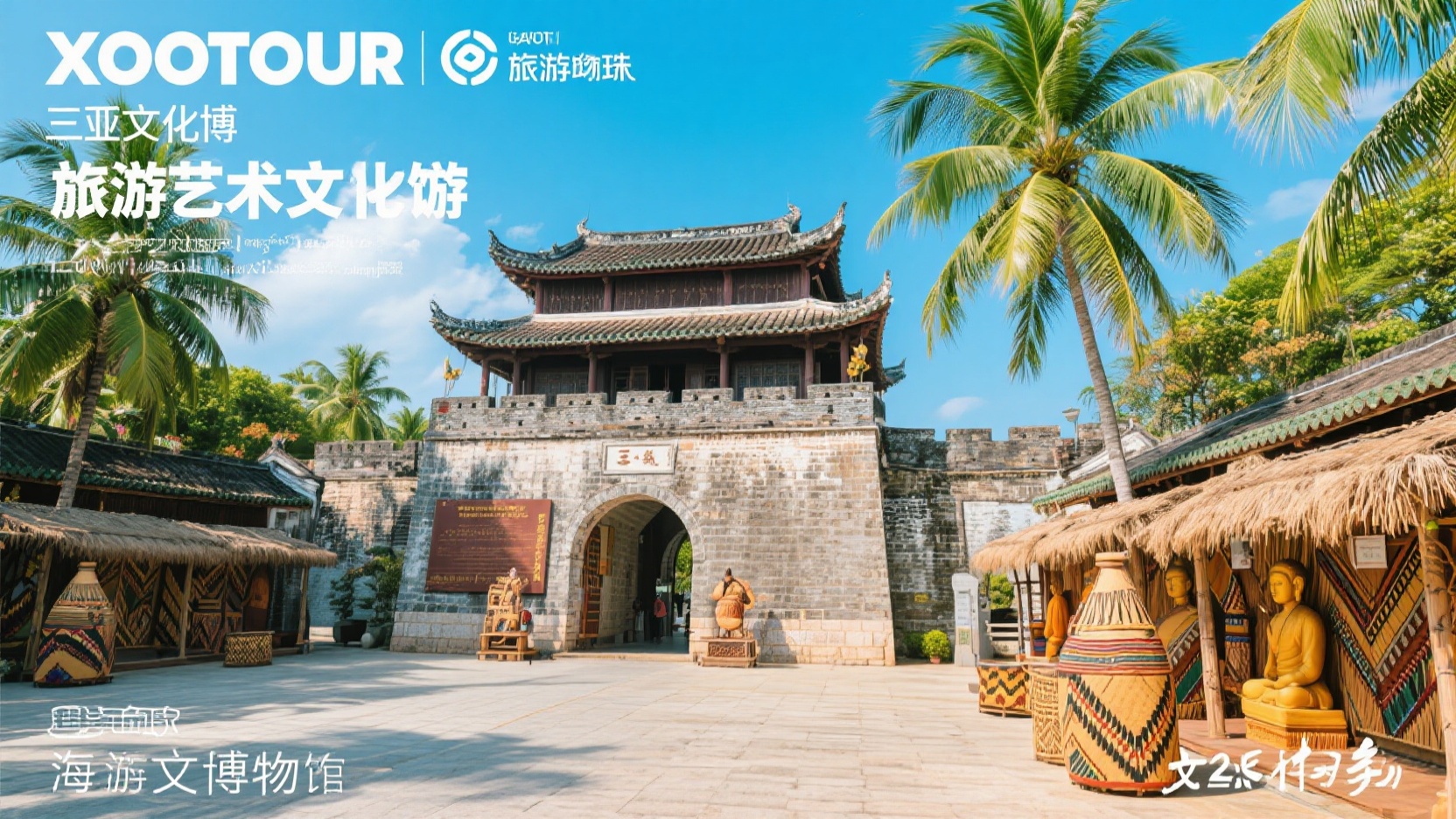
Sanya, a tropical seaside city hailed as the "Hawaii of the East," possesses charm far beyond its sun-drenched beaches and azure skies. Behind its shimmering coastline lies a rich cultural heritage, bearing the weight of thousands of years of history, unique ethnic customs, and diverse philosophical reflections. This curated blog post will guide you away from the hustle and bustle, into the heart of Sanya's culture, embarking on a leisurely cultural and artistic journey to experience the unique texture and historical echoes of this pearl of the South China Sea.
Ancient Charm of Yazhou and Maritime Memories
Sanya's historical roots are deeply embedded in the ancient Yazhou. As one of the earliest prefectures on Hainan Island, Yazhou was a place of exile and banishment for successive dynasties, and also an important center for the fusion of Central Plains culture and local culture. Its historical weight far surpasses that of ordinary coastal cities. We suggest you make Yazhou your first stop on your trip.
stroll
Yazhou Ancient City
You can touch the weathered city walls and feel their vicissitudes of time. Inside the city...Yazhou Confucian Temple
It is the most complete and largest existing Confucius Temple in Hainan. Its red walls, green tiles, and flying eaves silently tell the story of the spread and rooting of Confucian culture on the southern coast of the South China Sea. This was once the highest institution of learning in Yazhou, nurturing countless talents and symbolizing the local cultural heritage. Wandering through the alleys of the ancient town, you can also discover many traditional residences and handicraft workshops, experiencing authentic local life.Adjacent to the ancient city,
Sanya City Museum
This museum offers an excellent window into understanding the history and culture of Yazhou and even the entire Sanya area. Its rich collection, ranging from Neolithic stone tools and pottery to relics from the Maritime Silk Road of the Han and Tang dynasties, and porcelain and local folk artifacts from the Ming and Qing dynasties, comprehensively showcases Sanya's natural geography, historical evolution, ethnic culture, and maritime civilization. Particularly noteworthy are the museum's special exhibitions on ethnic minorities such as the Li and Miao, and its presentation of the "Danjia culture." The Danjia, or "water people," live on boats and have lived with the sea for generations, forming a unique maritime fishing and farming culture. Through the museum's exhibits, you can gain a deeper understanding of the customs, fishing techniques, and oral literature of these "sea gypsies," and experience their wisdom in coexisting with the ocean.Tracing the Customs and Myths of the Li Ethnic Group
Sanya is one of the main settlements of the Li ethnic group, and their culture is the most vibrant and authentic color of this land. The Li culture is renowned for its unique weaving techniques, boat-shaped house architecture, and romantic myths and legends.
Go to
Luhuitou Scenic Area
Beyond the breathtaking panoramic views of Sanya Bay, the most important aspect is exploring the millennia-old Li ethnic love myth behind it – the "Deer Turning Back" legend. It is said that a young Li hunter chased a deer to this spot, where the deer turned back and transformed into a beautiful maiden. The two married and multiplied, becoming the ancestors of the Li people. The giant sculptures within the scenic area are a concrete representation of this romantic legend. This story not only gives rise to the name of Sanya but also reflects the Li people's profound understanding and celebration of love, nature, and the origins of life.To experience Li ethnic culture in depth, it is recommended to visit the areas surrounding Sanya.
Li ethnic cultural villages or intangible cultural heritage experience bases
(Such as the Binglang Valley Li and Miao Cultural Tourism Area). Here, you will have the opportunity to observe up close what is listed as a World Intangible Cultural Heritage.Li Jin
Li brocade boasts a history of over 3,000 years, renowned for its exquisite weaving techniques, vibrant colors, and unique totem patterns. Li women use ancient looms to weave cotton, hemp, and silk threads into beautiful clothing, bedding, and ornaments; every inch of fabric embodies their wisdom and love of life. Common patterns such as frog motifs, human figures, and plant designs reflect the Li people's reverence for nature and their yearning for a better life. You can even try your hand at the simple weaving process and experience the charm of this intangible cultural heritage at your fingertips. Furthermore, the unique Li ethnic group...Boat-shaped house
The building, named for its resemblance to an overturned boat, is a testament to the wisdom of the Li people in adapting to the tropical climate and utilizing local materials, and is also an important symbol of their cultural identity.Taoist and Buddhist philosophy resonates with nature
Along the coastline of Sanya, there is not only the mundane world but also the transcendent Taoist and Buddhist philosophies, which blend perfectly with the natural landscape to create a unique spiritual world.
Da Xiao Dong Tian Scenic Area
Known as the "Number One Scenic Spot in Hainan," this area is a sacred site of Taoist culture with a long history in Hainan. It not only boasts unique mountain and sea landscapes but also embodies rich Taoist cultural connotations. The numerous cliff carvings throughout the scenic area, such as the "Longevity Like the Southern Mountain" inscription, and natural rock formations like "Little Grotto Heaven" and "Seascape Wonders," all reflect the Taoist philosophy of harmony between humanity and nature. Strolling through the area, listening to the waves crashing on the shore, and feeling the sea breeze on your face, you can almost converse with the ancients, experiencing their transcendent state of mind—finding solace in nature and seeking longevity and wisdom. This is also the location of the famous "Nanshan Evergreen Pine," symbolizing the tenacity and eternity of life.And facing it
Nanshan Cultural Tourism Area
It is world-renowned for its magnificent Buddhist cultural landscape. It is one of the world's centers for Buddhist cultural exchange and boasts famous...Nanshan Temple
And the 108-meter-tall Guanyin statue standing on the sea. Nanshan Temple's architectural style blends the grandeur of the Tang Dynasty with modern aesthetics, its halls solemn and its incense burning brightly. Here, you can visit Buddhist architectural complexes such as the Golden Jade Guanyin Pavilion and the Gate of Non-Duality, learning about the spread and development of Buddhism in China and experiencing its teachings of compassion and universal salvation. The scenic area also offers a variety of vegetarian dishes, allowing you to savor delicious food while experiencing tranquility and Zen. Nanshan is not only a scenic spot, but also a place for self-cultivation and spiritual purification, allowing you to find inner peace amidst this Buddhist paradise by the sea.This Sanya cultural and artistic journey aims to guide you beyond the traditional seaside resort model, allowing you to delve into the city's cultural heritage and artistic charm. Through visiting historical sites, experiencing intangible cultural heritage, and contemplating faith, you will discover a more three-dimensional and richer Sanya—a pearl of the South China Sea worth slowing down and savoring. Every pause, every glance, will be a profound dialogue with history and culture.