
Quanzhou City Pop-up | Weekend 2 Days 1 Night Special Forces Style Shopping and Dining Guide
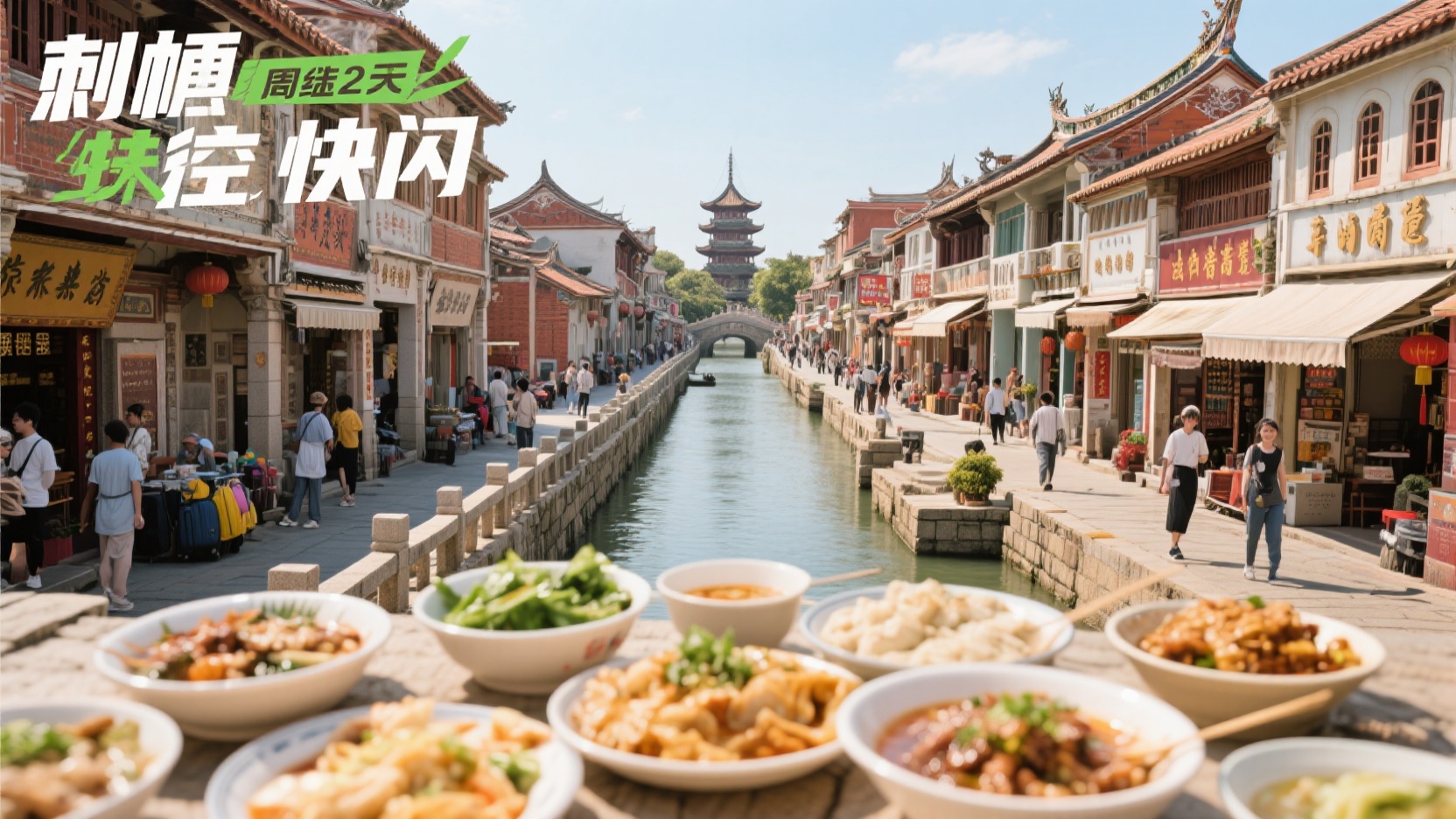
The core area of Quanzhou's ancient city is only two kilometers from east to west, and less than three kilometers from Chaotianmen to Tianhou Palace from north to south. It is suitable for a high-density connection using a combination of walking and public transportation. For a quick weekend trip, don't try to do too much. Follow the central axis of "West Street - Zhongshan Road - Tianhou Palace" and leave a morning for the Maritime Silk Road World Heritage route, and you can see the most essential parts of Quanzhou.
Day 1: High-density sightseeing along the central axis of the ancient city
Our first stop this morning was the Bell Tower. The Bell Tower is a crossroads of Quanzhou's ancient city; heading west leads to West Street, and heading south leads to Zhongshan Road. West Street is relatively quiet in the early morning, so start with a bowl of rice noodle soup with vinegar-braised pork and fried dough sticks, and grab a serving of spring rolls to eat as you walk. Don't miss the alleys on both sides of West Street; Tai Kui Alley, Jiu Guan Yi, and Xiang Feng Alley all feature red-brick ancient houses and Minnan-style window patterns, perfect for a quick stroll. At the end of Xiang Feng Alley, you can even see a framed view of the East Pagoda of Kaiyuan Temple.
Continue west to Kaiyuan Temple. Kaiyuan Temple opens around 7:30 am, when the light is good and there are fewer people, allowing for a quieter view of the East and West Pagodas and the main hall. Focus on the Ganlu Ordination Platform, the Hindu stone pillars, and the ancient mulberry tree. After leaving Kaiyuan Temple, return along West Street without stopping on the same route. Turn directly into the cultural and creative side alley near Xiaoxicheng, take a photo of the "Quanzhou" sign wall, and then leave.
In the afternoon, stroll along the arcade buildings of Zhongshan Road. The rows of arcades lining both sides of Zhongshan Road provide shade and shelter from the rain, perfect for a long walk. Stop at the Confucian Temple to see the Minnan-style double-eaved roof of the Dacheng Hall; then cross Daxi Street to Qingjing Mosque. Note that Qingjing Mosque has a dress code; shorts and skirts should be covered. Next to Qingjing Mosque is the Guan Yue Temple, which is very popular with worshippers, offering a "half city of incense, half city of immortals" atmosphere, but don't linger. Continue south to Tianhou Temple. The square in front of Tianhou Temple is connected to the Deji Gate ruins; as dusk falls, it's a good time for taking photos.
Dinner and night views return to the heart of the old city. Around the Tianhou Temple, you can find mung bean cakes and agar jelly for roadside refreshments. Zhongshan Road at night has more character than during the day; once the arcade lights come on, it's a good time to walk back to the Bell Tower from south to north. If you have the energy, you can revisit West Street, but walking in the opposite direction from Kaiyuan Temple towards the Bell Tower will result in far fewer tour groups than during the day.
Day 2: Half-day walk along the Maritime Silk Road World Heritage route
Don't stay in the old town on the second day. Quanzhou's true depth lies in its maritime trade and World Heritage sites. Set aside a morning to visit Luoyang Bridge, Zhenwu Temple, and Wenxing Wharf. The pace will be slower than the first day, but the information density will be higher.
In the morning, depart from the ancient city to Luoyang Bridge. Luoyang Bridge is the oldest existing stone beam bridge across the sea in China. Seeing the raft foundations of the bridge piers and the oyster-farming foundation reinforcement methods is more intuitive than reading about them in person. The bridge is not long; a round trip takes about half an hour. Focus on observing the stone carvings in the pavilion in the middle of the bridge and the Moonlight Bodhisattva Pagoda. After leaving Luoyang Bridge, you can visit Zhenwu Temple. Zhenwu Temple is not large, but as an important remnant of the Song and Yuan dynasty's sea god worship, its high location and good view allow for a quick understanding of the ancient Quanzhou port's sacrificial system.
Return to the ancient city for lunch to eat ginger duck or beef steak, then head to Wenxing Wharf. Wenxing Wharf, like Zhenwu Temple, is a World Heritage site along the Maritime Silk Road. The riverside walkway is quiet, offering panoramic views of the confluence of the Jinjiang and Luoyang Rivers. If time permits in the afternoon, choose between the Nanwai Zongzhengsi Ruins or the Maritime Museum within the ancient city. The Maritime Museum is recommended to consolidate your findings from the past two days.
Transportation Saving Card
Within the ancient city of Quanzhou, the most practical option is the "Xiaobai" public transport rental service, which offers flexible pick-up and drop-off, making it suitable for short trips between the Bell Tower, West Street, and Tianhou Palace. For trips across districts to Luoyang Bridge, it's recommended to take a bus or carpool, rather than taking a taxi the entire way. There are direct buses from Quanzhou Railway Station to the ancient city; if two or more people are traveling together, a taxi ride won't be expensive, but it's advisable to book in advance during peak hours. Shared bicycles are useful outside the ancient city; walking is more time-efficient once you enter West Street and Zhongshan Road. If the "Xiaobai" service is full on weekends, you can walk two blocks to flag one down.
Packing list
For two days and one night, carry only one backpack. Essentials include your ID card, power bank, sunscreen, sun hat, and folding umbrella. Choose well-worn flat shoes, as the cobblestone streets of the ancient city and the Luoyang Bridge require high-quality soles. Bring a light jacket, as Quanzhou afternoons are humid, but mornings, evenings, and public transportation are quite air-conditioned. If you want to take photos, bring a portable light or wait for the blues hour in the evening, but do not bring a tripod, as many indoor exhibition halls and temples do not allow their use. In summer, bring an extra quick-drying T-shirt, as you tend to sweat in the afternoon.
Avoiding pitfalls while queuing
Several long-established noodle soup and meat dumpling shops on West Street experience significant queues after 9:00 AM; it's recommended to eat between 7:30 and 8:00 AM. The second peak is between 12:00 and 1:00 PM, so try to eat after 1:30 PM. Kaiyuan Temple is crowded with tour groups on weekends, so go early rather than late. The area around Guanyue Temple is congested with incense stalls and people; be careful with your phone. Religious sites such as Qingjing Mosque and the Confucian Temple require dress codes; bring a scarf or long pants. In the old city area, minibuses are often full on weekend afternoons; avoid waiting on the main road of Zhongshan Road, as it's easier to catch a bus at the side street intersection on West Street. Also, at popular snack shops on West Street, queues often vary across different branches; walking a little further can often save you 20 minutes.