
Qingdao 48 Hours | Weekend Special Forces Flash Mob, Coastal Night Views Combined with In-Depth Tour of the Old City
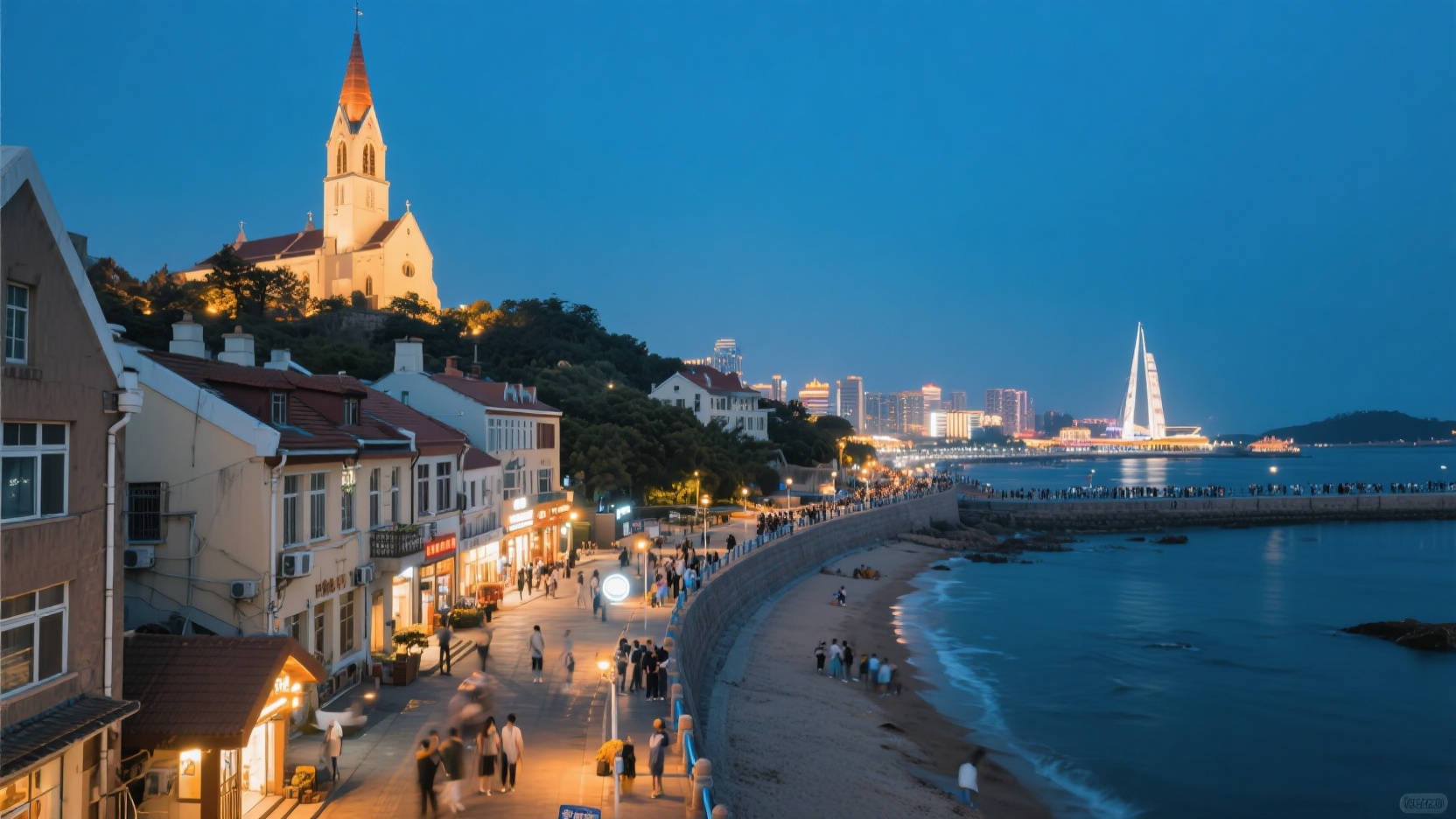
This two-day, one-night "special forces-style" flash mob in Qingdao focuses on not trying to do too much, but rather dividing the route into two clear main lines: Day 1 follows the coastline from west to east, connecting classic landmarks and night views; Day 2 delves into the heart of the old city, allowing visitors to experience the courtyards, hills, and sea breeze on foot. The following itinerary minimizes unnecessary travel without sacrificing time for photos, meals, and enjoying the sea breeze, making it suitable for those arriving on Friday evening or Saturday morning and returning on Sunday evening.
Day 1: High-density interconnection along the coastal line
In the morning, walk directly from Qingdao Railway Station to Zhanqiao Pier. Zhanqiao Pier is less crowded in the early morning, and from Huilan Pavilion, you can clearly see the old city skyline along the coast. Then head north along Zhongshan Road, passing the Catholic Church Square, and then enter Yinyu Lane and the surrounding courtyard neighborhoods. The morning light is ideal for photographing building facades and the depth of the streets and alleys; don't spend too much time at a single location. You can make short stops in front of the old buildings on Guangxi Road or Hunan Road; the German-style facades and the shadows of the plane trees are perfect for taking photos as you walk. Breakfast or lunch can be had near Zhongshan Road; mackerel dumplings, seafood noodle soup, or shrimp potstickers are all suitable choices for a fast-paced meal.
Choose between Signal Hill or Xiaoyushan Hill at midday. Signal Hill's revolving observation deck is recommended for a panoramic view of red-tiled roofs, green trees, old town rooftops, and the distant sea. After descending the hill, walk along Daxue Road, Huangxian Road, and Longjiang Road. If the queue at the red-walled corner exceeds two lines, turn into the surrounding alleys. The murals, independent studios, and old courtyard entrances offer equally photogenic shots, and you can avoid prolonged exposure to the sun.
In the afternoon, take a bus or a short taxi ride to enter Badaguan. Walk along Zhengyangguan Road and Linhuaiguan Road, focusing on the exterior and courtyard of Huashi Building and Princess Building; you can complete the main experience without entering the buildings that require payment. Walk to the Second Bathing Beach to walk on the sand and take pictures of the breakwater, then move along the coastal path towards Taipingjiao. The Taipingjiao reef and boardwalk are significantly less crowded than the main road of Badaguan, making it a good place to recover your energy. Before evening, you can rest on a beach bench and wait for the sky to turn from blue to gray.
In the evening, head to May Fourth Square and the Olympic Sailing Center. Before it gets completely dark, secure a spot near Lover's Dam or Torch Pier. After the light show begins, the coastal skyscrapers and their reflections in the sea offer the most concentrated nighttime view. If you want to avoid crowds, retreat to the breakwater west of the Olympic Sailing Center; the view is still unobstructed. For dinner, head back to Taitung or Minjiang Road area for seafood, braised pork belly, or wontons, ending your first day. No need to go far for late-night snacks; the residential areas around Taitung Pedestrian Street offer a sufficient variety of food options.
Day 2: In-depth exploration of the old town's heartland
On the second day, instead of exploring the outskirts, focus on exploring the old town. For breakfast, head to Xizhen or Tuandao area and try local combinations like tofu pudding, grilled meat, fried skewers, and sweet rice porridge. Only look for stalls with queues of locals, not just shops by name. Afterwards, enter the historical district from Guantao Road. The German-style street, old bank buildings, and plane-lined streets are perfect for a leisurely stroll. Walk through the Shanghai Road, Ningbo Road, and Wuding Road area, where courtyard houses are densely packed, some of which have been converted into multi-functional spaces. You can sit in the courtyard for a while and observe the old buildings' corridors and atrium structures.
Climb Guanshan Hill or Guanhai Hill around 10:00 AM. These two hills are quieter than Signal Hill and offer views of an abandoned observatory, a geomagnetic room, and the highest point in the old city, making them ideal for observing the layers of Qingdao's "mountains, sea, and city." At noon, return to the courtyard houses along Huangdao Road and Sifang Road, find an open courtyard for a light meal, and observe the staircases, corridors, and courtyard structures of the old buildings. Some courtyards have small exhibitions or local handicraft stalls, where you can spend about half an hour.
In the afternoon, head south along Zhongshan Road, but don't walk directly onto the main street. Instead, wander through the side alleys like Feicheng Road, Qufu Road, and Zhejiang Road to see different angles of the Catholic Church. The residential area behind St. Michael's Church retains clotheslines, old-fashioned doors and windows, and stone walls, giving it a more lived-in feel than the main square. Before concluding, return to Zhanqiao Pier or Xilingxia Road to watch the sea. If the weather is clear, the sea will turn a grayish-blue at sunset, perfect for wrapping up. Before returning home, you can buy portable souvenirs such as pork cracklings, sorghum candy, and calcium milk biscuits at local supermarkets—they won't take up much luggage space.
Practical Tips
Transportation Savings Card: For frequent travel, choose a one-day or three-day metro pass, linked to the Qingdao Metro App; no physical card is needed. In the old city of Shinan, walking is the primary mode of transportation; use the metro for inter-district travel and avoid taking taxis the entire way. Prioritize the metro for trips to the West Coast or Laoshan to avoid surface traffic congestion.
Packing list: A 20-24 liter backpack is sufficient for two days and one night. Essentials include non-slip sneakers, a sun hat, sunglasses, a power bank, and a windproof jacket that can be packed away. The wind can be strong at the beach in the evenings, and the perceived temperature is lower than inland, so keep a raincoat or folding umbrella in a side pocket as a backup. If you need to stay overnight, hostels or budget hotels near the train station are sufficient; you don't need to bring too many clothes.
Avoiding queue pitfalls: Arrive early or choose non-holidays for popular spots such as the corner of University Road and the Signal Hill viewing platform; confirm the prices of seafood stalls beforehand and order weighing them on the spot, and refuse to beg for customers on the street; there is no need to arrive too early for the light show on weekdays, but half an hour in advance is enough on holidays; the old town has many slopes, and even if the navigation shows a short straight-line distance, you may still need to climb a hill, so it is more important to save energy than to rush to the attractions.