
Tianyi Pavilion or Fufu Room? Let me compare them for you.
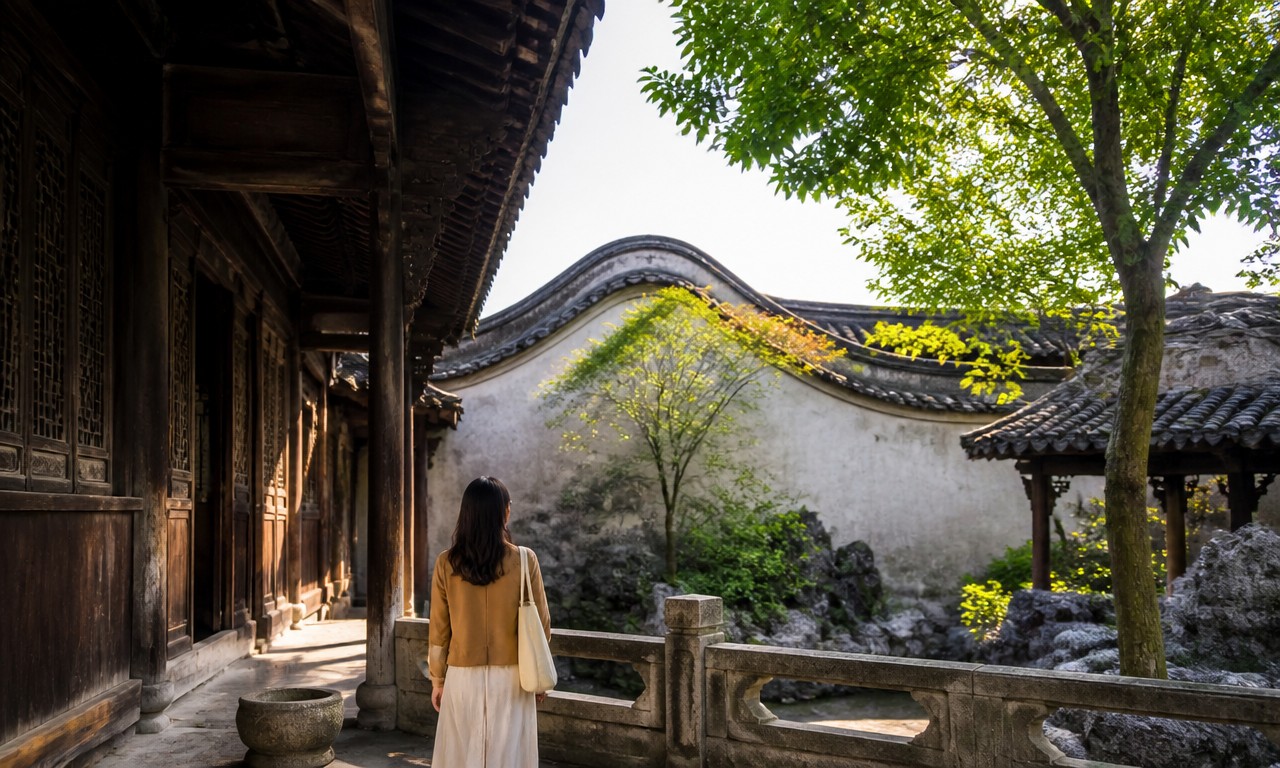
A common characteristic of Ningbo's cultural and artistic travel guides is that online searches often focus on just a few places, but before you actually set off, you'll find the dilemma of choice far from resolved. Which should you visit, Tianyi Pavilion or Fufushi? Which is more worthwhile to make a special trip to, the Ningbo Museum or Huamao Mall? What's the difference between free and paid admission? How should you allocate your time between indoor and outdoor activities to avoid wasting half a day? This article doesn't provide a list, but rather a comparison, breaking down the costs and benefits of each "either/or" option.
Tianyi Pavilion vs. Fufu Room: A Battle Between Fame and Tranquility
Most travel guides will tell you that Tianyi Pavilion is the first stop for Ningbo's cultural heritage, and missing it is like not having visited at all. In reality, if you already have an idea of what a typical Jiangnan-style library should be, Tianyi Pavilion's layout, explanations, and gardens are indeed comprehensive, but the crowds during peak season significantly diminish the experience, and you'll have to wait for a table to take photos. Fufu Room, located in an old town alley, is the former residence of Feng Mengzhuan, a bibliophile from eastern Zhejiang. It's small, densely packed with information, and almost deserted—so quiet you can hear your own footsteps. If you're short on time, choose Tianyi Pavilion; it at least guarantees you've seen Ningbo's cultural landmark. If you have more time or are visiting Ningbo a second time, Fufu Room will offer you an undisturbed world of books.
Ningbo Museum vs. Huamao Art Education Museum: Urban History and Architectural Experiment
Most travel guides list the Ningbo Museum as a must-see, citing Wang Shu's tiled walls and its photogenic quality. However, the Ningbo Museum's core value lies in its permanent exhibitions—a complete historical overview from Hemudu to modern times, suitable for first-time visitors to Ningbo to quickly establish a basic understanding. The architecture itself is a bonus, not the whole story. The Huamao Art Education Museum, located towards Dongqian Lake, is designed by Siza. Its exhibits focus on art education, and while not large, every corner explores "how to see." If you're short on time, the Ningbo Museum can serve as a "catch-up"; if you have half a day to spare, the Huamao Museum will prevent you from feeling like you're repeating the same thing.
The Old Bund vs. the Fishing Vessel Factory: Popular Streets and Real Creative Sites
Most travel guides focus on the Republican-era buildings, bar street, and night view of the Old Bund, packaging it as "Ningbo's artistic living room." In reality, the cultural richness of the Old Bund is largely confined to its architectural facades and consumer scenes; the true hub of contemporary art has shifted to the area across the Yong River near the Fishing Vessel Factory. Studios converted from old factory buildings, independent exhibitions, and experimental theater performances are more concentrated and more organic than on the Old Bund. If you want to take photos, have a drink, and experience the "riverside chic," the Old Bund is just as good; if you want to see what Ningbo's young artists are up to right now, head to the Fishing Vessel Factory. The two aren't mutually exclusive, but don't expect to stumble upon much "in-progress" on the Old Bund.
Nantang Old Street vs. Cicheng: Old Things Packaged and Old Things Accumulated Over Time
Most travel guides recommend Nantang Old Street, arguing that it offers a "one-stop shop for all the authentic flavors of Ningbo." However, Nantang is actually a planned, imitation ancient street. While the layout is smooth, the shops are concentrated, and the hygiene is good, the homogeneity is also obvious. The fried dough sticks, rice cakes, and glutinous rice balls you see can be found in similar versions in other cities' old streets. Cicheng, on the other hand, is a living ancient town. The ancient county government office, Confucius Temple, and the Imperial Academy are all genuine historical sites. Residents hang clothes to dry and sunbathe in the alleys, and the pace of life is so slow that you don't want to leave. For families with elderly people and children, or those with limited time, Nantang is convenient and hassle-free. But if you can dedicate half a day and want to experience "Jiangnan that hasn't been fully developed," Cicheng is far superior to Nantang.
Ningbo Art Museum vs. Huamao Art Education Museum: The choice between free and paid admission
Most travel guides don't clearly tell you which museums charge admission and which don't, leading many people to decide only at the doorstep. In reality, the Ningbo Art Museum's permanent exhibitions are free, and most temporary exhibitions are also free. Located on the old Bund riverside, its layout is comfortable, making it suitable for those who "don't know what they want to see and just want to browse around." The Huamao Museum charges admission, but in return, it offers fewer crowds, higher quality exhibitions, and a more architecturally appealing building, making it suitable for those willing to pay for a spatial experience and seeking a quiet place to view exhibitions. If you're on a tight budget or just passing by, choosing a museum offers a respectable experience at no cost; if you're specifically coming for art, the Huamao Museum's admission fee is well worth it.
Baoguo Temple vs. Qita Temple: Ancient Mountain Architecture and Zen in the City
Most travel guides recommend Baoguo Temple, as its Northern Song Dynasty main hall holds a prestigious position and its architectural historical value is irreplaceable. However, Baoguo Temple is located on a mountainside north of Hongtang, requiring at least half a day for a round trip and visit, which is physically demanding and not ideal for those with tight schedules. Qita Temple, on the other hand, is located in the old city, has no entrance fee, and its halls are compact with daily incense offerings, making it suitable as a stop on your itinerary rather than a main focus. If you want to see authentic Song Dynasty wooden structures and are willing to climb mountains, Baoguo Temple is a must-see; if you have limited time and don't want to travel far, Qita Temple is sufficient to experience the everyday religious warmth of Ningbo.
Moon Lake Park vs. Tianyi Pavilion: Free Outdoor Parks vs. Paid Gardens
Most travel guides treat Yuehu Lake as a "casual stroll" transitional space, as if it were merely a scenic spot on the way to Tianyi Pavilion. In reality, the area around Yuehu Lake boasts a high density of cultural sites, including the He Mijian Ancestral Hall, the Lay Buddhist Association, and the former site of the Korean Embassy, most of which are free to enter. A walk around the lake will provide a more concrete understanding of Ningbo's literary heritage. Tianyi Pavilion does charge an entrance fee; its gardens are exquisite, and its narrative is complete, but it's also very crowded. If you're on a budget or want to experience the atmosphere first, a walk around Yuehu Lake is sufficient. However, if you have a strong interest in the history of the library, Tianyi Pavilion offers a level of completeness that Yuehu Lake cannot provide; neither can replace the other.
Hanling at Dongqian Lake vs. Dongqian Lake Loop Tour: Point-based Check-in vs. Linear Roaming
Most travel guides describe Hanling Old Street as having an "artsy vibe," leading you to believe that the essence of Dongqian Lake's culture is concentrated on that one street. In reality, Hanling has a high level of commercialization, gets crowded on weekends, and the experience can easily slip into "another Nantang." The true Dongqian Lake cultural experience is achieved through movement. The Southern Song Dynasty Stone Carving Park, Taogong Village, and Yinwan Village are distributed along the lake; only by cycling or walking slowly can you connect the "lake, village, and stone carvings" into a cohesive whole. Visiting only Hanling presents a curated cultural tourism product; only by circling the lake can you understand why Dongqian Lake is considered Ningbo's spiritual backyard.
Ningbo's cultural and artistic resources fall into two categories: one is "well-organized," with clear routes, a wide audience, and no room for error; the other is "in the making," requiring some effort and patience, but offering insights beyond what you might expect. If time is limited, choose the former, as following the map will be straightforward; if time is ample, dedicate at least half your time to the latter, and Ningbo will reveal a different side of itself.