
What's the best order to visit all the cultural sites in Ningbo in one day?
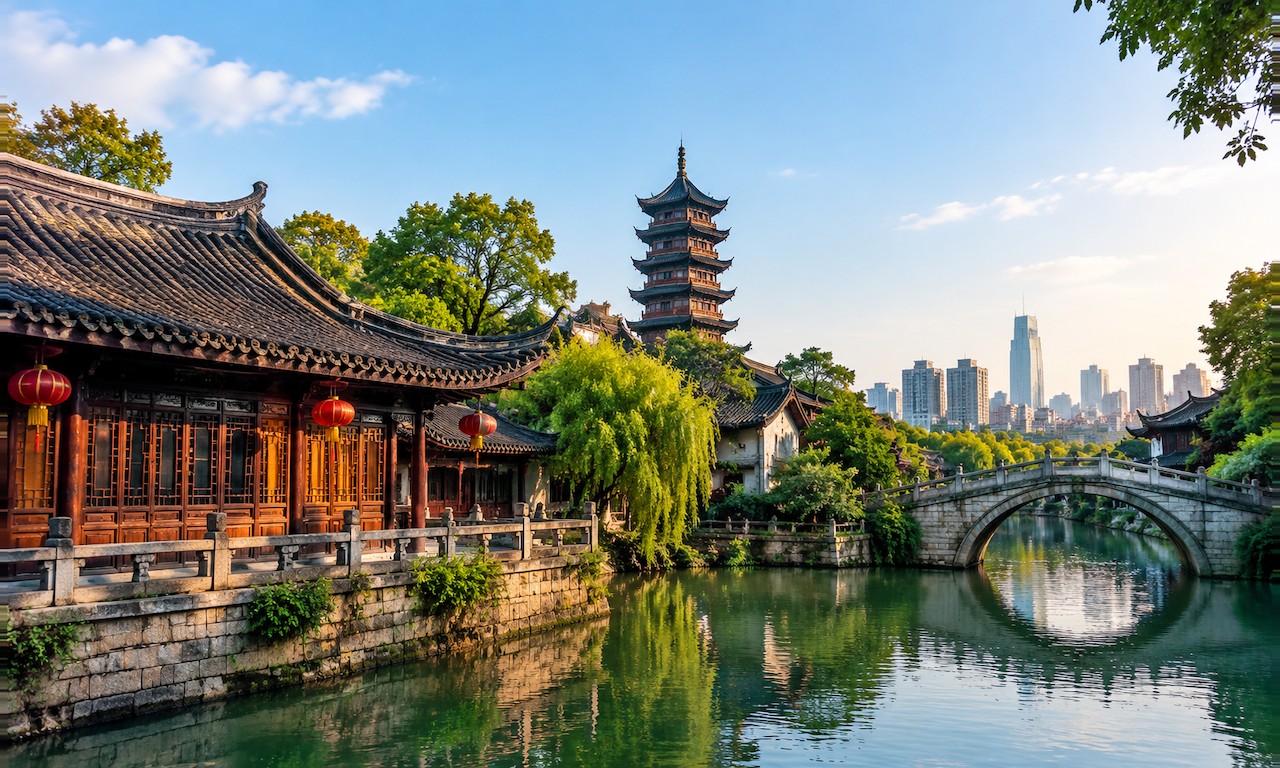
Ningbo's cultural attractions are scattered throughout the city and suburbs. Following the usual itinerary might lead you to the wrong place at the wrong time – either overcrowded, poorly lit for photos, or you might miss opening hours. This article aims to answer the question: what's the most reasonable time order to visit Ningbo's cultural and artistic attractions within a single day? The answer isn't based on fame, but rather on the lighting, crowds, and opening hours of each location. The timeline below is based on my repeated visits and isn't the only solution, but following it will prevent you from making mistakes.
6:30 Moon Lake Park
Why come at this time: Moon Lake is open all day, but only between 6:30 and 8:00 AM is the best time to visit. The lake surface receives a steady morning light, and the shadows of the trees in the gardens are angled, making it ideal for quiet observation and photography. Tianyi Pavilion isn't open yet, and Moon Lake itself is a free cultural experience—the lakeside features old buildings like the He Mijian Ancestral Hall and the ruins of the Goryeo Embassy. Locals exercising in the morning are scattered in the pavilions, giving you a glimpse of the city still somewhat asleep. If you arrive after 9:00 AM, it becomes a passageway for tour groups, and the atmosphere is completely different.
There's no need to rush at this time; a half-circle around the lake is enough. The beauty of Moon Lake lies not in any particular spot, but in the fact that the light and sound throughout the park haven't yet been diluted by tourists.
8:00 Tianyi Pavilion
Tianyi Pavilion opens at 8:00 AM, and the first group to enter is the least crowded. The library is a wooden structure, and the morning sunlight from the east reveals the layers of the eaves and carvings, especially near Tianyi Pond where the reflection on the water is less intense, making it ideal for leisurely exploration. The worst time to visit is after 10:00 AM when tour groups flood in, causing crowds in front of the library and even requiring queues for photos. Therefore, Tianyi Pavilion is the first stop in the morning, allowing you to seamlessly transition to the next destination.
After entering the park, don't rush to the main building. Take a stroll through the East and South Gardens first, and wait for the initial crowds to disperse before entering the core area. The essence of Tianyi Pavilion lies in the relationship between the library and the gardens; this relationship becomes less apparent when there are many people.
10:30 Ningbo Museum
It takes about half an hour to get here from the city center. I arrived at the site at 10:30 AM, by which time the morning rush hour had passed, and the crowd for the morning session was starting to thin out. The exterior of the Ningbo Museum looks best in the mid-morning light; the concrete and old brick facade has sufficient contrast without being overexposed like at midday. The exhibition inside takes about two hours, so I went in at 10:30 AM and came out at 12:30 PM, which was just before lunch.
If you come in the afternoon, it's too hot to stand outside the building in the summer afternoon, and the light is too weak in the winter afternoon around 3 or 4 pm. You'll also be caught in the morning rush inside the exhibition hall. So, visiting the Ningbo Museum in the latter half of the morning avoids both the queues when it opens and the afternoon crowds.
13:30 Baoguo Temple
After lunch, we set off for Baoguo Temple, a journey of about forty minutes. Baoguo Temple is located on a mountain, and the afternoon is not a peak time; tour groups usually arrive in the morning or very late in the afternoon. The tranquility during this time is even better than at Tianyi Pavilion. The Mahavira Hall is an original structure from the Northern Song Dynasty, and the interior is naturally dimly lit. However, between 1:30 and 3:00 PM, the natural light coming in from the south-facing windows falls perfectly on the inner pillars and the coffered ceiling, allowing you to see the details of the wooden structure.
If you arrive too early, it will be too dark inside the hall; if you arrive too late, the temperature in the mountains will drop, and the light will be insufficient. Therefore, Baoguo Temple is the place where you most need to "time it right" for the day. Once you're up there, there's no need to rush. Take your time to explore inside and outside the main hall. The tranquility at this time will make you feel like the entire mountain is yours to command.
15:30 Dongqian Lake
Arriving at Dongqian Lake at 3:30 PM, the sunlight began to soften, and the lake surface was no longer as glaringly reflective as at noon. There were two considerations for arriving at this time: firstly, the light was suitable for viewing the stone carvings scattered along the lake and the stone statues along the Southern Song Dynasty tomb path, with the setting sun creating more depth than the midday overhead light; secondly, Dongqian Lake is large, and if we arrived too late, it would get dark before we could walk through the entire area.
Between 3:30 and 5:30, you can walk along a section near Taogong Island or Xiaoputuo. Don't try to see everything; just focus on the Southern Song Dynasty stone carvings and the water system of the old lakeside village. Dongqian Lake isn't the kind of place where you have to check off every corner. Choose a route with stone carvings and bays, and slowly walk until the light warms up. This is much better than rushing through it.
17:30 Old Bund
Turning around from Tianyi Square at 5:30, the sunset over the Bund and the newly lit buildings presented the same scene. The best time to see the old buildings here isn't during the day or late at night, but rather for about half an hour around 6 pm. Before it gets completely dark, the building outlines are clear, and the walls of the century-old churches and old trading houses appear even more three-dimensional under the warm lighting than during the day.
Many travel guides recommend visiting bars at night, but if you're looking for architectural views and photos, the best time to do so is during those few tens of minutes in the evening. Walk along the river from north to south; you don't need to go into any shops. Just watching the building facades change from day to night is enough to keep you entertained for a long time. After walking this stretch, you can have dinner nearby; the small restaurants around the Bund offer more authentic experiences than those along the river.
19:30 Ningbo Art Museum or Nantang Old Street
For the final evening session, you have two options: If you didn't get enough of the architecture and art during the day, some exhibition halls at the Ningbo Art Museum are open at night, and the riverside lighting along the Bund is sufficient for taking photos of the facades; if you want to experience the local life of the old city, head to Nantang Old Street. However, Nantang Old Street is best visited after 7:30 pm. During the day, it's just a commercialized, imitation antique street. Only when it gets dark, the lanterns light up, and the reflections on the river and the steam from the vendors bring out the true feeling of "old Ningbo."
The art museum is perfect for those who want a quiet end to their day, while Nantang is ideal for those who want to stroll and eat along the way. Don't worry about which is better; it depends on whether you're more interested in seeing the artworks or eating by evening. Both places are in the city center, just a ten-minute taxi ride apart.