
How to have a good time in Nanjing? Three types of people can find their perfect experience.
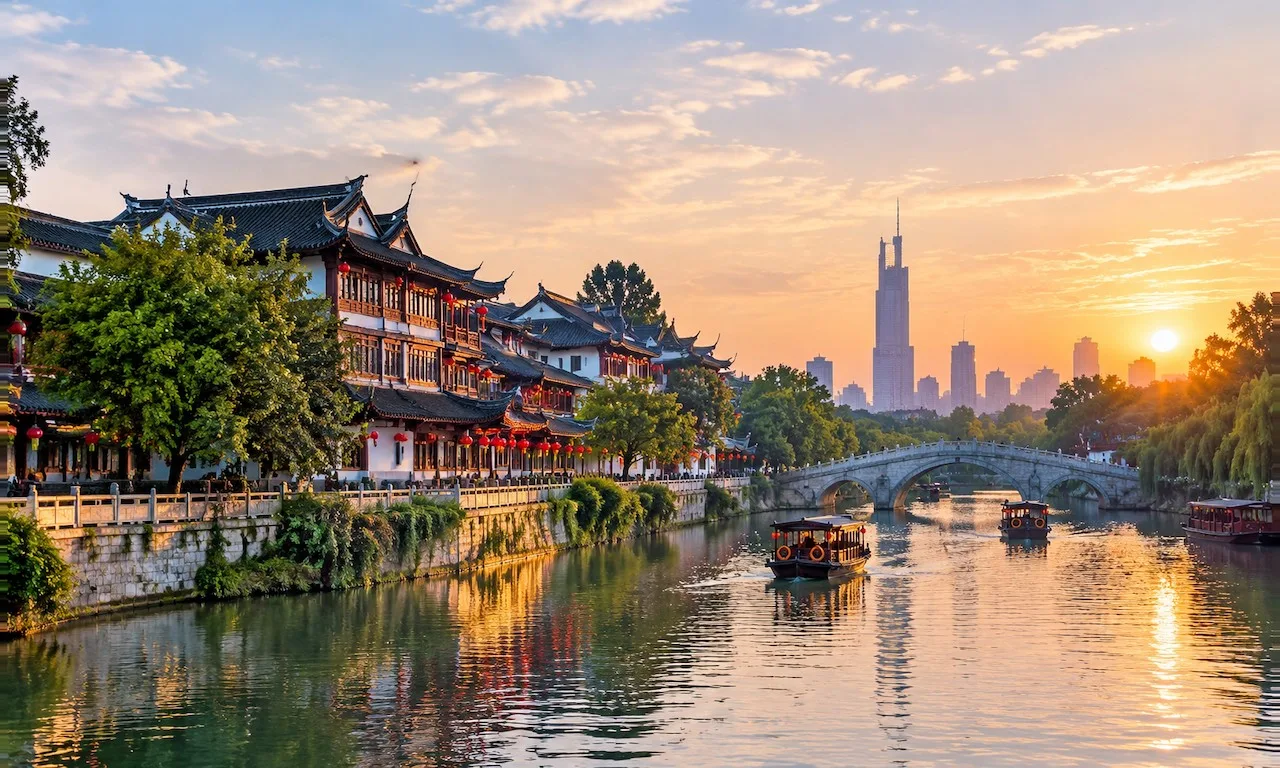
Many readers, before their trip, don't ask "What's fun in Nanjing?" but rather "How many days should I stay, where should I stay, and what order should I follow to make the most of my time?" This question deserves a serious answer because Nanjing's attractions are densely packed and require different levels of physical exertion than most cities: there are different ways to explore it – one day at a time, three days at a time – and routes for traveling with children and for solo travelers should be treated differently. Below, we provide suggestions and feasible plans based on three categories: number of days, target group, and budget. Just choose the one that suits your needs.
Branch 1: I only have one day, how can I leave without wasting my time?
The most common mistake people make is crowding the streets during the day, leaving them unable to walk any further by the time they reach the Qinhuai River in the evening. My advice is to focus on two things per day: exploring the "roots" of things in the morning and understanding the "qi" (vital energy) in the evening. Choose either the Sun Yat-sen Mausoleum or the Presidential Palace in the morning; don't try to visit both. The steps at the Sun Yat-sen Mausoleum are too strenuous for a full day's hike. If you don't usually climb mountains, I recommend the Presidential Palace; it takes about two hours to see, and it's right next to Ke Lane, perfect for a convenient lunch break without having to go through a detour.
Go to Laomendong around 2 or 3 pm. Don't rush into the shops; walk along the city wall for a while first, then turn into the alley. Around 6:30 pm, head towards Confucius Temple, only walking along the Qinhuai River section, and don't go deep into the shopping streets. The reason for this arrangement is that what people need most in a day is not to cover a large number of attractions, but to make the Qinhuai River the highlight of the day, rather than arriving there exhausted.
Branch Two: Two Days and One Night – Where You Stay Determines How Smooth Your Second Day Is
For a two-day trip, the convenience of the itinerary largely depends on the location of your accommodation. I recommend staying in the area between Daxinggong and Xinjiekou; it's mid-range priced and a transportation hub for several directions. Day 1: Zhongshan Scenic Area. Morning: Ming Xiaoling Mausoleum. Have a simple lunch within the scenic area. Afternoon: Zhongshan Mausoleum. Return to the city in the evening. Day 2: Morning: Nanjing Museum. Afternoon: Leisurely stroll around Yihe Road and the area around Pioneer Bookstore.
Why not stay near Confucius Temple? Because visiting Confucius Temple once in the evening is enough. Staying there means repeatedly passing through the same commercial area during the day, wasting time on places you should really spend your time. The advantage of being near Daxing Palace is that it's almost a straight-line distance to the museum, Zhongshan Mountain, and Laomendong, saving you a lot of time on transfers and taxis over two days.
Branch 3: Should the route be changed if you're traveling with children or parents?
The plan needs to be revised, and not just the list of attractions, but the pace and energy allocation. With elementary school children, I would make the Nanjing Museum the first stop in the morning, when they are most energetic. In the afternoon, we would go to Hongshan Forest Zoo, which is built on a hillside and has plenty of open space for them to run around. We wouldn't plan any nighttime outings; just have a meal near the hotel and that's it.
If you're traveling with parents, skip the steps to Sun Yat-sen Mausoleum and opt for the flat route to Ming Xiaoling Mausoleum and the Linggu Temple area. The Presidential Palace can be included, but make sure to rest at the tea house near the entrance before going in. The key to traveling with parents isn't "going to many places," but rather allowing time to sit down and have a drink between each attraction. Even though both are two-day, one-night trips, the itineraries for these two groups can be completely different, but neither should blindly follow the rushed pace of younger travelers.
Branch 4: With different budgets, what are the differences for the same route?
Tickets to attractions in Nanjing aren't generally expensive; the main differences in budgets lie in accommodation and food, not sightseeing. For those on a budget, staying in budget chain hotels near Daxinggong and eating at food stalls in Laomendong and Kexiang is perfectly feasible, costing around 100 yuan per person for two days and one night. Don't try to save on accommodation by staying in Jiangning or Jiangbei, as the travel time will consume half your time.
For those with a mid-to-high budget, I would suggest spending your money on "location and a proper meal." For accommodation, choose a hotel with a courtyard near Yihe Road, and reserve one dinner for a Huaiyang cuisine meal. However, be aware that a higher price doesn't mean you have to change your itinerary. The same two-day itinerary can simply offer quieter accommodations and more leisurely dining; the order of attractions doesn't need to be expanded just because you've spent more money.
Branch 5: How to arrange three days of people so that it doesn't seem like two days have been forcibly stretched out?
People with three days to spare are most likely to plan their itineraries as "two days of sightseeing plus one pointless attraction." My judgment is that the purpose of the third day is not to add attractions, but to do the things that couldn't be done in the first two days. After seeing the Roots and Night that you wanted to see in the first two days, spend the morning of the third day strolling along Yihe Road, have lunch in the area, spend two hours at the Vanguard Bookstore in the afternoon, or go to the Stone Elephant Road at Ming Xiaoling Mausoleum to take a photo of the morning light.
If you're interested in history, you can visit the scattered Southern Dynasties stone carvings on the third day. However, I don't recommend first-time visitors to Nanjing go directly there, as transportation between those sites is inconvenient, and it's easy to get lost without a local guide. The biggest advantage of a three-day trip is that you don't have to rush, so don't schedule yourself to leave at 7:30 in the morning.
Branch Six: What is the best season to go? This question is actually a false question.
I'm often asked, "Is autumn the best season to visit Nanjing?" Autumn is indeed beautiful, but if you only have time in spring, there's absolutely no need to join the crowds. My assessment is: avoid mid-July to mid-August; other times offer their own unique attractions. Nanjing in March and April is full of flowers, but also the most crowded; from late October to November, the autumn colors at the Ming Xiaoling Mausoleum Stone Elephant Road and Linggu Temple are outstanding, perfect for setting aside a whole day just for taking photos.
What you really need to be aware of is the Qinhuai River in winter. If you're on a day trip, it gets very cold by the river at night, feeling significantly colder than in the city. Overall, for first-time visitors to Nanjing, I would recommend early April and late October, not because these are the "most beautiful" times, but because the temperature and the number of tourists at the scenic spots are at their best, making it suitable for any of the above itineraries.