
Should I go to Nanjing during peak season or off-season? Let me break it down for you.
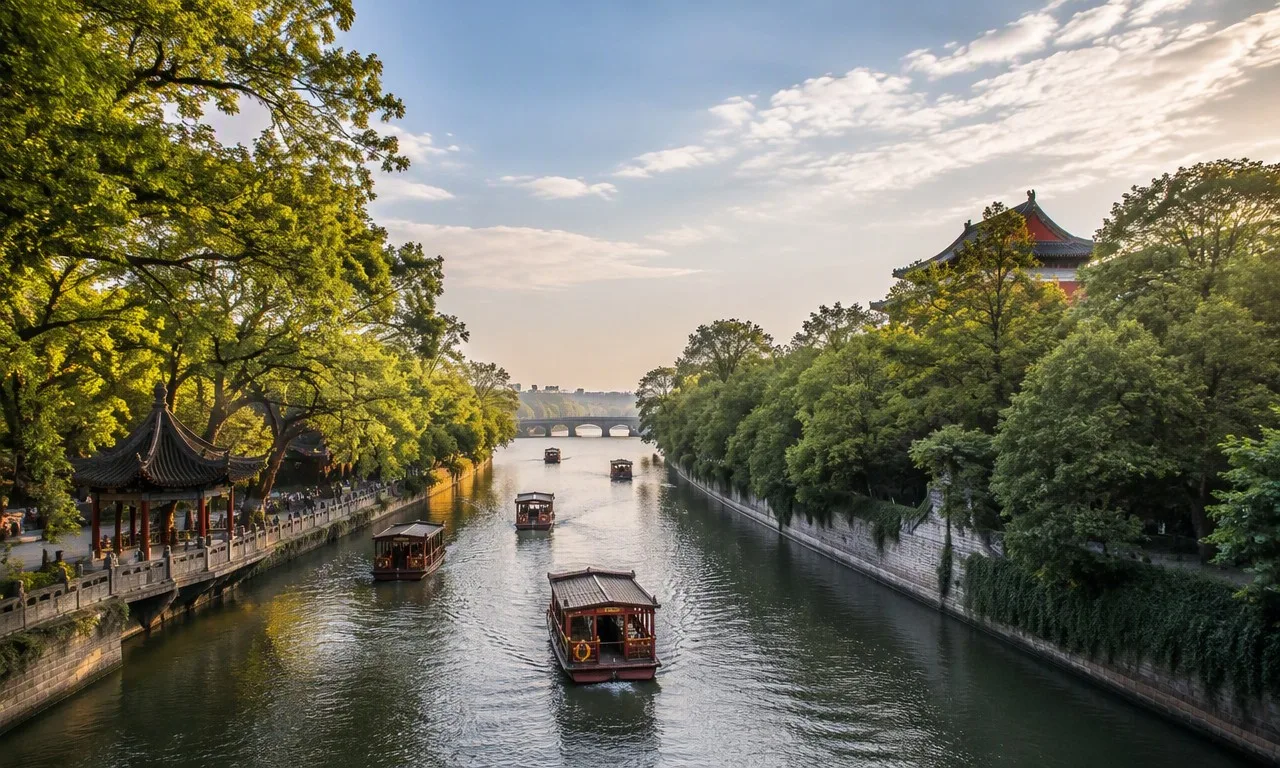
The real question worth answering isn't "What's fun in Nanjing?", but rather "When should I go, how should I go, and how should I plan my trip to make the most of it?" The same Nanjing presents two completely different worlds: the sycamore-lined avenues during peak season and those during the off-season; the museum on weekends and the museum on weekdays have two distinct rhythms; and the Qinhuai River offers two completely different experiences compared to a group tour. Below, we'll address the differences and trade-offs regarding six of the most common concerns.
First, most travel guides will tell you that "spring and autumn are the best times to visit Nanjing," but in reality, it depends on whether you're more afraid of crowds or cold weather.
Most travel guides will tell you that "the best seasons to visit Nanjing are spring and autumn," which is true, but not entirely accurate. In reality, from late March to mid-April and from late October to mid-November, Nanjing's plane trees, ginkgo trees, and cherry blossoms are indeed beautiful, but the price of this "beauty" is being incredibly crowded. The steps of Sun Yat-sen Mausoleum are filled with people's backs, and the queues in front of the Presidential Palace are incredibly long. If you only have time during these two periods, then go, but be prepared to spend an extra two hours queuing per person. If you have more flexible time, early December and late February offer a "low-crowd, high-experience" window: the cemetery paths after the plane tree leaves have fallen have a stark beauty, and the stone elephant path at Ming Xiaoling Mausoleum is unobstructed, allowing you to see the entire stone carving.
My assessment is: for your first trip to Nanjing, don't obsess over autumn leaves and spring flowers. Nanjing's essence lies in the tranquility of its mausoleums and ancient capital, which only becomes apparent when there are fewer people. If you're sensitive to the cold, choose a time before mid-November; if not, choose late January. The time with the fewest people is when you can best capture the depth and grandeur of the Sun Yat-sen Mausoleum.
Second, most travel guides will tell you that "you can check off your Nanjing trip in two days over the weekend," but in reality, two days over the weekend are only enough to check off your trip amidst the crowds.
Most travel guides will tell you "Nanjing isn't big, two days on the weekend is enough," but in reality, you'll spend half of those two days queuing and waiting. The Nanjing Museum on Saturday morning and Confucius Temple on Saturday evening are the two busiest times in Nanjing. If you can only come on the weekend, my approach is to plan one major attraction with long queues and one leisurely walking route on Saturday. For example, go to the Six Dynasties Museum on Saturday morning, walk through Meiyuan New Village to see the exterior of the Presidential Palace in the afternoon, and in the evening, don't go into the core area of Confucius Temple; just have a bowl of wontons on Changle Road and leave.
The difference in actual experience lies in the fact that weekends in Nanjing are better spent "avoiding the peak crowds" rather than "rushing into the peak crowds." Visiting the museum, Sun Yat-sen Mausoleum, and Presidential Palace—the three most time-consuming places—on weekdays, and instead spending weekends on Qingliang Mountain in the west of the city, Yuejiang Tower in the north, and the alleys of Laomenxi, makes a completely different experience.
Third, most travel guides will tell you that "group tours are worry-free and cost-effective," but in reality, group tours save you the trouble of thinking, not the physical experience.
Most travel guides will tell you that "a one-day group tour to Nanjing is hassle-free and connects many attractions," but the biggest problem with group tours is actually the "pacing." For example, you might have an hour and a half of free time at the Sun Yat-sen Mausoleum, but you have to rush back as soon as you reach the music stage; you only get forty minutes at the Presidential Palace, and you don't even get a proper look at the water features in Xuyuan Garden. The cost-saving aspect of group tours is based on compressed time; it may seem like you've visited five places in one day, but in reality, you only scratch the surface of each one.
In practice, the reason Nanjing is best suited for independent travel is precisely because of its low transportation costs. The subway connects Sun Yat-sen Mausoleum, Presidential Palace, Confucius Temple, and Nanjing Museum in one line, with each stop taking only 20-30 minutes. For the same per-person transportation cost of a few dozen yuan, independent travelers can have an extra afternoon leisurely strolling along Yihe Road. There's only one situation where I recommend joining a tour group: when traveling with elderly people who have mobility issues, and only for low-intensity tours that involve "driving around and taking photos." Otherwise, exploring on your own is definitely more worthwhile.
Fourth, most travel guides will tell you that "Xinjiekou is the most convenient place to stay," but in reality, Xinjiekou is only convenient for transfers, not necessarily the best overall experience.
Most travel guides will tell you, "Stay in Xinjiekou, it's close to everything," which is true, but not entirely. The problem with Xinjiekou is its "noise"—late-night delivery scooters, early morning shopping mall unloading, and prices significantly higher than comparable options in the surrounding area. Xinjiekou isn't the only subway interchange in Nanjing; Daxinggong, Gulou, and Yunnan Road are all near subway stations, offering more local food options within walking distance and quieter nighttimes.
In my personal experience, I prefer the "Daxinggong-Zhujiang Road" area: it's close to the Presidential Palace, 1912, the Skin Research Institute, and Jiming Temple, and you can take a walk along the river at night. The real advantage of staying in this area is that when you're tired, you don't need to take the subway back to your accommodation; you can often just walk back. Xinjiekou is for shoppers, not for those who want to experience Nanjing as a cultural destination.
Fifth, most travel guides will tell you that "going to Confucius Temple to see the lanterns at night is very romantic," but in reality, Confucius Temple on weekday evenings and weekend evenings are two completely different worlds.
Most travel guides will tell you that "the night view of Confucius Temple is not to be missed," but in reality, if you go on a Friday or Saturday night, you'll likely be pushed from Wende Bridge to Pingjiangfu Road by the crowds, unable to stop and unable to see much. The value of Confucius Temple lies in the "lights reflected on the water," and these reflections are best appreciated in a quiet environment. On a weekday evening, the Qinhuai River is not crowded; a short walk along the river, a glance from the bridge, and you can savor the atmosphere in twenty minutes.
In practice, I would visit Confucius Temple on a weekday evening after 7 pm, without going inside the temple or the commercial street, just walking along the "Zhanyuan Road - Laiyan Bridge - Wenyuan Bridge" section. On weekend evenings, I could go to Laomendong, but the plan would be the same: walk through the side alleys, not the main street. Crowds are the enemy of night views, especially in Nanjing.
Sixth, most travel guides will tell you that "three days is enough for Nanjing," but in reality, three days is only enough to see the "must-see" places, and four days are needed to fully explore Nanjing.
Most travel guides will tell you about the "standard three days and two nights in Nanjing," but in reality, those three days will likely consist of: one day at Sun Yat-sen Mausoleum and Ming Xiaoling Mausoleum, one day at the Presidential Palace and Nanjing Museum, and one day at Jiming Temple, the city wall, and Confucius Temple. It seems like you've seen everything, but every day is spent rushing around, the pace is very tight, and there's no time to "sit and daydream on Yihe Road." The truly comfortable part of Nanjing lies precisely in those unused moments not included in the PowerPoint presentations.
In practice, if you only have three days, you can skip one mausoleum and add one alleyway. Four days is a true "journey through Nanjing": one day for the mausoleums in the eastern suburbs, one day for the cultural and historical sites in the city center, one day for the alleyways in the southern part of the city, and one full day for Yihe Road, Nanxiu Village, and the area around Nanjing University. Nanjing isn't for rushing around; it's for staying. Three days is enough, five days won't bore you, and four days is the most cost-effective choice for most people.