
Which area is best to live in Nanjing? First, ask these 8 questions.
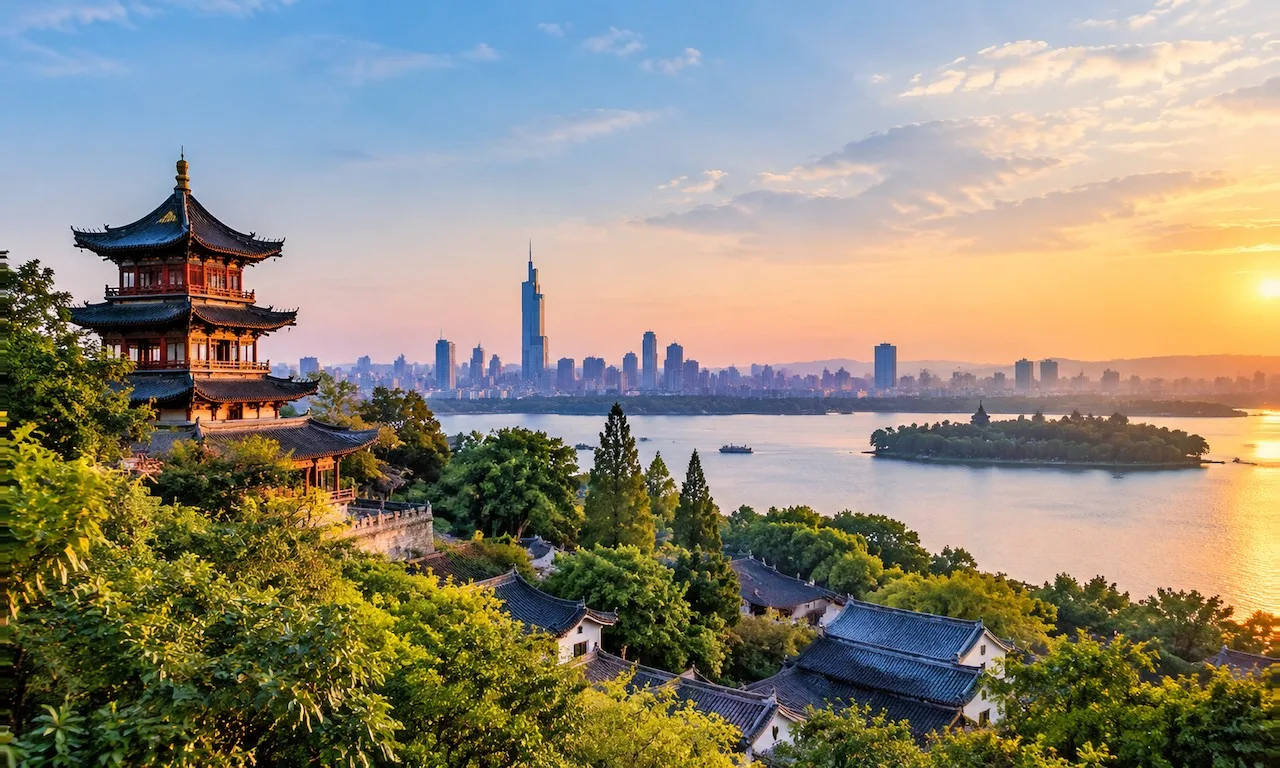
Whenever readers plan to visit Nanjing, the most frequent question isn't "Which attractions should I visit?" but rather "Which area is the best to stay in?" This question deserves a serious answer because Nanjing's urban structure and transportation system differ from many tourist cities—attractions are scattered across the south, east, and north of the city. While the subway is convenient, transfers are time-consuming. Staying in the wrong area can add up to the time spent traveling back and forth each day—enough to visit an extra attraction. Below, I'll address the eight most frequently asked accommodation questions before your trip, providing two suggested areas and the rationale for each.
If this is your first time visiting Nanjing, which area is the least likely to be a mistake when choosing a place to stay?
Xinjiekou is the top choice. It's the transportation heart of Nanjing, where three subway lines intersect. Confucius Temple, Presidential Palace, Sun Yat-sen Mausoleum, and Nanjing Museum are all within a half-hour commute. Hotels range from budget chains to high-end, and there are plenty of dining and shopping options nearby. Even if you arrive late at night, there are places to grab a bowl of hot soup noodles. The downside is that it's a bustling and lively area, and rooms facing the street might be noisy.
The second option is the area along Zhongshan East Road from Daxinggong. It's within walking distance of the Presidential Palace and the 1912 Street area, and is served by Metro Lines 2 and 3. It's only one stop from Xinjiekou, but overall it's quieter than Xinjiekou. Suitable for first-time visitors who want to avoid the noise of a purely commercial area.
Where should we stay if we're traveling with elderly people and children and want to minimize walking and find a quiet environment?
Consider the area around the east bank of Xuanwu Lake and Jiming Temple. This area is close to Xuanwu Lake Park and the Ming City Wall, with smooth roads, making it comfortable for strolling with a stroller or taking the elderly for a walk in the morning. Hotels are mainly mid-range and resort-style, not far from Metro Lines 1 and 3, and convenient for Nanjing Railway Station, making them suitable for families who may arrive by train.
Another option is the area around the Olympic Sports Center in Hexi. The roads here are wide, the greenery is lush, the sidewalks are well-maintained, and the hotels are generally newer with larger rooms than comparable hotels in the old city. The downside is that it's a bit further from traditional attractions, but if you plan to visit the Nanjing Eye Pedestrian Bridge, Jiangsu Grand Theatre, or take your children to a performance, staying here is actually convenient.
I want to live somewhere with the feel of old Nanjing, but not too commercialized. Where should I go?
One area is the section south of Laomendong, from Diaoyutai to Gutong Lane. Laomendong's main street is crowded with tourists, but just two lanes south lead to the old city south where locals live – you'll still find blue brick walls, small courtyards, clotheslines, and elderly people playing cards. Many guesthouses and inns here are converted from old houses, offering a genuine experience of daily life in Nanjing, rather than just tourist trappings.
Another option is Shanghai Road and Hankou Road, near Nanjing University's Gulou campus. This area is a former academic district from the Republican era, shaded by plane trees, with old buildings interspersed with small cafes and secondhand bookstores frequented by students. Accommodation is mainly small designer hotels and apartment-style guesthouses, quiet, with a scholarly atmosphere, suitable for those who enjoy exploring the city's details on foot.
I enjoy nightlife and have plenty of restaurants and bars to go out at night. Where should I stay?
Choose the 1912 Block near the Presidential Palace. This area is Nanjing's most concentrated nightlife district, packed with bars, craft beer houses, and late-night eateries. Within walking distance, there are also late-night dining options in Beiting Lane and Changjiang Road. Staying here, you can still find lively shops downstairs at 11 pm, and it's not far to go back to sleep.
If you find 1912 too touristy, you can stay in the area between Shanghai Road and Qingdao Road. The bars there are more geared towards students and local artsy young people, with a high concentration of craft beer and hand-drip coffee shops. Prices are a cut below 1912, and the atmosphere is more relaxed. The downside is that it's not as concentrated as 1912, so you'll need to walk around to find a different shop.
Will I be able to check into a hotel smoothly if I arrive in Nanjing late at night? Which areas are friendly to overnight arrivals?
The area around Xinjiekou, with its concentration of hotels, is most welcoming for late-night arrivals. Most chain hotels and business hotels have 24-hour front desks, so check-in is no problem even in the middle of the night. Furthermore, it's easy to hail a taxi in Xinjiekou late at night; ride-hailing services respond quickly, and the journey from the airport or train station avoids detours and remote areas.
Secondly, the area around Nanjing South Railway Station and Nanjing Railway Station is a good option. These two transportation hubs have numerous hotels offering 24-hour front desk services, making them ideal for those arriving by late-night high-speed trains or red-eye flights. The advantage of staying here is that you can go straight to your room after getting off the train; the disadvantage is that there's not much to do around the area besides the hotels, making it suitable for trips where Nanjing is only a transit point.
Are there any compromises between staying close to tourist attractions and being surrounded by tourists?
The area from Gulou to Hunan Road is an underrated compromise. It's close to Xuanwu Lake, Jiming Temple, and the Republican-era mansions along Yihe Road, and is served by Metro Line 1. However, the accommodation density is lower than in Xinjiekou, and the streets are mostly filled with local residents taking walks in the evenings. Hotels range from established star-rated establishments to mid-range chains, offering a wide selection.
Another area is the section east of Daxing Palace, from Yixian Bridge to Ming Palace. It's within walking distance of the Nanjing Museum and the Ming Palace Ruins Park, and only a few subway stops from Sun Yat-sen Mausoleum and the Presidential Palace. This area has many military and government buildings, a clean and quiet environment, and is mainly comprised of mid-range hotels. The tourist density is significantly lower than in the Confucius Temple area.
If you have a limited budget and want to stay in a clean, safe, and affordable place, where can you look?
The area along Jiankang Road to Changle Road outside Confucius Temple is worth considering. Staying in the core area of Confucius Temple is expensive and noisy, but just a five or six-minute walk out, there are many budget chain hotels and mid-range business hotels, significantly cheaper, and within walking distance of Confucius Temple and the subway station. This area is well-lit at night, has a steady flow of people, and is relatively safe.
Another option is the area between Andemen and Jiqingmen on the southern extension of Metro Line 1. Accommodation prices here are significantly lower than in the city center, and it takes about 15 to 20 minutes by metro to Xinjiekou. The surrounding area is a well-established residential area with affordable restaurants, supermarkets, and pharmacies, making it suitable for those on a budget who don't want to stay in a remote location.
Are there any places in Nanjing that offer a quiet, vacation-like stay without rushing to tourist attractions?
Yes, there is the area from Sun Yat-sen Mausoleum to Linggu Temple on the southern slope of Zijin Mountain. This area is hidden inside or on the edge of the scenic area, surrounded by sycamore trees and mountains, and you can hardly hear the city noise at night. Accommodation is mainly in resort hotels and boutique hotels converted from sanatoriums. The prices are on the higher side, but staying there is like living in a forest. When you open the window in the morning, you can hear birds chirping. It is suitable for people who come specifically to relax and unwind.
Another option is the cluster of rural homestays in Tangshan and Jiangning. Tangshan has hot springs, while Jiangning has tea plantations and stand-alone homestays by reservoirs. These places are far from the city center and require driving or taking a taxi, making them suitable for splitting your Nanjing trip into a "two days in the city, one night in the suburbs" schedule. When choosing a homestay, make sure to confirm whether it offers overnight stays and dining options, as the convenience of the suburbs is not as good as that of the city center.