
Nanjing cuisine is so varied that you have to choose the right option for each person. Which route should you choose?
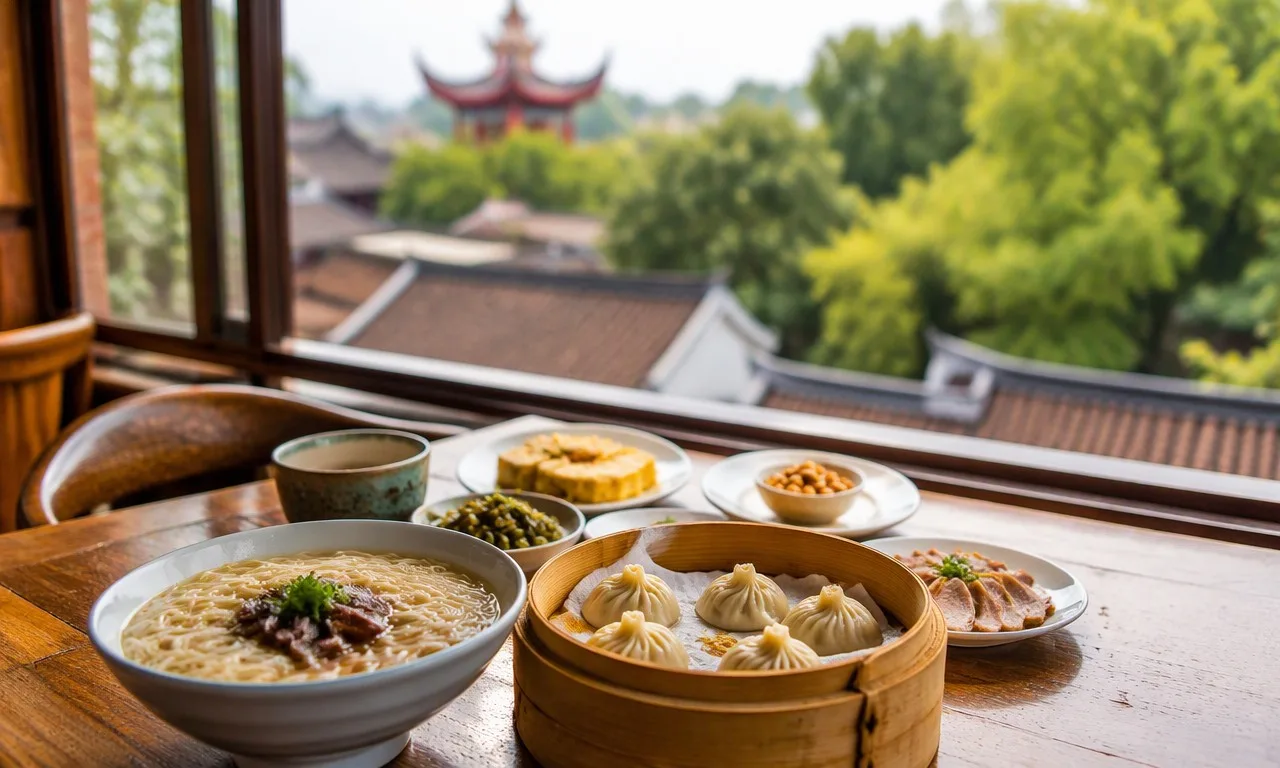
When visiting Nanjing to enjoy local delicacies, the biggest fear isn't having nothing to eat, but rather choosing the wrong options. Some people only have time for one meal, while others can stay for three days; some come alone, while others bring parents and children; some are content with a budget of a few dozen yuan per person, while others prefer a more refined dining experience. The logic behind these choices differs significantly and deserves detailed explanation. Below, we've categorized the options based on three dimensions: time, companions, and budget. Find the one that best fits your situation.
Only one meal: saving my appetite for the fixed combination of "salted duck + duck blood vermicelli soup".
If you're only eating in Nanjing, I suggest avoiding those trendy restaurants with hour-long queues, and don't try to sample every type of food in one meal. The safest approach is to find a long-established restaurant that makes both salted duck and duck blood soup, and order both. Salted duck is the essence of Nanjing cuisine, while duck blood soup is a staple of everyday life; eating just one of them doesn't complete the experience.
The rationale is that the cost of trying and failing with only one meal is too high. These two dishes are the combination with the lowest error rate and the highest recognizability among Nanjing delicacies. If your budget is mid-range, add a serving of sweet taro sprouts to finish the meal, balancing sweet and savory flavors. Don't just order a bowl of duck blood vermicelli soup and leave; that would miss the essential element of Nanjing cuisine: the "duck."
One day: eat three meals a day, breakfast, lunch, and dinner, but choose meals that are close by.
If you have a whole day to spare, you can plan one meal each for breakfast, lunch, and dinner, but the premise is not to cross half the city just for one particular shop. In the morning, find a duck fat sesame flatbread with soy milk or a bowl of wontons near your accommodation, and then start exploring. For lunch, choose a pork belly noodle shop near a residential area. It costs a few dozen yuan per person, and you'll be sweating profusely while eating. This is the kind of lunch that Nanjing locals would eat.
In the evening, you can be a little more sophisticated and try Nanjing roast duck or a casserole. Nanjing roast duck and Beijing roast duck are two different things; a half-eaten duck with rice from a street stall is quite satisfying. The strategy for this day is to "eat nearby and at different times," and avoid having too many snacks between meals, otherwise you won't be able to eat much in the evening.
Able to stay for three days: Eat in a progressive order "from the street to the private room".
You have three days to explore the diverse culinary landscape of Nanjing. Day 1: Duck cuisine: duck blood and vermicelli soup, salted duck, Nanjing roast duck – thoroughly experience the "duck" theme. Day 2: Noodles and snacks: xiaolongbao (soup dumplings), beef potstickers, sweet taro sprouts, plum blossom cakes – these are perfect for snacking on the go and won't take up a full meal.
On the third day, you can choose a well-established Huaiyang cuisine restaurant, sit down and order dishes like braised shredded tofu, stewed lion's head meatballs, and salted duck to experience the "refined" side of Nanjing cuisine. Over three days, you'll experience both the street food vibe and the private dining room atmosphere—a level of experience that those who only stay for one day cannot grasp.
Solo travel: Look for the type that is "friendly when traveling alone, and not awkward when sharing a table".
When traveling alone in Nanjing, the most comfortable places are those restaurants that offer individual small portions and have single seats or a counter. Duck blood vermicelli soup shops are perfect for solo dining; the food comes out quickly, you don't have to wait for anyone, and you don't have to deal with other people's attitudes. Beef potstickers can be bought by weight; two or three are enough, no need to force yourself to buy a whole portion.
What you should avoid are restaurants where you have to order a huge spread of dishes to create an atmosphere, where ordering two or three dishes is too much for one person, but ordering just one dish seems meager. Pig skin noodles are suitable for one person, but the portion is large; you can tell the owner to order less noodles. The core of solo travel isn't "eating alone," but "eating comfortably and without waste."
Couples traveling together: Choose a restaurant suitable for sharing food, taking photos, and relaxing.
When two people come to Nanjing, the focus isn't on eating a lot, but on eating in a way that fosters interaction. You can share a steamed bun, a bowl of sweet taro soup, or a small portion of Nanjing roast duck – these are all perfect for couples. In the evening, find a cozy Huaiyang cuisine restaurant, order a couple of dishes, and relax – it's much more comfortable than squeezing into a fast-food restaurant.
I wouldn't recommend taking your partner to a stand-up dumpling stall, nor would I recommend going to a overly formal business banquet restaurant. The former feels too rushed, and the latter too formal. The ideal dining experience for couples in Nanjing is to "share every dish with each other"—this sense of sharing is far more genuine than any trendy Instagram spot.
Bringing parents: Prioritize established restaurants that offer seating, hot dishes, and mild flavors.
When bringing parents to Nanjing, the priority for dining out should be "sitting down" and "not having to wait in line." Parents usually have a low tolerance for standing and waiting for a long time, so you can skip those small street-side restaurants where you have to wait for an hour. Choose established restaurants with dine-in service, preferably with booths or private rooms, and order mild dishes like salted duck, boiled shredded tofu, and braised lion's head meatballs.
Avoid taking your parents to restaurants that are too spicy, have a lot of oily fumes, or have greasy floors. Many established restaurants in Nanjing offer mid-range prices, decent environments, and consistent flavors, making them suitable for a quiet family meal. Parents value comfort and quality over excitement and novelty.
When taking care of children: Focus on categories that offer "quick service, include a main dish, and offer optional spiciness."
When taking children out to eat, the most important factors are the speed of service and the comfort of the seating. Small wontons, duck fat pancakes, sweet taro sprouts, and potstickers are all suitable options—they provide a main dish, are not spicy, and are well-received by children. When choosing a restaurant, prioritize whether they have high chairs for children, whether the floor is clean, and whether the wait time is less than ten minutes.
Avoid those trendy restaurants with long wait times (over half an hour) when dining with kids. When they're hungry and in a bad mood, even the best food won't make a difference. Mid-range, established chain restaurants are a safer choice; they tend to be more spacious, offer a wider selection, and provide hot soup or water. When dining with kids, it's about the "pacing," not the "brand name."
How to choose based on different budgets: Eat your fill at an affordable price, eat well at a mid-range price, or eat thoroughly at a high-end price.
For a budget-friendly price of just a few dozen yuan per person, you can sample all the staple street foods of Nanjing: duck blood and vermicelli soup, pork belly noodles, potstickers, and sesame seed cakes. At this price, you'll be full without any problem, and the food is authentic, but don't expect too much from the ambiance or service. Suitable for those in a hurry and looking for a memorable experience.
For a mid-range budget of around 100 yuan per person, you can visit a time-honored restaurant and order a few dishes, such as salted duck, boiled shredded dried tofu, xiaolongbao (soup dumplings), and sweet taro sprouts, all in a relatively comfortable setting. The high-end option focuses on the ingredients and cooking methods; a traditional Huaiyang cuisine restaurant can elevate a single dish like lion's head meatballs to a completely different level. A higher budget doesn't necessarily mean more "authentic," but it does allow you to experience a more refined version—that's the truth.