
How should Nanjing residents eat each day to make their trip worthwhile?
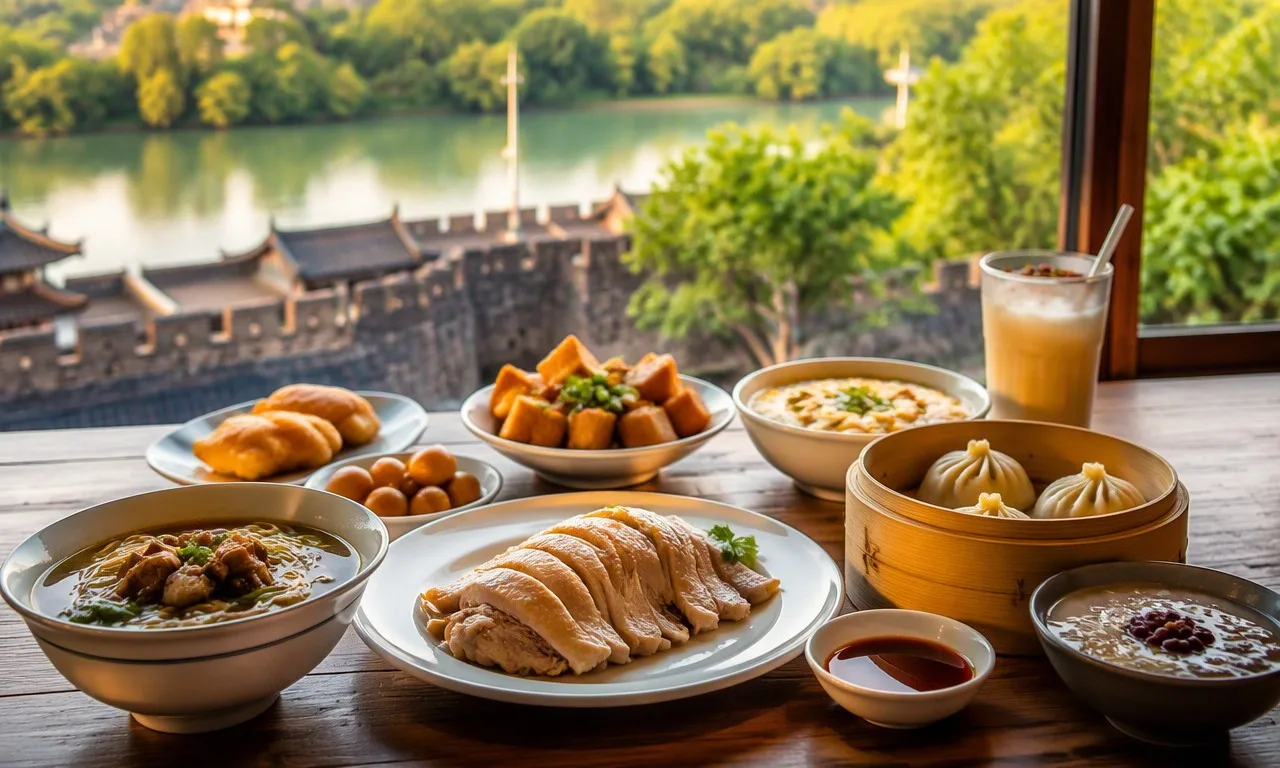
Nanjing's snacks are extremely time-sensitive; going to the same shop in the morning and going at night can sometimes result in completely different experiences. This is a question worth answering seriously because most people only ask "what to eat," but rarely "when to eat," while Nanjing is precisely a city that has "eating on time" etched into its snack calendar. Below, I'll explain, based on my years of observation, the one or two things that are best eaten at each of the six time slots of the day, and why these specific times are crucial.
6:00 AM First pot of food at the morning market
The best things to eat at this time are xiaolongbao (soup dumplings) and sweet taro soup. For the xiaolongbao, you have to catch the first batch. The reason isn't fancy: the dough is freshly steamed, and the broth inside the meat filling hasn't been repeatedly steamed away. Each dumpling is heavy, and if you bite into it, the soup is plentiful. After 8 or 9 am, the same steamer has been used several times, causing the dough to stiffen and the broth to shrink, resulting in a significantly worse taste. Get up early and go to Sanqi Baxiang, Kexiang, or the alley next to Laomendong. Just go into the steamer as soon as you see it being opened, regardless of the sign size.
Sweet taro sprouts are also best enjoyed as the first pot at the morning market. This dish is made with lotus root starch and brown sugar, using small, round taro. It's cooked in the early morning and kept warm in a large pot. When the first bowl is ladled out, the aroma of osmanthus and brown sugar hasn't dissipated, and the consistency of the lotus root starch is just right to coat the spoon. Later, the bottom of the pot will slightly char, giving it a slightly bitter taste. Old Nanjing locals don't care much about what dry snacks they pair with sweet taro sprouts; a bowl warms the stomach, making it easier to enjoy the rest of the breakfast.
8:00 Local breakfast
Around 8 AM is peak time for locals to go out, and this is the perfect time to enjoy beef potstickers with duck blood vermicelli soup. The potstickers should be ordered early, as they are crispiest in the first twenty minutes after being cooked. Nanjing potstickers are different from those elsewhere; they have a thick skin, a deep bottom, and a generous filling. One bite and the beef juice will burst out. Therefore, go to the potsticker stall first to queue, then find a seat for the duck blood vermicelli soup. The order is crucial. If you sit down and wait for the soup first, the potstickers will have softened by the time they arrive, making the wait pointless.
Duck blood and vermicelli soup is considered an "all-day" food in Nanjing, but the magic of eating it at 8 AM lies in the soup itself. The broth at the old shops is simmered overnight, with duck carcasses, intestines, and liver all cooked together. When the first pot of soup boils in the morning, the duck offal is freshly blanched that day, resulting in a crisp and tender texture. By noon, the broth becomes increasingly thick, but the duck offal becomes tough if blanched for too long. Therefore, the refreshing taste and tenderness of the duck offal in the morning bowl represent the peak of the day. Don't underestimate this difference; in the eyes of Nanjing locals, the difference is significant.
11:00 Lunch Service
At 11:00 AM sharp, the lunch market is just starting, and the best things to eat at this time are salted duck and pork skin noodles. The salted duck should be chopped before 11:30 AM, because truly meticulous shops braise it in the early morning and dry it in the morning. When you make the first cut, the duck skin will be slightly oily, and the meat will still have a little elasticity. After noon, the duck has been air-drying for too long, and the gelatinous layer between the skin and meat starts to tighten, making the texture dry. Tourists often ask which shop has the best salted duck, and my answer is always: Don't ask the name of the shop, ask, "Is the duck being chopped still warm?" If it's warm, you can buy it.
Pig skin noodles are one of the representative noodles of Nanjing, characterized by the "sizzling" pig skin. It's best eaten at 11 am because most noodle shops simmer their first batch of broth from 7 am until it's thick and white, resulting in the most flavorful soup. In the afternoon, the broth is repeatedly boiled and refilled, causing the flavor to dissipate. The noodles should be "qiangmian," meaning firm noodles; Nanjing locals rarely order soft noodles for pig skin noodles. A bowl of noodles, with the pig skin soaked in broth, bursts with juice with every bite. Add some chili oil and a few greens, and it's the quintessential Nanjing lunch.
3:00 PM Afternoon tea or sweet soup
Around 3 PM is when Nanjing's dessert shops really start to get busy. The best dishes at this time are red bean glutinous rice balls and honey-glazed lotus root. For the red bean glutinous rice balls, choose freshly cooked ones; cook the red beans until they're soft and mushy, and turn off the heat immediately after the small glutinous rice balls float to the surface, then add a small spoonful of osmanthus sugar. Between 11:30 AM and 2 PM is the lunch digestion period, and the dessert shops are less crowded. If the cooked red bean glutinous rice balls are left to stay warm, they'll easily clump together. Around 3 PM, the afternoon batch is freshly cooked; the glutinous rice balls are soft and chewy but not mushy, and the broth is so thick it clings to the back of a spoon. When visiting the old city of Nanjing, avoid buying the kind that's already packaged in a cup and left on the counter for a long time; sit inside and eat the freshly served bowl.
Honey-glazed lotus root is a different story altogether. In Nanjing, the key to honey-glazed lotus root is stuffing the holes with glutinous rice and then slowly simmering it with rock sugar and osmanthus flowers. Eating it at this time is important because the lotus root has been slowly simmering for several hours, allowing the sugar to permeate to the very core, without being ruined by the repeated heating during the evening rush. If you go at 3 PM, the chef will be just taking a whole lotus root out of the pot to slice it fresh, drizzling a little of the thick sauce from the bottom of the pot on top. The lotus root and glutinous rice will be warm, and the sweetness will be perfectly balanced, not cloying.
18:00 Night market or evening market
At 6 PM sharp, the night market just started setting up, and the sky gradually darkened. This time of day is perfect for crayfish in summer; in other seasons, grilled duck tongue is a better choice. Crayfish in Nanjing have their own unique ways of being prepared: thirteen-spice, garlic, plain water, or stir-fried, with the thirteen-spice being the most popular. Eating around 6 PM is recommended because the first batch of crayfish usually arrives at the restaurant around 4 or 5 PM, allowing for the most thorough cleaning and resulting in firmer shrimp. By 8 or 9 PM, with long queues, the kitchen often shortens the soaking time to meet orders, resulting in less flavorful shrimp. Therefore, even if you have to wait in line, I suggest you try to get a table in the first batch.
If it's not crayfish season, try grilled duck tongues. Nanjing-style grilled duck tongues are different from those elsewhere. They choose large duck tongues, grilling them until the skin is slightly charred and the inside still has a bit of cartilage. They're sprinkled with salt and cumin, but not with heavy sauce. This is because small skewers like duck tongues need to be slowly grilled over charcoal, not quickly. Around 6 PM, the charcoal is just heated through, resulting in the most even temperature. What you get is the aroma of the duck tongue's fat slowly rendered out, not a burnt taste.
22:00 Late-night snack
After 10 PM, Nanjing's late-night snack scene truly begins. The best things to eat at this time are spicy wontons and hot pot. There's a widely circulated saying about spicy wontons: "The wrappers are as thin as paper, melting in your mouth." They're at their best late at night. Because after 10 PM, the wonton stalls change the water, making the wontons fresh to order. The broth is clear, the wrappers are smooth, the meat is fresh, and the chili oil is homemade by the stall owner—fragrant but not overly spicy. The wontons you eat during the day are likely made and left to sit for hours, the wrappers absorbing moisture and resulting in a poor texture. That bowl at 10 PM is specially prepared by the stall owner for those finishing work; one bowl and all the day's fatigue disappears.
Casserole is another highlight of late-night dining. The essence of Nanjing casserole lies in the broth and the glass noodles. The broth is bone broth, and the glass noodles must be the kind that don't fall apart even after long cooking. After 10 p.m., the broth is kept warm on a small stove in the casserole shop. The glass noodles are soaked in hot water before being put into the casserole, then cooked in the boiling broth for about ten seconds, then scooped out and topped with sauce. At this time, there's no rush, and the vendors don't hurry. The casserole is still bubbling when it's served. You take a sip of the broth first, then pick out the noodles. After eating, you'll feel warm all over, just in time to go home and sleep. Late-night dining isn't about the taste itself, but about the last bit of patience in the Nanjing night.