
What should you eat for your first meal in Nanjing? I'll explain the six most frequently asked questions one by one.
The question "How to eat in Nanjing?" is often answered by "What's available?" in most guides. However, readers are really stuck on another level: I'm a first-time visitor with limited time, so which dishes should I prioritize? What's the difference between what locals eat and what tourists queue up for? This article directly answers six of the most frequently asked questions, providing clear answers and actionable methods for each.
This is my first time in Nanjing, and I only have one meal. What dishes should I eat?
If I only have one meal, my advice is to skip the "food street" approach and go straight to a well-established or reputable local restaurant serving Nanjing cuisine. Order a set meal of "duck blood vermicelli soup + soup dumplings + salted duck." The reasoning is practical: these three dishes are the most recognizable in Nanjing cuisine, you can enjoy them all in one meal, and they don't clash. For the duck blood vermicelli soup, choose one with a clear broth and plenty of duck intestines and liver. Don't add chili oil yet; taste the original flavor first before deciding how much to add. Order only one basket of soup dumplings. Take small bites and drink the soup first; the umami flavor of the meat filling and broth is more consistent in one basket than any main dish in a restaurant. Order a small portion of salted duck, choosing ones with a thin layer of fat under the skin. It should be salty and savory but not cloying—that means it's been properly marinated in the brine.
If you're willing to walk a little further, I recommend replacing the "xiao long bao" with the seasonal "crab roe tang bao," provided it's in season and freshly steamed. The difference between freshly steamed and reheated tang bao can be tasted in the skin; freshly steamed skin is elastic and won't stick to the steamer paper.
What do locals in Nanjing eat for breakfast? Do they all eat duck blood and vermicelli soup?
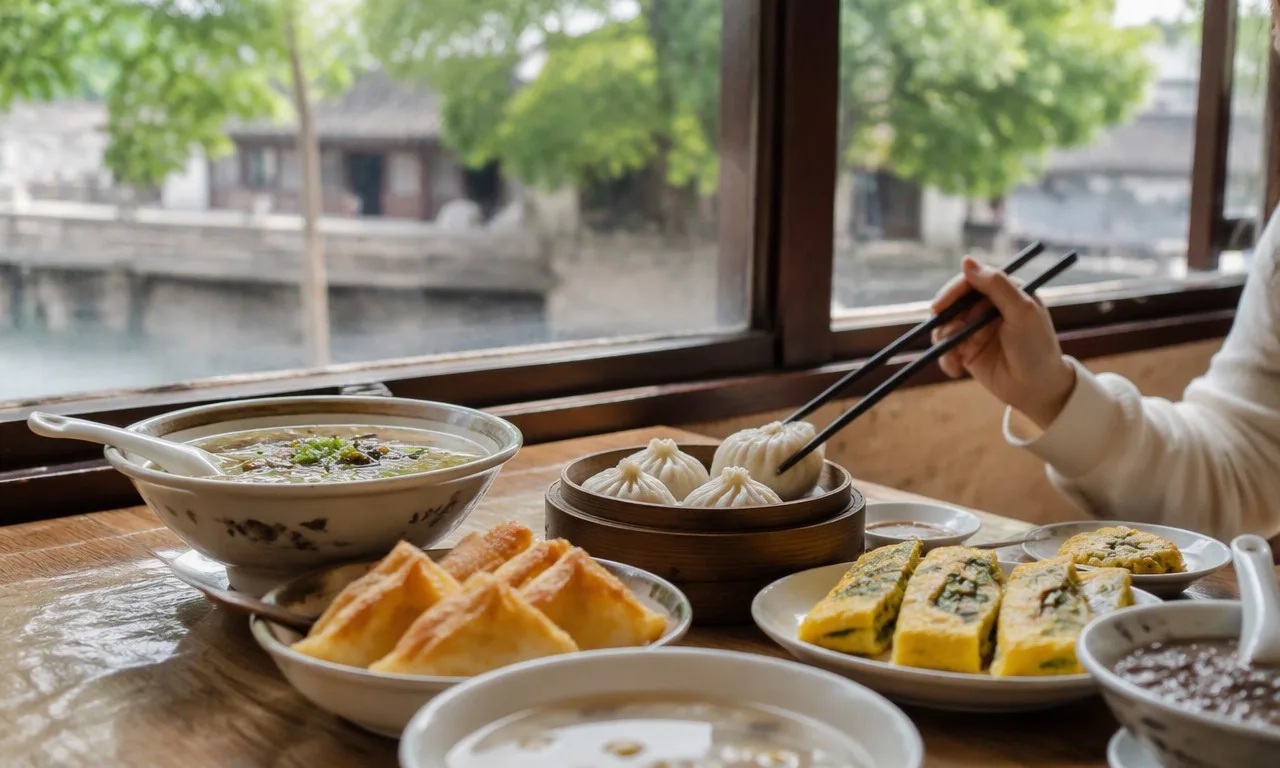
No. Nanjing locals' breakfasts are more "noodle-based" than tourists imagine. The most representative local breakfasts are spicy wontons and duck fat sesame flatbread, along with a pot of sweet osmanthus taro soup. Duck blood vermicelli soup is more of a lunch or afternoon snack for many locals, rather than their first meal of the morning. The spicy wontons are small, with thin wrappers and a small but very fresh filling; the key is the fragrant but not overpowering chili oil in the soup. The proper way to eat them is to first eat two plain ones, then add a small spoonful of chili oil and stir it, paired with a freshly baked duck fat sesame flatbread, breaking it apart to dip in the wonton soup. The duck fat sesame flatbread comes in savory and sweet varieties; the savory ones have scallions, and the sweet ones have sesame seeds. It's best to buy one of each for your first visit.
Sweet osmanthus taro stems are the perfect finishing touch. The taro stems are cooked until soft and tender, thickened with lotus root starch, and the sweetness is mild, not harsh. Many old shops start selling as early as five or six in the morning, and the sight of locals standing at the shop entrance with bowls in hand eating speaks volumes more than the shops themselves.
Are Nanjing snacks sweet or savory? Are they very sweet or very spicy?
The essence of Nanjing snacks is "primarily savory and fresh, with sweetness as a garnish, and spiciness that can be controlled." Compared to the southern Jiangsu region, Nanjing snacks are not as sweet; compared to Sichuan and Hunan snacks, spiciness is not the main focus. For example, in soup dumplings, the sweetness in the meat filling is merely to enhance the umami flavor, not to make you feel like you're eating a dessert. Duck blood vermicelli soup is served without chili oil by default, and the spiciness is added by the diner. The truly sweeter items are desserts like sweet taro sprouts and red bean dumplings, as well as some pastries, but those are inherently desserts, so their sweetness is perfectly justified.
What's easily misunderstood is "braised duck head" and "roast duck with gravy." Nanjing roast duck's gravy is on the salty and savory side, with a hint of plum or cinnamon sweetness, unlike the sweetness of Cantonese roast meats. If you don't like sweet flavors at all, you can mention "less gravy" when ordering, and the restaurant can usually adjust accordingly. However, the main dishes like salted duck, pork skin noodles, and potstickers generally don't have a sweet flavor.
What's the difference between trendy online stores and old-fashioned shops in alleyways? Are they worth the wait?
Most travel guides will tell you that trendy restaurants are for tourists, while established restaurants are for locals. The reality is more complex. My assessment is: most trendy restaurants with queues exceeding twenty minutes are not worth it; and established restaurants hidden in alleys with no queues aren't necessarily suitable for first-timers. It depends on the type of food. For dishes like duck blood soup or soup dumplings, which emphasize "made-to-order," established restaurants usually offer better consistency and faster service; however, some trendy restaurants are actually more hygienic and better suited to tourists' palates than established restaurants hidden in alleys.
A safer approach is to consider trendy restaurants as "backups" and established restaurants as "primary choices." When choosing an established restaurant, pay attention to two things: whether there are local middle-aged and elderly diners, and whether the storefront still retains a traditional kitchen counter. If an established restaurant is full of young people checking in, the taste may have changed; if it's still using old-fashioned round steamers to steam soup dumplings and strainers to scoop out vermicelli, then it's generally safe to go in. If you encounter a queue that exceeds twenty minutes, decisively switch to a similar restaurant. There are many alternative restaurants in Nanjing offering the same type of food, so there's no need to waste time waiting in one line.
Where in Nanjing can you find decent late-night snacks after 10 p.m.?
Yes, but we need to change our approach. After 10 PM, most restaurants close up shop, and the real activity comes from potsticker shops, noodle shops, and some long-established salted duck stalls. Potstickers are a perfect late-night treat, with their crispy skin, sizzling bottom, and juicy filling. Paired with a bowl of beef soup, they're even more satisfying than eating them during the day. Nanjing's beef potstickers and beef wontons have their own unique system. Unlike Shanghai's pan-fried dumplings, the potstickers have a semi-leavened dough and a thick, crispy crust on the bottom. To eat them, you first bite off a corner to let the heat escape, then dip them in vinegar and chili oil.
If you want a lighter meal, look for a still-open sweet taro seedling stall or a traditional braised meat shop and buy half a salted duck to take home with tea. The soul of Nanjing's late-night snacks isn't the hustle and bustle, but the "sense of ending." A bowl of noodles or a plate of duck late at night is about finally getting back the energy you used up queuing up during the day. However, be aware that many old shops close as soon as they sell out at night and won't wait until 10 pm. So, if you can still find something to eat after 10 pm, it's mostly from dedicated late-night snack shops or fixed stalls in residential areas.
This is my first time in Nanjing. How do I choose from non-duck foods like potstickers, rice cakes, and noodles?
If I had to give only one non-duck dish, I'd recommend three: beef potstickers, pork skin noodles, and either qingtuan (green glutinous rice dumplings) or zheng'er gao (steamed rice cake). For beef potstickers, choose those freshly made and pan-fried at the shop; the bottom should be evenly browned without being burnt, and the meat juice will splatter when you bite into them—a more direct experience than eating anything from a supermarket freezer. Pork skin noodles are the most overlooked of Nanjing's noodle dishes. The pork skin is simply fried pork skin; after absorbing the broth, the texture is somewhere between crispy and soft. The noodles must be "qiang" (slightly firm), meaning a bit firm; scoop them out and mix them with the toppings before eating. Qingtuan is best enjoyed in spring, while zheng'er gao is available year-round; the rice aroma is very clean, and the focus is on freshness, not just the toppings.
These three elements form the foundation of Nanjing's non-duck snacks. They don't need the aura of internet celebrities, nor do they rely on fancy presentation; they rely on perfect cooking time and freshness. To judge whether a shop is reliable, look at the bottom of the potstickers, the broth of the pork belly noodles, and whether the cakes are freshly steamed. These three criteria are very specific, and following them will make it less likely to make a mistake.